
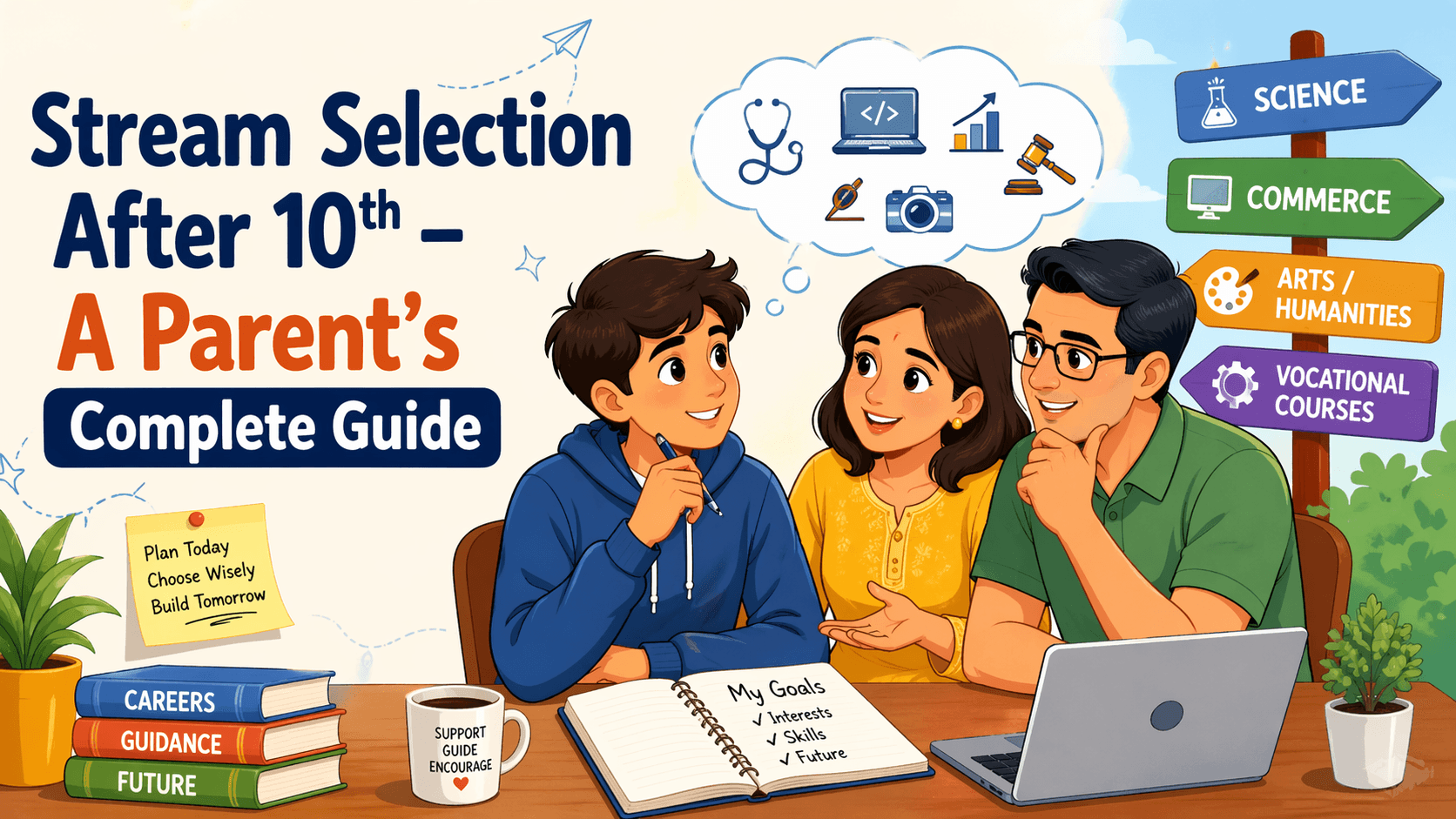
Choosing the right path after 10th grade is often more stressful for parents than it is for the students. In India, this moment feels like a massive crossroads where one choice determines the next forty years of a person's life. It is natural to feel a bit of stream confusion parents often face when looking at the endless options available today. While our generation grew up with just three main choices, the current landscape is much more diverse and integrated. Parents want the best for their kids, but sometimes the pressure to choose a "safe" career can cloud the actual potential of the child. It is all about finding that sweet spot between what the child loves doing and what the world is willing to pay for. Taking a deep breath and looking at the bigger picture is the first step in this journey. It is not just about marks but about matching personality with a long-term career path.
Understanding the Indian Education System
The transition from school to a specialized stream is a significant shift in a child's academic life.
➤ It marks the end of general education.
➤ Students move from ten subjects to five focused ones.
➤ The choice impacts college admissions and entrance exams.
➤ National boards like the CBSE provide various subject combinations.
Comparison of Major Streams
Deciding between the three main pillars requires a clear understanding of what each one offers.
| Stream | Core Subjects | Potential Careers |
|---|---|---|
| Science | Physics, Chemistry, Biology, Math | Engineering, Medicine, Research |
| Commerce | Accounts, Economics, Business Studies | CA, Finance, Management |
| Arts/Humanities | History, Psychology, Sociology | Law, Design, Journalism |
Take a comprehensive Stream Selection Test for Grade 10 students (only ₹99) to discover the best academic path based on your interests and strengths: Start Stream Selection Test.
The Role of Parents in Decision Making
A parent guide career after 10th is essential because children often feel overwhelmed by the sheer volume of choices.
➤ Observe your child's natural interests at home.
➤ Avoid projecting your own unfulfilled dreams on them.
➤ Encourage them to speak with seniors or working professionals.
➤ Use a parent counselling guide to understand modern career trends.
Evaluating Academic Strengths
Marks are not the only indicator, but they do show where a student’s current comfort zone lies.
➤ Analyze consistent performance over the last three years.
➤ Look for subjects where the child studies without being told.
➤ Check if they enjoy the logic of math or the stories of history.
➤ Use a strategy to score 90 to see their potential in science.
Common Myths vs. Reality
Many families struggle with how parents choose stream because of outdated social myths.
| Myth | Reality |
|---|---|
| Science is only for toppers | Every stream requires hard work and intelligence |
| Arts has no career scope | Digital media and law are high-paying fields |
| Commerce is for average students | Finance and data roles are highly competitive |
Tools for Effective Career Planning
Parents can use various government and private resources to make an informed choice for student future planning parents and their kids.
➤ Visit the National Career Service portal for job descriptions.
➤ Check the Ministry of Education website for new policy updates.
➤ Look into various vocational courses as alternatives to traditional streams.
➤ Research entrance exams to understand the difficulty levels.
Handling the Pressure of Board Results
Results can be unpredictable, and it is important to have a backup plan for student stream decision India scenarios.
➤ Focus on the effort rather than just the final percentage.
➤ Remember that one exam does not define a child's worth.
➤ If the results are not as expected, look for a next steps guide for alternatives.
➤ Stay positive to keep the child’s confidence intact.
Why Location and Environment Matter
Sometimes the choice of school or city can influence the quality of education guidance parents provide.
➤ Some cities have better coaching facilities for specific exams.
➤ For instance, many people explore career counselling in Coimbatore for localized advice.
➤ School environment affects the peer group and competitive spirit.
➤ Ensure the school offers the specific subject combinations your child wants.
Future Skills and Trends
The world is changing, and career planning children India must include future-ready skills.
➤ Coding and data literacy are becoming universal.
➤ Creative thinking is highly valued in the modern job market.
➤ Emotional intelligence is a key factor for leadership roles.
➤ Aiming to score 95 percent helps in building a strong academic foundation.
Final Steps for Stream Selection
Once the research is done, it is time to finalize the science commerce arts selection process.
➤ Have a calm, one-on-one discussion with your child.
➤ List the pros and cons of the top two choices.
➤ Finalize the decision at least a month before admissions start.
➤ Support the choice wholeheartedly once it is made.
Frequently Asked Questions
Q1. How parents help stream selection?
Ans. Parents should act as facilitators by providing resources and a stress-free environment. It is about listening to the child's interests and helping them research the practical aspects of stream selection after 10th parents usually look for.
Q2. Which stream best for child?
Ans. The best stream is the one where the child's interest, aptitude, and personality align. There is no "universal best" stream, as success depends on how well the child connects with the subjects.
Q3. Mistakes parents make?
Ans. The biggest mistake is forced selection based on social status or peer pressure. Often, how parents choose stream depends on what their relatives' children are doing, which is not a healthy approach for the child.
Q4. When to decide stream?
Ans. The ideal time to start discussing this is during the middle of the 10th-grade academic year. This gives enough time to research without the last-minute panic of admission deadlines.
Q5. Should child decide or parent?
Ans. It should be a collaborative effort. While the child knows their interests, parents understand the financial and practical realities of student future planning parents and kids need to discuss together.