Vaibhav Suryavanshi Is 15 and Holds a World Record. Should Your Child Follow Him?
Vaibhav Suryavanshi scored 204 off 53 balls for India A in Doha. Here is what his Rs 1.1 crore IPL deal means, what a cricket career really takes, and the honest odds for students and parents.
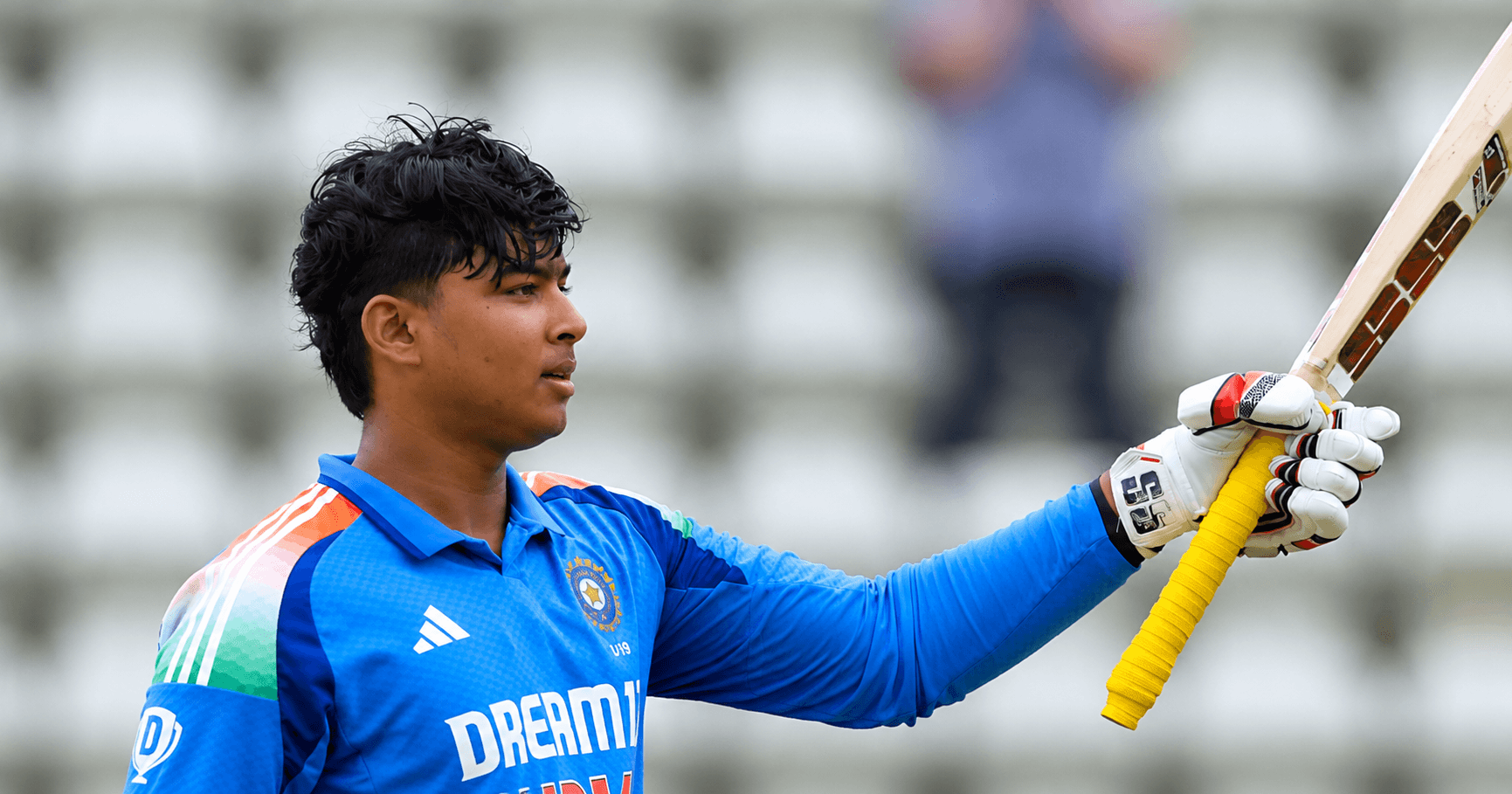
Most children should not follow him as a plan, but his path shows exactly what serious cricket demands. Vaibhav Suryavanshi, a Bihar batter born in March 2011, scored 204 off 53 balls for India A against the UAE in Doha on 24 November 2026. Cricket can be a real career, but for a player like him it is a long-shot exception, not a template. His one confirmed pay figure is the Rs 1.1 crore Rajasthan Royals paid for him, and most players earn far less.
Some reports spell his surname Sooryavanshi, which is also how many people search for him. This guide covers what he has done, what he earns, and what a cricket career in India really takes, including the parts parents should weigh first.
What happened in Doha on 24 November 2026
Playing for India A in the Asia Cup Rising Stars tournament, he hit 204 off 53 balls against the UAE, with 28 sixes. He reached 200 off 52 balls, the fastest double hundred in List A cricket, and his hundred came off 28 balls, a List A record [VERIFY]. You can check the innings on the match scorecard.
The UAE made 249 for 8. India A chased 250 in 14.2 overs and won by 7 wickets, with the teenage opener's innings doing most of the work.
Who Vaibhav Suryavanshi is and how he was spotted
He was born on 27 March 2011 in Tajpur, in Samastipur district of Bihar, and he plays for Bihar. His father, Sanjeev Suryavanshi, is his coach, and for a time the two travelled about 100 km to Patna for training on alternate days.
He was spotted through the franchise route. He went through trials at Rajasthan Royals' high performance centre in Nagpur, as one report on that trial describes. The team signed him in November 2024 for Rs 1.1 crore, when he was 13, according to its official franchise profile.
His record, year by year
- 2024: A Ranji Trophy debut for Bihar at 12, a 104 off 62 balls in a Youth Test against Australia Under-19s at Chennai, and an IPL contract at 13, which made him the youngest player to get an IPL contract.
- 2025: His IPL debut came on 19 April 2025, making him the youngest IPL debutant. At 14 years and 32 days he scored 101 against Gujarat Titans, the youngest IPL centurion. In November he made 144 in a T20 against the UAE in Doha, and in December he scored 171 for India Under-19 against the UAE in Dubai.
- 2026: Opening for Rajasthan Royals, he scored 776 runs in 16 IPL matches at a strike rate of 237.30. In the Under-19 World Cup final in Harare on 6 February, he made 175 off 80 balls against England, and India won by 100 runs. He was named Player of the Tournament, as ICC's tournament records show.
- November 2026: The 204 off 53 balls in Doha, described above.
What he earns, and how cricket income works
No credible source publishes an audited net worth for Vaibhav Suryavanshi, and at 15 there is no reliable figure to quote, so this guide does not state one. The one confirmed money figure is the Rs 1.1 crore that Rajasthan Royals paid for him at the IPL auction, more than three times the Rs 30 lakh base price. Auction coverage has the details.
A cricketer's income is built in four layers, and most players reach only the first one or two:
- IPL contract. Franchises buy players at the auction, and the price is paid for the season. Only players who are bought earn this, and most domestic players never are.
- BCCI central contracts. These are yearly retainers for senior men's players, graded A, B or C. For 2025-26 the retainers were Rs 5 crore for Grade A, Rs 3 crore for Grade B and Rs 1 crore for Grade C (contract figures), on a list announced on 9 February 2026 (list summary). In 2024-25 there was an extra top grade, A+, at Rs 7 crore (2024-25 grades), which has since been dropped.
- Domestic match fees. Ranji Trophy players are paid per day of play. A 2024 report listed Rs 40,000 a day for players with under 20 caps, Rs 50,000 for 21 to 40 caps and Rs 60,000 for 41 caps and above.
- Endorsements. Brand deals grow with fame and reach, and they are negotiated privately, so no fixed figure applies.
For a state player, the floor matters as much as the ceiling. A four-day match at Rs 40,000 a day comes to about Rs 1.6 lakh before tax, if the player features on all four days. A 2021 report put a season at about Rs 11 lakh for a newer player from a lower-division side that went out early, and about Rs 25 lakh for a senior player whose team reached the finals of all tournaments. Those are 2021 figures, so use them as a guide, not a rate card.
Can your child do this? The honest odds
Most boys who play age-group cricket never reach the Ranji Trophy, and far fewer reach the IPL. Vaibhav is at the far end of that line. He has said that chances in India are rare compared with most other countries, and that is the honest starting point for any family.
So ask a better question than whether your child will play for India. Ask whether they keep improving while doing well in school, and whether there is a path forward if cricket does not open up in the next few years. If the honest answer is no, build a second track from the start.
The real pathway: age-group cricket, trials, academies and the BCCI route
The usual route has five steps, and each one is a filter:
- School and local cricket. Regular matches, a coach who watches closely, and a record that others can see.
- District trials and age-group teams. Selection for district sides, then state Under-16 and Under-19 teams.
- State senior cricket. A place in the state senior side leads to the Ranji Trophy, India's first-class domestic tournament.
- Academies and high performance centres. Private and franchise-run centres hold trials and training, and franchise scouting often starts here.
- The BCCI and the IPL. National age-group camps and tournaments, and the IPL auction for players a franchise decides to buy.
Vaibhav's path combined these steps: training in Bihar with his father, then trials at the Rajasthan Royals centre in Nagpur. Your child's path will look different, and most players will not reach step five. For a school-level plan, read From Classroom to Stadium.
Jobs in cricket beyond the playing role
Most people who build a life around cricket never play for a national side. These careers use the same knowledge of the game:
- Cricket coach works with players at academies, schools and clubs.
- Sports physiotherapist treats and prevents injuries for players and teams.
- Sports analyst studies video and performance data to help teams plan.
- Cricket pitch curator prepares and maintains the pitches used in matches.
- Cricket umpire officiates matches and applies the laws of the game.
- Cricket commentator describes matches for television, radio and digital audiences.
Each route has its own training and selection, so read the career page before you choose.
What parents are right to fear, and what is true
Parents are right to be cautious. Here is each concern, answered plainly:
- Injury. Fast bowlers and batters both get hurt, and one serious injury can stop a season or a career. Keep a physical routine, a doctor you trust, and a school plan running alongside.
- Selection and contracts. Contracts are reviewed every year, and a player can move down a grade or be left off a list. Selection decisions are not always easy to predict or explain.
- Lost study years. Cricket takes long hours of practice and travel, and a child who leaves school early for cricket can lose options. Keep board exams and a degree on track, and treat them as protection, not distraction.
- Seasons that do not happen. In January 2021 the Ranji Trophy was not held for the first time in its 87-year history, affecting more than 800 players without IPL contracts. Income depends on whether the season runs.
Plan B: where cricket skills transfer
Cricket builds discipline, a calm head under pressure, teamwork, and the habit of reviewing your own performance with numbers. These skills carry into sales, management, teaching, sports marketing and data work. A student who keeps a second track open loses very little if cricket does not work out.
If you want to see where your child's strengths point, start with a career counselling session. A psychometric assessment can show interests and aptitude next to the options you are weighing.
Frequently asked questions
See the questions below for quick answers.
Frequently Asked Questions
Does Vaibhav Suryavanshi have a net worth?
No credible source publishes an audited net worth for him, and at 15 there is no reliable figure to quote. The one confirmed money figure is the Rs 1.1 crore Rajasthan Royals paid for him at the IPL auction. Any net worth number you see for a teenager is a guess, so this guide does not give one.
How much does a Ranji Trophy player earn per match?
Ranji Trophy players are paid per day of play. A 2024 fee structure lists Rs 40,000 a day for players with under 20 caps, rising to Rs 60,000 a day for those with 41 caps or more. A four-day match therefore pays about Rs 1.6 lakh before tax for a player who features on every day of it.
How do you become a cricketer in India?
Most players start with school and local matches, then trial for a district and state age-group side. From there the route runs through the state senior team, the Ranji Trophy, and academies or high performance centres. Only a few are picked for national age-group squads or bought at the IPL auction, so build your education alongside your cricket.
Is cricket a good career in India?
For most people, cricket is a healthy passion and a risky main career. Only a small share of players reach the Ranji Trophy, and fewer still earn IPL or central contract money. Careers around the game, such as coaching, physiotherapy, analysis and commentary, offer steadier routes. Weigh the odds honestly against your child's schooling and strengths.
What is a BCCI central contract and how much does it pay?
A BCCI central contract is a yearly retainer for senior men's players, graded A, B or C. For 2025-26 the retainers were Rs 5 crore for Grade A, Rs 3 crore for Grade B and Rs 1 crore for Grade C. Contracts are reviewed every year, so a player can move up or down a grade or be left out.
Conclusion
Take our free Career Suitability Test to see which fields fit your child's strengths, with cricket as one option among several. If you are still confused about this topic, you can connect with Infigon Futures and talk to a career expert.
Before you decide: two free 2-minute checks
- 2 min · freeAre your skills safe from AI?AI will replace people who only do work a machine can do. Answer 10 quick questions to see your score and what to work on.Check my skills
- 1 min · freeWhen will you earn your dream salary?Pick a career and the monthly salary you want. We show at what age people in that career usually earn that much, or if most never do.Check my salary