Study in Russia 2025: Top Universities, Courses & Admission Process
Russia continues to be a popular study destination for international students in 2025, especially for those seeking quality education at affordable costs. With globally ranked universities, strong programs in medicine, engineering, and science, and a straightforward admission process, Russia offers excellent academic and career opportunities.

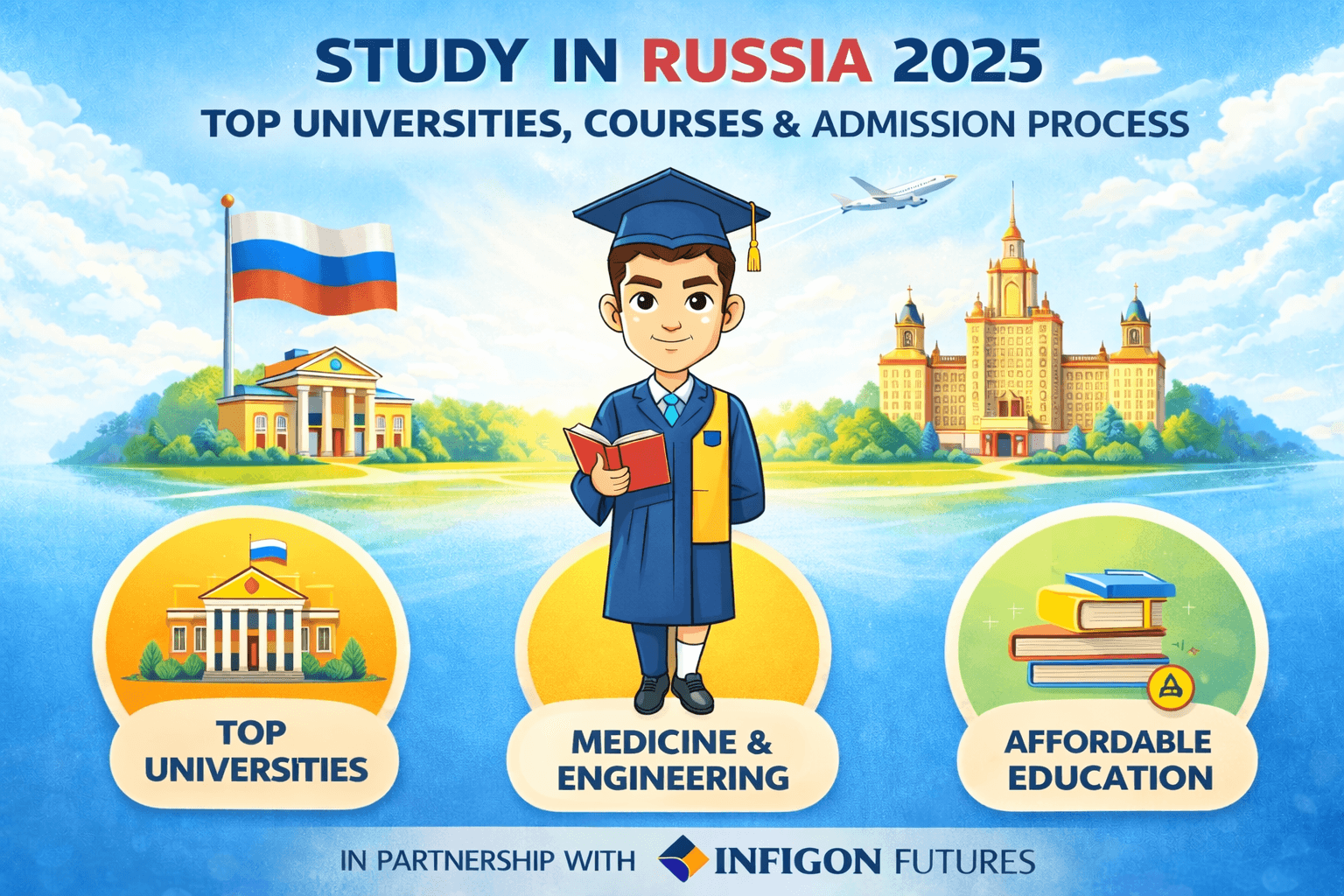
Russia continues to be a popular study destination for international students in 2025, especially for those seeking quality education at affordable costs. With globally ranked universities, strong programs in medicine, engineering, and science, and a straightforward admission process, Russia offers excellent academic and career opportunities.
This guide covers everything you need to know about top universities, best courses, eligibility criteria, and the step-by-step admission process.
Why Study in Russia in 2025?
Russia hosts over 300,000 international students from across the world. Here’s why it remains a strong choice:
- Globally recognized degrees
- Affordable tuition fees compared to Western countries
- Strong focus on research, innovation, and technology
- No entrance exams for many undergraduate and medical programs
- English-taught programs available
- Rich cultural exposure and student-friendly cities
Top Universities in Russia for International Students
Russia has several universities ranked among the best globally.
1. Lomonosov Moscow State University
One of the oldest and most prestigious universities in Russia, known for research and academic excellence.
Popular Courses: Medicine, Physics, Mathematics, Economics, Computer Science
2. Saint Petersburg State University
A globally respected institution with strong humanities and science programs.
Popular Courses: International Relations, Law, Biology, Management
3. Novosibirsk State University
Renowned for science, technology, and innovation-driven programs.
Popular Courses: Engineering, Data Science, Applied Mathematics
4. Kazan Federal University
A popular choice for medical aspirants and international students.
Popular Courses: MBBS, Pharmacy, Biotechnology, Psychology
5. Peoples’ Friendship University of Russia (RUDN)
Known for its diverse international student community.
Popular Courses: Medicine, Engineering, Economics, Social Sciences
Popular Courses to Study in Russia
1. Medicine (MBBS)
Russia is one of the top destinations for MBBS due to:
- Low tuition fees
- WHO and NMC-recognized universities
- English-medium instruction
2. Engineering & Technology
Strong emphasis on:
- Mechanical Engineering
- Aerospace Engineering
- Artificial Intelligence
- Robotics
3. Computer Science & IT
High demand programs include:
- Software Engineering
- Data Science
- Cybersecurity
- Artificial Intelligence
4. Business & Management
Growing interest in:
- International Business
- Finance
- Economics
- Entrepreneurship
5. Arts, Humanities & Social Sciences
Russia offers strong programs in:
- Psychology
- International Relations
- Political Science
Admission Process for Studying in Russia (2025)
The admission process is relatively simple and student-friendly.
Step 1: Choose University & Course
Select your preferred university and program based on eligibility and career goals.
Step 2: Check Eligibility Criteria
General requirements:
- Valid passport
- Academic transcripts
- Minimum 50–60% marks (varies by course)
- NEET qualification (mandatory for MBBS for Indian students)
Step 3: Submit Application
Apply directly to the university or through an authorized education consultant.
Step 4: Receive Invitation Letter
Once accepted, the university issues an official invitation letter.
Step 5: Apply for Student Visa
Apply for a Russian student visa using:
- Invitation letter
- Medical certificate
- Passport
- Visa application form
Step 6: Travel & Enrollment
After arrival, complete university registration and hostel formalities.
Cost of Studying in Russia
Tuition Fees (Approximate):
- MBBS: ₹2.5 – ₹5 lakh per year
- Engineering & IT: ₹2 – ₹4 lakh per year
- Business & Arts: ₹1.8 – ₹3.5 lakh per year
Living Expenses:
- ₹10,000 – ₹20,000 per month (depending on city and lifestyle)
Scholarships for International Students
- Russian Government Scholarships
- University-specific merit scholarships
- Bilateral education exchange programs
These scholarships can significantly reduce tuition and living costs.
Career Opportunities After Studying in Russia
Graduates can:
- Work in Russia after graduation
- Pursue higher education globally
- Return to home countries with internationally recognized degrees
Fields like medicine, IT, engineering, and research offer strong global demand.
Conclusion
Studying in Russia in 2025 is not just about affordability, it's about making informed career decisions that align with your skills, interests, and long-term goals. With a wide range of universities and courses available, choosing the right academic path becomes crucial.
This is where structured career guidance platforms like Infigon Futures add real value by helping students evaluate options realistically. Through tools such as psychometric tests, students can gain deeper insights into their strengths, learning styles, and career suitability before committing to an international education journey. Making the right choice early can shape not just your education, but your entire professional future