
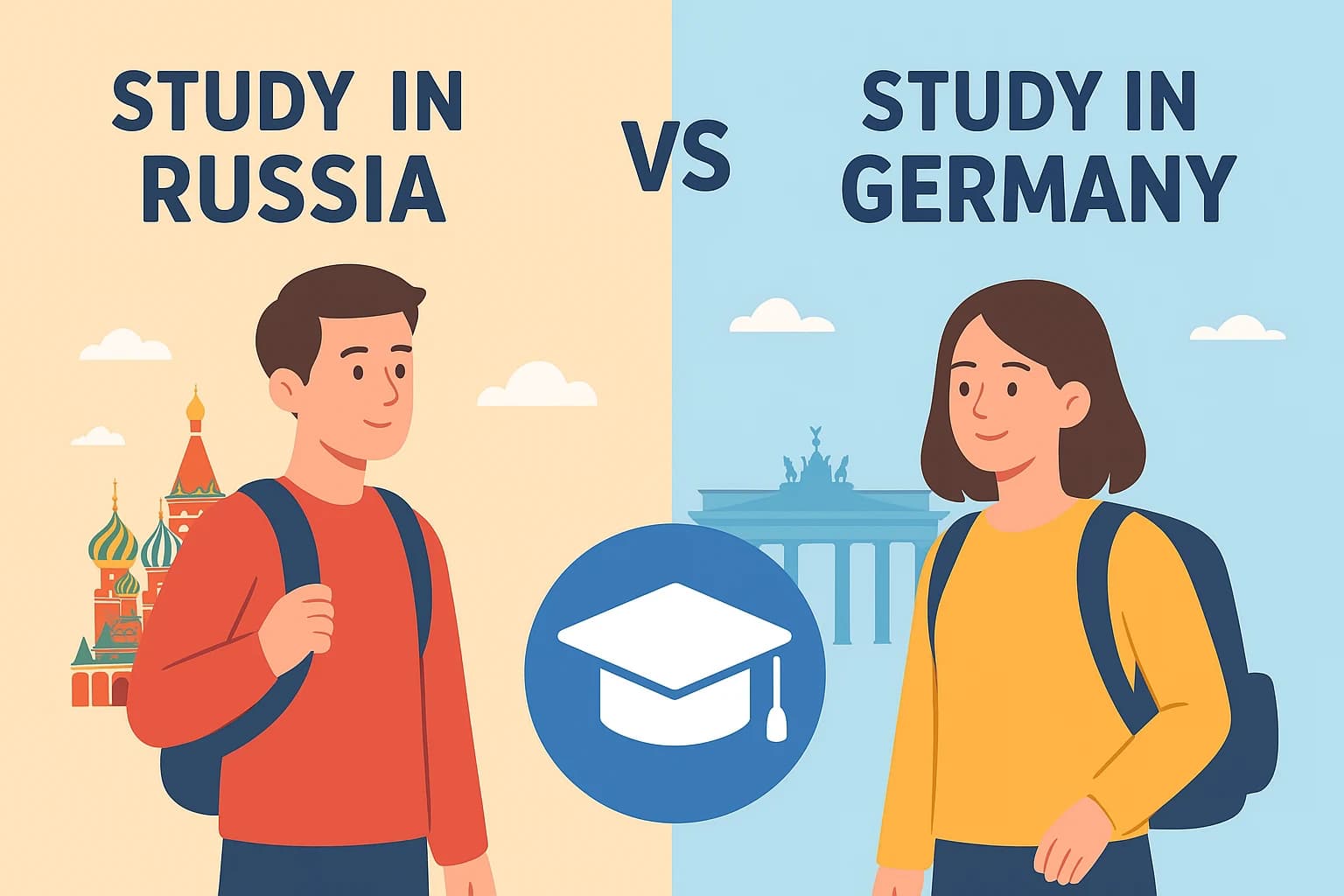
If you are deciding between Study in Russia vs Study in Germany, you’re already exploring two of Europe’s most popular study abroad destinations for international students. Both countries offer world-class universities, degrees, affordable education, and modern programs in engineering, medicine, and more—but the experience, language, tuition, and admission process are very different.
Below, we break down everything you should know before choosing your perfect country.
Study in Germany and Europe – Why Germany Attracts Global Students
Affordable education & tuition-free universities
Germany is known for public universities with zero tuition fees, especially for bachelor and master degrees. International students usually only pay a small semester contribution.
Best for engineering & STEM fields
Germany is globally famous for engineering, automotive tech, robotics, and applied science programs.
Popular programs:
1. Engineering
2. Computer Science
3. Masters in engineering
4. Business
5. Medicine (however very competitive)
Study in Russia and Europe – Why Russia Is Growing in Popularity
Diverse programs & culturally rich education
Study in Russia offers strong programs across medicine, engineering, nuclear science, aviation, and space studies—often at lower fees compared to Western Europe.
Popular fields:
1. Medicine
2. Engineering
3. Dentistry
4. Aviation
5. Nuclear science
Affordable tuition & cost of living
Russian universities provide lower tuition fees and cheaper living than Western European countries including Germany.
Admission, Degree Duration & Language Requirements
Admission and programs in Germany
You will likely need:
1. IELTS/TOEFL
2. German language (for most bachelor programs)
3. strong academic profile
Masters programs are easier in English, but some knowledge of German greatly helps in living and part-time jobs.
Admission and programs in Russia
Many Russian universities accept:
1. basic English
2. sometimes no IELTS
3. or offer preparatory courses
Students frequently learn Russian during their program.
Tuition Cost, Scholarships & Living Expenses
Germany scholarships
Top government grants:
1. DAAD
2. Erasmus+
3. German State Scholarships
Russia scholarships
Government-funded scholarships include:
1. Russian Government Scholarship
2. Ministry of Education programs
Student Visa, Migration & Work Opportunities
Student visa in Germany
Germany offers:
1. Post-study work visa
2. EU work opportunities
3. Permanent residency pathways
This is a major advantage for long-term career plans.
Student visa in Russia
Russia offers work options—but usually more limited and often require additional permits depending on region and university rules.
Engineering, Medicine and International Career Options
Both countries are excellent for international students but in different ways:
Germany is best for
1. Engineering
2. Automotive
3. Robotics
4. IT
5. Masters programs
6. International careers
7. EU job opportunities
Russia is ideal for
1. Medicine
2. Dentistry
3. Aviation
4. Nuclear science
5. Space & technology
University Ranking & Global Recognition
German universities rank consistently higher worldwide
Germany has several globally top-ranked institutions, especially in engineering.
Russian universities are known in medicine & science fields
Many medical degrees are well-recognized in Asia, Africa, and the Middle East, depending on national accreditation.
FAQs
Q1. What is better: Study in Russia vs Study in Germany?
Ans. Germany offers strong employment opportunities and zero tuition, while Russia offers affordable medical programs and easier admissions. The “best” depends on your career goals.
Q2. Where is it better to study, in Germany, Russia, or Ukraine?
Ans. Germany generally offers stronger job pathways, Russia offers strong medical education, and Ukraine used to be cheaper but became less stable recently.
Q3. How do Russian universities compare to foreign universities?
Ans. Russia is excellent for medicine and science, while universities in Germany and Western Europe often rank higher overall.
Q4. Do students think that studying in Russia is a good idea?
Ans. Many international students choose Russia because of affordable medical degrees, cultural diversity, and good science programs.
Q5. Is Germany good for engineering and masters programs?
Ans. Yes, Germany is one of the world’s best destinations for engineering and STEM degrees with global job opportunities.
Q6. Does Germany have tuition-free universities for international students?
Ans. Yes, most public universities are tuition-free except for a small semester fee.
Q7. Are Russian medical degrees recognized globally?
Ans. Yes, many are—but recognition depends on your home country’s medical accreditation rules.