
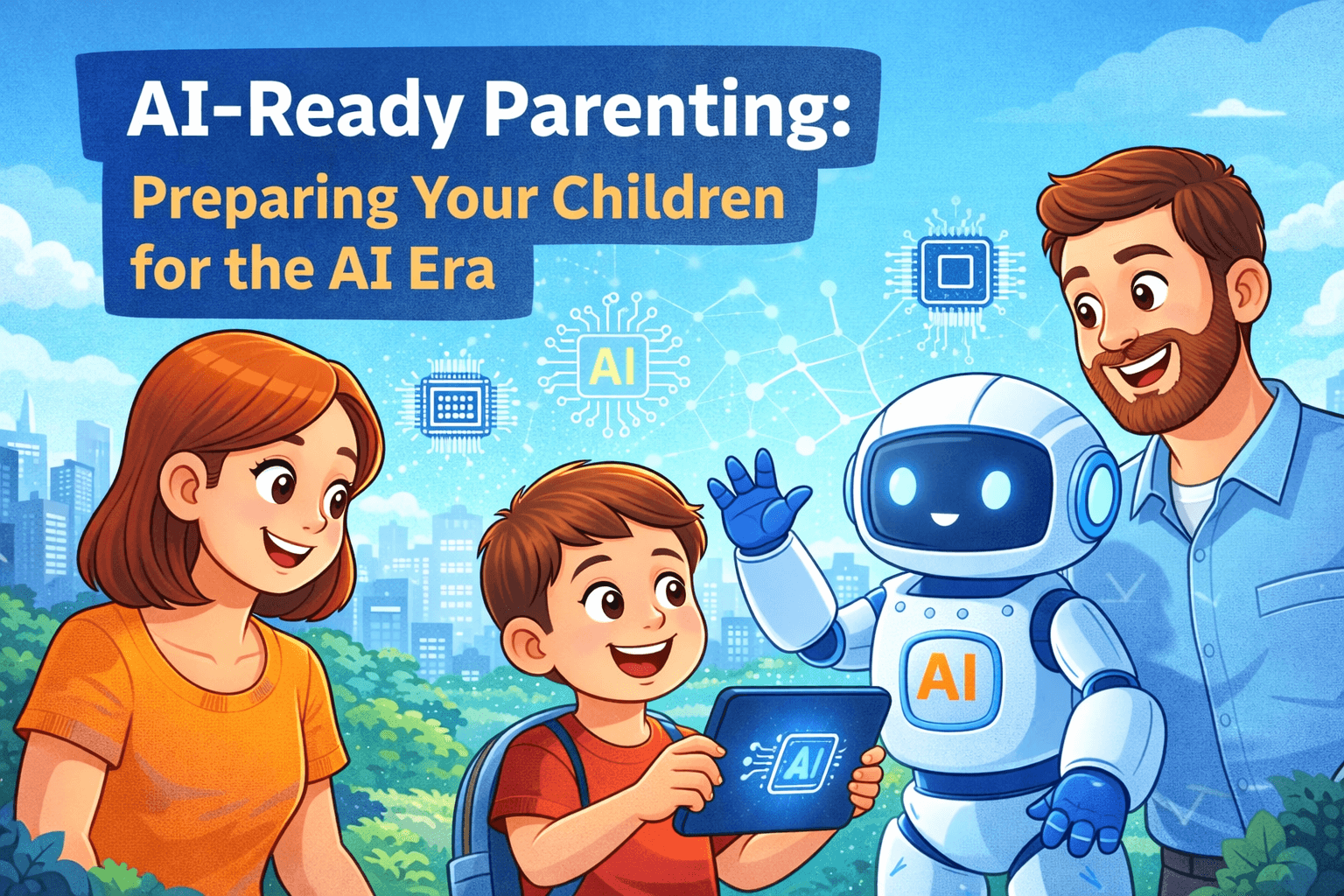
The world is shifting beneath our feet, and as parents, we often feel like we are racing to catch up with a future that has already arrived. The rise of AI is not just a trend for tech enthusiasts; it is a fundamental shift in how our children will learn, work, and interact with the world. Preparing your family for this era does not mean every child needs to become a computer scientist, but it does mean they need a new set of future-ready skills to thrive. We are moving toward a landscape where digital literacy for kids is as essential as reading and writing. By focusing on curiosity, critical thinking, and a healthy relationship with technology, we can empower our kids to lead rather than follow. This blog explores how families can navigate this transition with confidence, ensuring that innovation becomes a tool for growth rather than a source of anxiety.
Understanding the Foundations of the AI Era
The first step in parenting for the future is understanding what these changes actually mean for daily life and education. We need to move beyond just screen time and look at how tools are shaping the minds of the next generation.
➤Defining the New Normal: AI is no longer a distant concept; it is integrated into the apps we use and the way we search for information.
➤Shifting Career Landscapes: Understanding the 2026 jobless boom what students must know to stay relevant in the age of ai helps us realize that traditional roles are evolving quickly.
➤The Power of STEM: Encouraging an interest in STEM fields ensures that children understand the logic behind the machines.
➤Human Intelligence vs. Artificial Intelligence: While machines excel at data, humans excel at empathy. Learning about ai and therapy can technology replace therapists shows kids the value of human connection that robots cannot mimic.
| Concept | Human Strength | AI Strength |
|---|---|---|
| Problem Solving | Emotional Context | Pattern Recognition |
| Creativity | Original Thought | Data Synthesis |
| Communication | Empathy and Nuance | Speed and Scale |
Practical Skills for the Next Generation
To be future-ready, children need a mix of technical know-how and "soft" skills. This balance ensures they can manipulate technology without losing their human edge.
➤Coding for children: Learning the language of computers through coding helps kids develop structured thinking and logic.
➤Robotics and Hardware: Engaging with robotics kits allows children to see the physical manifestation of software.
➤AI for kids: Introducing age-appropriate AI learning games makes complex concepts feel like play.
➤Media Literacy: Teaching kids to question the information they see in paragraphs generated by chatbots or social media algorithms.
➤Psychological Resilience: Understanding stock market psychology 101 what education teaches about panic buying and selling can help older kids understand how algorithms drive human behavior and herd mentalities.
| Skill Type | Key Focus Area | Recommended Activity |
|---|---|---|
| Technical | coding for children | Building simple mobile apps |
| Analytical | digital literacy for kids | Identifying "Deepfake" images |
| Creative | innovation | Using AI to brainstorm story ideas |
Resources for Family Learning
Parents do not have to be experts to teach their kids. There are numerous tools and platforms designed to bridge the gap between curiosity and mastery.
➤Government Initiatives: Explore resources to understand how national education bodies are integrating these topics.
➤Educational Platforms: There are sites which provide structured paths for young learners.
➤Science and Tech Insights: Check out Parents-Families for deeper dives into the science behind the technology.
➤Career Guidance: It is important to help kids understand workplace dynamics, such as the concept of revenge quitting explained, which highlights the importance of job satisfaction in a tech-driven world.
| Resource Type | Best For | Keywords Included |
|---|---|---|
| Interactive | AI learning games | learning, kids |
| Technical | coding, robotics | STEM, future |
| Parental Guide | tips, parenting | families, education |
Strategy and Tips for Parents
Implementation is where the real work happens. Here are some tips to make the journey smoother for both parents and children.
➤Encourage Curiosity: Instead of fearing new apps, explore them together as a family.
➤Set Boundaries: Balance tech learning with outdoor activities to ensure holistic development.
➤Focus on Ethics: Discuss the moral implications of AI and how it should be used for the benefit of society.
➤Promote Adaptability: The most important of all future-ready skills is the ability to unlearn and relearn as innovation continues.
Frequently Asked Questions
Q1.How to prepare my kids for an AI dominated world?
Preparation starts with exposure and mindset. Encourage your kids to be creators rather than just consumers of technology. Focus on developing their critical thinking skills so they can analyze the output of AI systems. Ensure they have a strong foundation in STEM while maintaining their unique human creativity.
Q2.How to future-proof your children for an AI world?
The best way to future-proof is through digital literacy for kids. This includes teaching them the basics of coding and how algorithms work. Additionally, foster emotional intelligence and social skills, as these are the areas where humans will always have an advantage over machines in the future.
Q3.How to guide my kids to have interest in artificial intelligence?
Start with their existing interests. If they love video games, show them how AI controls the characters. If they like art, explore AI image generation tools together. Using AI learning games is a great way to make the subject approachable and fun without it feeling like extra schoolwork.
Q4.How to make AI safe for children?
Safety involves both technical settings and open communication. Use parental controls on all apps and devices. More importantly, talk to your kids about data privacy and the fact that AI can sometimes provide incorrect information. Building a relationship of trust is the best safety measure.
Q5. What is the right age to start teaching kids about technology?
There is no single "right" age, but basic learning can start as early as five or six through play-based robotics and simple logic games. The focus should be on building a positive and curious relationship with innovation rather than rigorous academic study.