
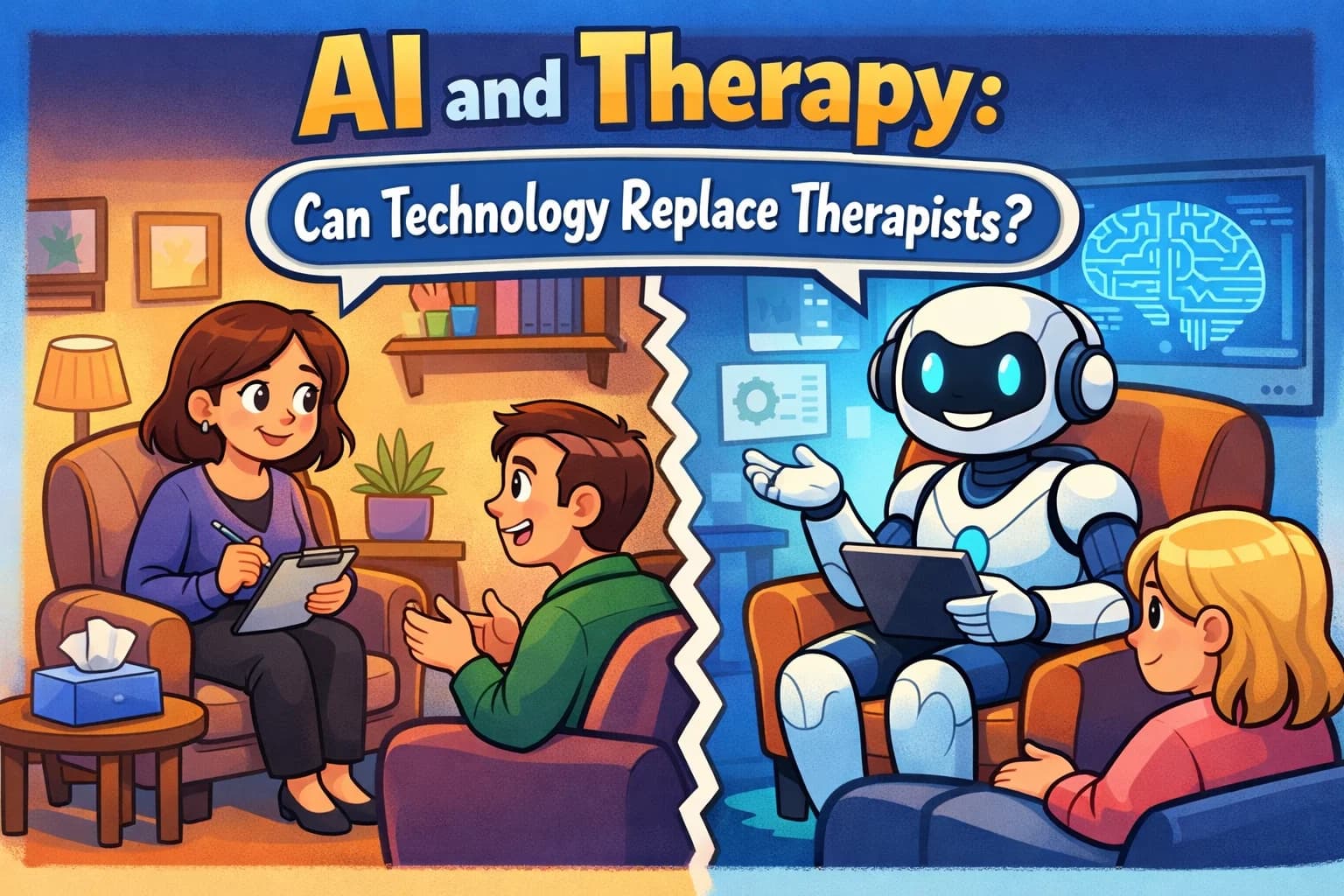
Imagine sitting on your couch at 2:00 AM, feeling overwhelmed, and having a conversation with a bot that responds instantly to your deepest anxieties. This is no longer science fiction. We are currently witnessing a massive shift where artificial intelligence therapy is becoming a primary resource for many. Technology has moved beyond simple scheduling tools to sophisticated systems capable of tracking mood patterns and offering real-time coping mechanisms. While the convenience of online therapy has already bridged geographic gaps, the introduction of AI adds a layer of immediate accessibility that humans simply cannot match. However, as we lean more into mental health AI, a critical question arises: can a sequence of algorithms truly replicate the warmth, intuition, and empathy of a living person? As we explore this digital frontier, it is essential to understand that while technology offers incredible support, the core of healing often lies in the messy, unscripted connection between two human beings.
The Rise of Digital Mental Health Tools
The landscape of emotional support is changing rapidly due to the integration of artificial intelligence in psychology. Below is a breakdown of how these tools are currently being used and their impact on the industry.
➤Immediate Accessibility: One of the biggest perks of therapy apps is that they are available 24/7, providing support during moments of crisis when a human professional might be unavailable.
➤Anonymity and Reduced Stigma: Many individuals feel more comfortable sharing their thoughts with virtual therapy platforms because it removes the fear of being judged by another person.
➤Data Driven Insights: Unlike traditional methods, mental health technology can analyze vast amounts of data to identify patterns in sleep, speech, and activity that a patient might not even notice.
➤Cost Effectiveness: For those who cannot afford weekly sessions, a chatbot therapy subscription is often a fraction of the price of a private practice visit.
➤Bridge to Care: Technology serves as a great entry point for those wondering how to become a therapist a step-by-step career guide for students in india by showing the diverse ways help can be delivered.
Comparison: Traditional Support vs. AI Support
| Feature | online therapy vs traditional therapy | AI therapy |
|---|---|---|
| Availability | Scheduled appointments | Instant, 24/7 access |
| Connection | Deep human empathy | Pattern recognition |
| Cost | Usually higher | Generally low or free |
| Privacy | Professional confidentiality | Data encryption concerns |
| Nuance | Understands sarcasm and tone | May misinterpret complex emotions |
Why AI Cannot Fully Replace Human Therapists
While digital therapy is an incredible supplement, there are specific human elements that code cannot replicate. The nuances of the human experience are far too complex for current machines.
➤The Therapeutic Alliance: Research shows that the bond between patient and provider is the strongest predictor of success. This "human spark" is missing in AI therapy.
➤Complex Trauma Handling: Deep emotional wounds often require a trauma therapist career in 2026 training skills job demand level of expertise to navigate safely without re-traumatizing the individual.
➤Ethical Judgment: AI follows rules, but humans use ethics and intuition to handle "gray area" situations that don't have a clear-cut answer.
➤Physical Presence: In some cases, such as the work of a sports therapist jobs in 2026 scope career growth expert, physical intervention and observation are mandatory.
➤Cultural Competence: Humans understand cultural context, slang, and societal pressures in a way that AI mental health systems are still struggling to learn.
Human vs. AI Strengths
| Capability | Human Therapist | artificial intelligence therapy |
|---|---|---|
| Empathy | High (Authentic) | Simulated |
| Pattern Discovery | Intuitive | Computational |
| Safety Intervention | High (Direct action) | Moderate (Alerts/Triggers) |
| Scalability | Low | High |
The Hybrid Future: Humans and Machines Working Together
The most likely future is not one where robots replace doctors, but where they work together. We see this trend in the official artificial intelligence in mental health research new who study on applications and challenges which highlights how tech can assist clinical decisions.
➤Pre-session Screening: Patients can use therapy apps to log symptoms before meeting their doctor, making the actual session more efficient.
➤Homework and Tracking: Between sessions, mental health AI can remind patients to practice breathing exercises or journal their thoughts.
➤Global Reach: Technology allows for technology and the future of mental health treatment to reach remote areas where no physical clinics exist.
➤Career Guidance: If you feel stuck in the wrong career common traps and smarter ways to choose, tech can help analyze your skills, but a human counselor helps you make the final leap.
The Role of Technology in Modern Practices
| Tool Type | Primary Use Case | Benefit |
|---|---|---|
| AI mental health bots | Mood tracking | Early warning signs |
| virtual therapy video calls | Long distance sessions | Flexibility |
| digital therapy journals | Self-reflection | Better data for therapists |
| Wearable Tech | Physiological monitoring | Real time stress alerts |
FAQS:
Q1. Will you use a chatbot as a therapist?
Ans. Many people use a chatbot therapy tool for low level anxiety, habit tracking, or when they need to vent at odd hours. While it is helpful for daily maintenance, most users still prefer a human for deep emotional work or complex life crises.
Q2. Do you think AI will ever replace therapists or psychologists?
Ans. It is unlikely that artificial intelligence in psychology will ever fully replace humans. Therapy is built on shared human experience and vulnerability. While AI can simulate conversation, it does not "feel" or "care," which are essential components of the healing process.
Q3. Can chatbots replace human counselors?
Ans. Chatbots can replace some functions of a counselor, such as providing educational resources or basic Cognitive Behavioral Therapy (CBT) exercises. However, for nuanced counseling and emotional support, the human element remains superior.
Q4. Can AI take the place of my psychologist?
Ans. AI can act as a powerful assistant to your psychologist by providing data and 24/7 support, but it cannot replace the clinical judgment, diagnosis, and deep rapport that a trained psychologist provides.
Q5. Is my data safe with these apps?
Ans. Privacy is a major concern in mental health technology. It is important to read the terms of service of any app you use to ensure your sensitive emotional data is encrypted and not sold to third parties.