
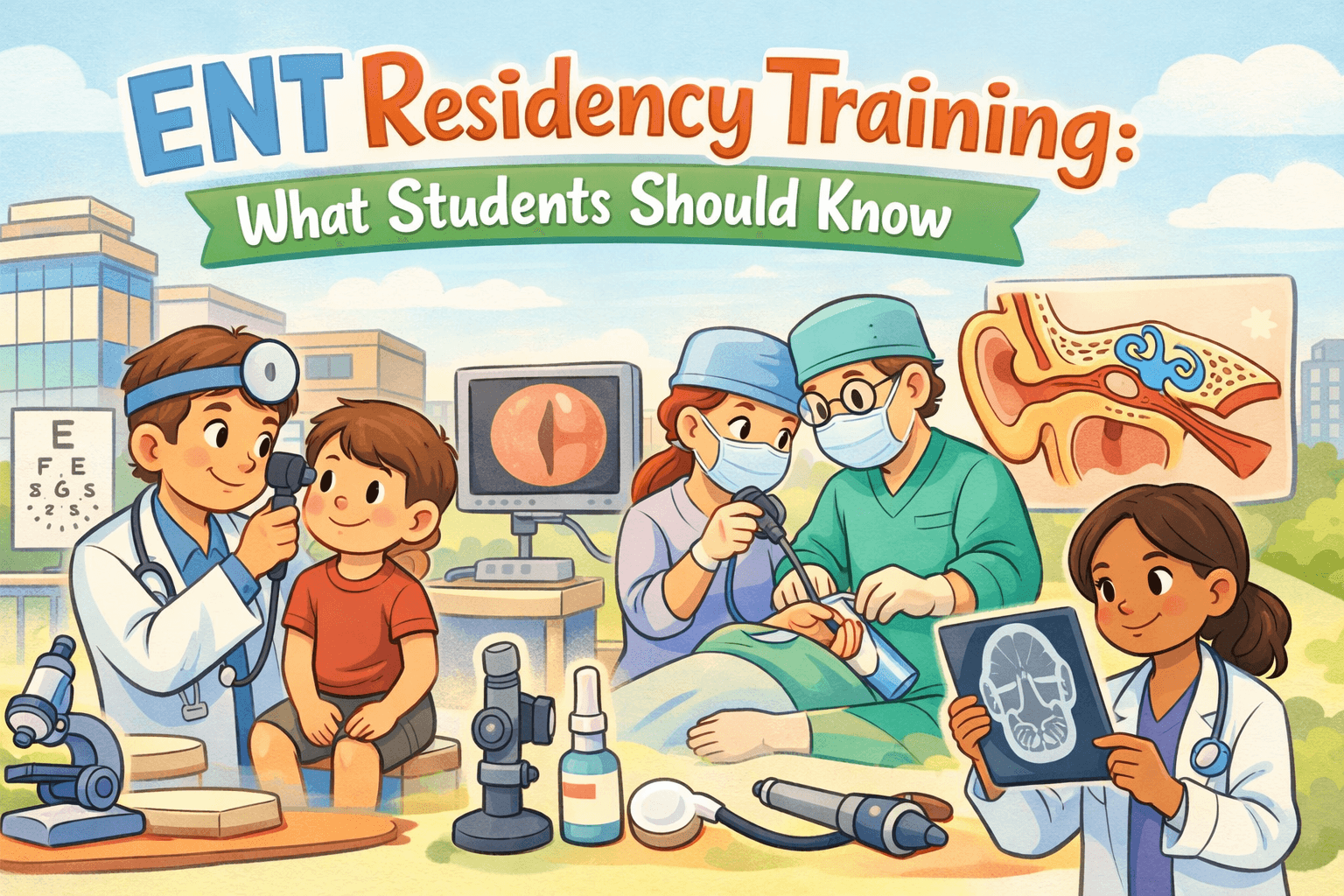
Choosing a medical specialty is a big decision, and for many MBBS students, ENT (Ear, Nose, and Throat), also known as Otolaryngology, stands out as a balanced and rewarding field. It combines medicine, surgery, technology, and patient interaction. If you’re considering an ENT residency, understanding the training journey, expectations, and career scope can help you prepare better.
This guide breaks down what ENT residency is really like and what students should know before stepping into it.
What Is ENT (Otolaryngology)?
ENT, or Otolaryngology, is a medical specialty focused on diagnosing and treating conditions related to the ear, nose, throat, head, and neck. ENT specialists handle a wide range of cases, from sinus infections and hearing loss to voice disorders and head and neck surgeries.
Because it covers both clinical and surgical work, ENT appeals to students who enjoy variety and hands-on procedures.
What Is an ENT Residency Program?
An ENT residency is postgraduate medical training pursued after MBBS. In India, this is usually done through:
- MS ENT
- DNB ENT
Residency typically lasts 3 years, during which doctors receive structured clinical and surgical training.
Key Components of ENT Residency
- OPD consultations and patient diagnosis
- Assisting and performing surgeries
- Emergency case management
- Academic learning and case discussions
- Research and presentations
- Rotations in related departments
Residents gradually move from observation to independent handling of cases under supervision.
Skills Needed to Succeed in ENT Residency
ENT is skill-intensive. Successful residents often develop:
- Strong anatomical knowledge
- Fine motor and surgical skills
- Good communication with patients
- Attention to detail
- Time management
- Emotional resilience
Since ENT deals with delicate organs, precision and patience are extremely important.
Why Many Students Choose ENT
Here are some reasons ENT is a popular choice:
- Balanced lifestyle compared to some other surgical branches
- Mix of clinic and surgery
- High demand for ENT specialists
- Opportunities in private practice and hospitals
- Scope for super-specialization (like cochlear implants, head & neck surgery)
Common Challenges in ENT Residency
Like any medical training, ENT residency is demanding. You may face:
- Long hours in OT and wards
- Steep learning curves in surgery
- Academic pressure
- Managing emergencies
However, most residents say the learning is rewarding and confidence grows quickly with experience.
FAQs
Q1) As a medical student, how can I study ENT perfectly?
Ans. Focus on understanding anatomy, revise standard textbooks, watch surgical videos, and actively participate in clinical postings. Consistent revision works better than last-minute study.
Q2) Is it hard to become an ENT doctor?
Ans. It is competitive but achievable. Clearing PG entrance exams and completing rigorous training are the main steps. With dedication, it is very doable.
Q3) What does a residency program for medical students do?
Ans. Residency provides hands-on clinical and surgical training. It transforms theoretical knowledge into practical expertise under senior supervision.
Q4) Is ENT a good career for the future?
Ans. Yes. ENT specialists are in demand due to increasing lifestyle-related ENT issues, allergies, and hearing problems.
Q5) Can ENT doctors open private clinics?
Ans. Yes. Many ENT specialists run successful private practices along with hospital attachments.
Q6) Does ENT involve a lot of surgery?
Ans. Yes, but it also includes clinical diagnosis and non-surgical treatments. It offers a balanced mix.