
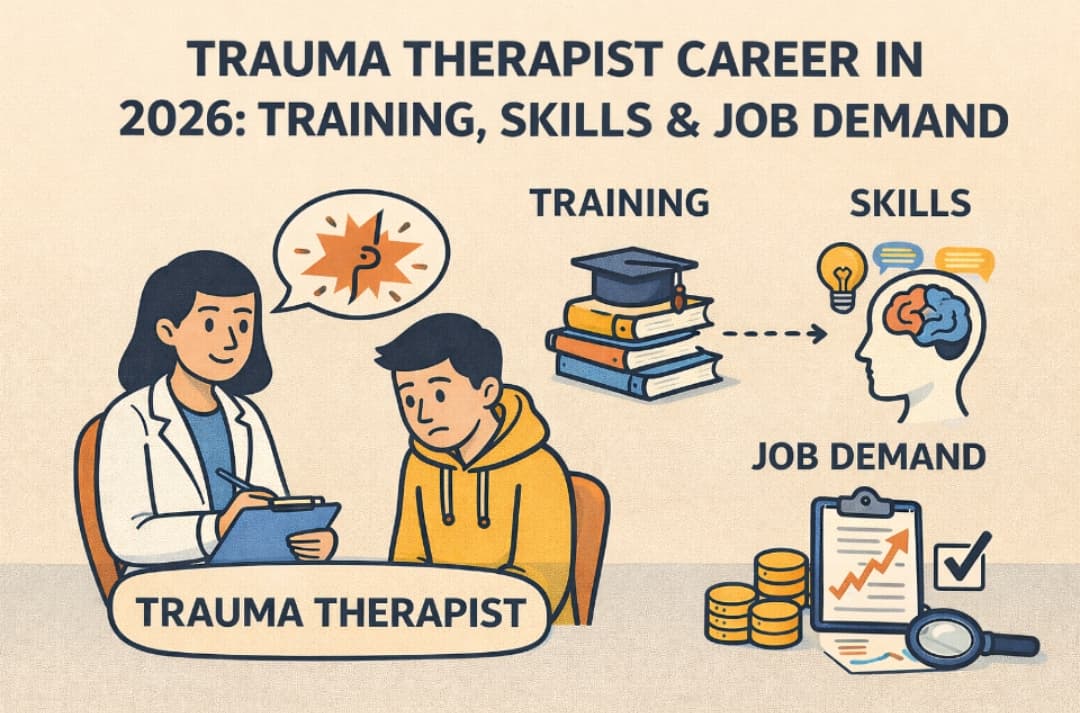
Mental health awareness has grown rapidly over the past decade, and by 2026, careers in psychology are no longer niche or misunderstood. Among them, trauma therapy stands out as one of the most impactful and in-demand professions. As societies acknowledge the long-term effects of trauma caused by accidents, abuse, loss, disasters, and chronic stress, the need for trained trauma therapists continues to rise across healthcare systems, schools, corporates, and private practice.
What Does a Trauma Therapist Do?
A trauma therapist helps individuals process and heal from deeply distressing experiences. Unlike general counseling, trauma therapy focuses on understanding how trauma affects the brain, emotions, and behavior over time. Professionals in this field work with children, adults, families, and sometimes communities, helping them regain emotional stability and resilience.
Trauma therapists may work in hospitals, mental health clinics, rehabilitation centers, NGOs, corporate wellness programs, or establish independent practices.
Why Trauma Therapy Is a High-Demand Career in 2026
The global focus on mental well-being has expanded beyond anxiety and depression to include PTSD, childhood trauma, workplace burnout, and emotional abuse. Employers and governments are investing more in behavioral health services. As a result, trauma therapy roles are growing not only in clinical psychology but also in schools, corporate HR wellness teams, and digital mental health startups.
In India and globally, trauma therapists are increasingly being hired by:
- Hospitals and mental health centers
- NGOs and rehabilitation organizations
- Schools and universities
- Corporate wellness and employee assistance programs
- Online therapy platforms and startups
- Educational Pathway to Become a Trauma Therapist
The journey to becoming a trauma therapist requires both academic training and emotional preparedness.
Typical pathway:
- Bachelor’s degree in Psychology or related field
- Master’s degree in Clinical Psychology, Counseling
- Psychology, or Psychotherapy
- Specialized training or certification in trauma-focused therapies
- Supervised clinical practice and internships
- Licensing or registration as required by governing bodies
Many therapists also pursue continuous learning in evidence-based approaches like trauma-informed care and psychotherapy techniques.
Essential Skills for a Trauma Therapist
Academic qualifications alone are not enough. Trauma therapists need strong personal and professional skills, including:
- Emotional intelligence and empathy
- Active listening and communication
- Psychological assessment skills
- Patience and emotional resilience
- Ethical decision-making
- Ability to work with diverse populations
As demand grows, therapists who combine psychological expertise with digital tools and data awareness will stand out in the job market.
Salary and Career Growth Outlook
In 2026, trauma therapy offers stable and meaningful career growth. Entry-level professionals can expect modest salaries, while experienced therapists, specialists, and private practitioners earn significantly higher packages. International opportunities, online counseling platforms, and corporate wellness roles further expand earning potential.
Freshers often begin through internships, hospital roles, or NGO placements before moving into higher-paying positions or private practice.
FAQs
Q1. How do I become a trauma therapist?
Ans. You need a psychology degree, a master’s in counseling or clinical psychology, specialized trauma training, and supervised practice.
Q2. How good is counseling psychology as a career?
Ans.It offers strong job stability, emotional fulfillment, and increasing demand across healthcare, education, and corporate sectors.
Q3. What is the most in-demand psychology job today?
Ans. Trauma therapists, clinical psychologists, and behavioral health specialists are among the most sought-after roles.
Q4. Do trauma therapists need special certification?
Ans. Yes, additional training in trauma-focused therapy methods is highly recommended and often required.
Q5. Is trauma therapy emotionally draining as a profession?
Ans. It can be challenging, but with proper training, supervision, and self-care, therapists manage it effectively.
Q6. Can freshers enter trauma therapy roles?
Ans. Freshers usually start through internships, assistant therapist roles, or supervised clinical placements.