
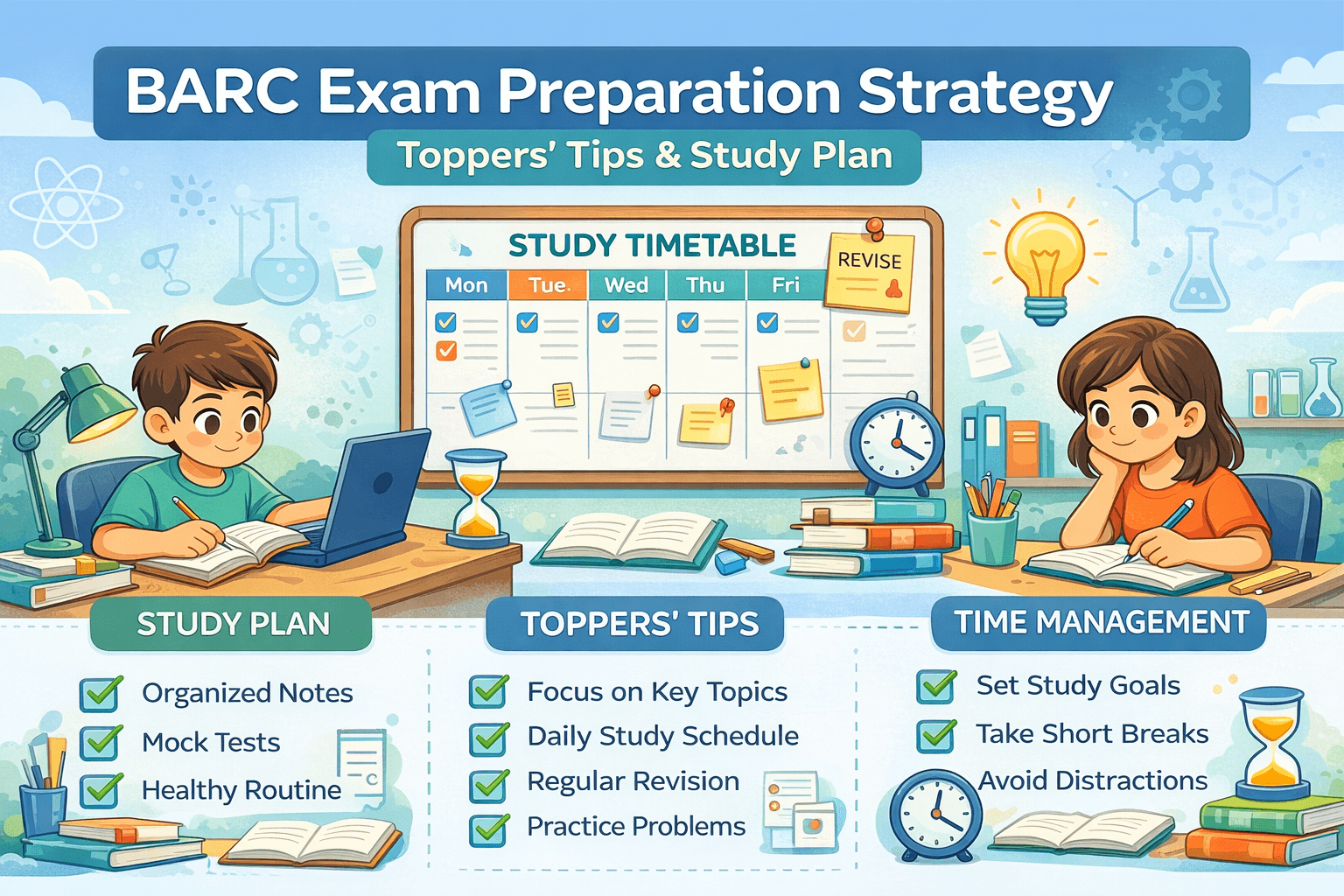
Cracking the BARC exam is a dream for many engineering and science students in India. The Bhabha Atomic Research Centre offers some of the most respected roles in nuclear science, research, and government engineering services. Along with prestige, it offers strong job security, good salary packages, and opportunities to work on high impact national projects.
But BARC is also highly competitive. Every year, thousands of candidates apply through BARC OCES or DGFS channels, and only the most prepared make it through. The good news is that with the right strategy, consistent effort, and smart planning, it is absolutely achievable.
Here is a practical and realistic guide to help you prepare.
Understand the BARC Exam First
Before jumping into preparation, understand what you are preparing for.
BARC recruits mainly through:
- BARC OCES DGFS programs
- GATE score based shortlisting
- BARC written test and interview
The exam usually focuses on core engineering or science subjects from your discipline. The questions test conceptual clarity, problem solving ability, and fundamentals.
If your basics are strong, half the battle is already won.
Toppers’ Tips to Crack BARC
1) Strengthen Fundamentals
BARC questions often come from core concepts rather than tricky shortcuts. Revise:
- Core subjects from your branch
- Standard textbooks
- Important formulas and derivations
Focus on understanding, not memorizing.
2) Make a Realistic Study Plan
Instead of long random study hours, plan smartly. Example daily plan:
- 2 to 3 hours concept revision
- 1 to 2 hours problem solving
- 30 to 45 minutes mock tests or PYQs
- Quick revision before sleep
Consistency matters more than intensity.
3) Practice Previous Year Questions
Previous year papers show:
- Question patterns
- Important topics
- Difficulty level
Solve them in timed conditions. This improves speed and confidence.
4) Focus on Problem Solving
BARC is not just theory. Numerical and application based questions are common. Practice:
- Numerical problems
- Concept based MCQs
- Mixed topic tests
The more you solve, the better your accuracy.
5) Prepare for the Interview
Many candidates clear the written stage but struggle in interviews. BARC interviews test:
- Concept clarity
- Academic understanding
- Logical thinking
- Basic project knowledge
Be ready to explain your final year project and core subjects clearly.
Sample 3 Month Study Plan
Month 1
- Revise core subjects
- Prepare notes
- Solve topic wise questions
Month 2
- Start mock tests
- Identify weak areas
- Revise formulas and concepts
Month 3
- Full length tests
- Interview preparation
- Quick revision cycles
FAQs
Q1) How to prepare for BARC exam?
Ans. Focus on core subjects, revise fundamentals, solve previous year papers, and take mock tests regularly. Concept clarity is key.
Q2) How to prepare for a BARC OCES interview for physics?
Ans. Revise basic physics concepts, especially from graduation. Be clear with fundamentals, problem solving logic, and your academic projects.
Q3) Is GATE preparation enough for BARC?
Ans. GATE preparation helps a lot because the syllabus overlaps, but BARC may test deeper conceptual understanding. Extra practice is useful.
Q4) How many hours should I study daily?
Ans. Quality matters more than quantity. 4 to 6 focused hours daily with consistency is effective for many aspirants.
Q5) Is coaching necessary for BARC?
Ans. Not always. Many candidates crack it through self study using standard books, PYQs, and mock tests.
Q6) What is the difficulty level of BARC exam?
Ans. It is considered moderate to tough. Questions are concept based and require strong fundamentals.