
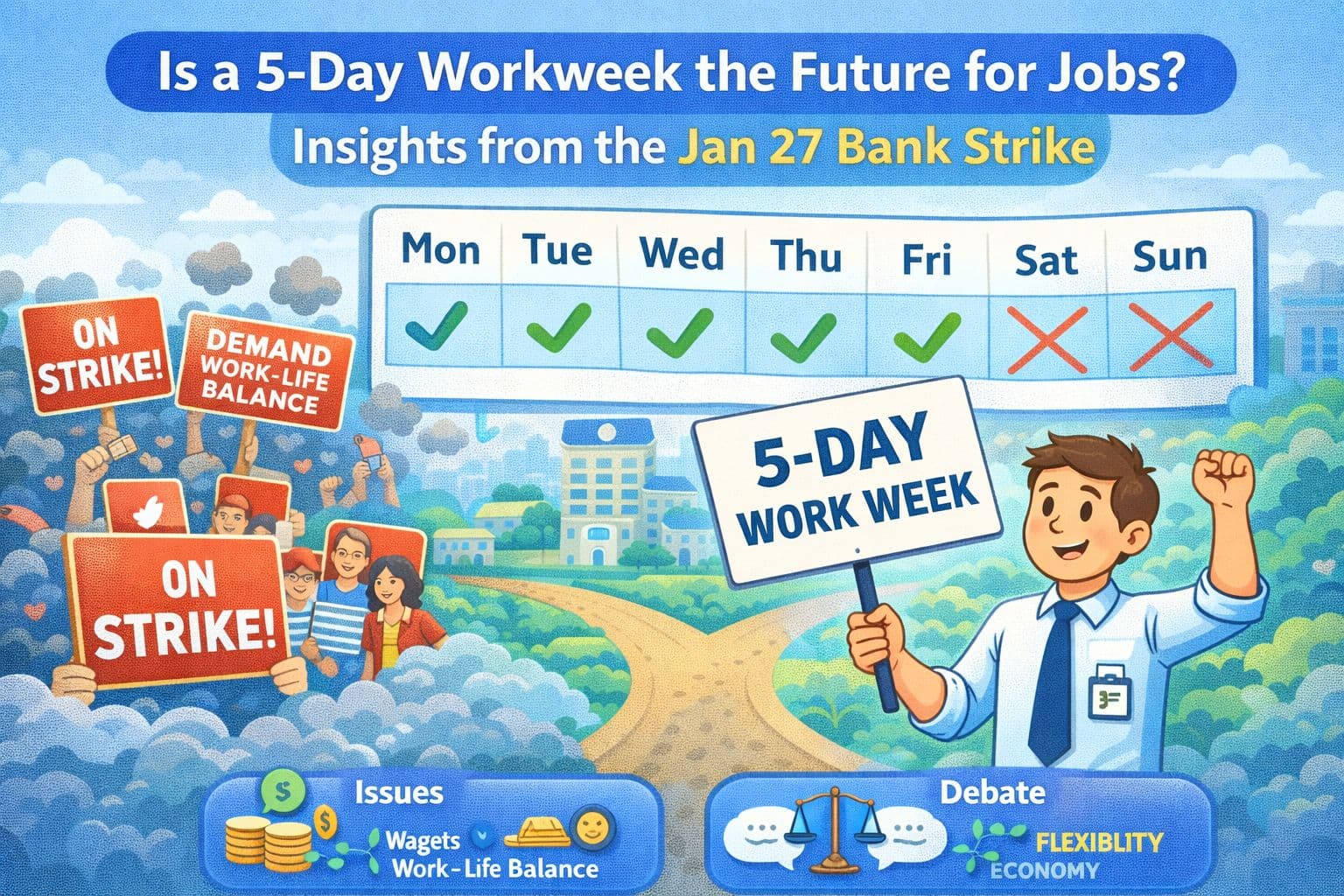
The demand for a 5-day workweek has been gaining momentum across industries in India, but the conversation truly intensified after the Jan 27 bank strike, where bank employees nationwide raised their voices for better work-life balance. This protest wasn’t just about fewer working days; it reflected deeper concerns around employee well-being, productivity, and the future of work culture in India.
So, is a five-day workweek really the future of jobs? Let’s break it down.
What Sparked the Jan 27 Bank Strike?
The Jan 27 bank strike was led by banking unions demanding reforms in employee work hours, staffing levels, and the long-pending implementation of a five day workweek. Bank employees often work extended hours, even beyond official schedules, leading to burnout and reduced job satisfaction.
This strike highlighted how traditional work structures may no longer align with modern career expectations especially in high-pressure sectors like banking.
Why the 5-Day Workweek Matters Today
1. Work-Life Balance Is No Longer Optional
Employees today prioritize work-life balance jobs more than ever. A five-day workweek allows time for personal growth, family, and mental health factors directly linked to long-term career sustainability.
2. Productivity Over Presence
Research and workplace trends show that productivity doesn’t depend on longer hours, but on focused, meaningful work. Shorter workweeks often lead to higher efficiency and fewer sick days.
3. Changing Career Expectations
The modern workforce, especially Gen Z and millennials values flexibility. Rigid six-day schedules feel outdated in an era where future of work discussions revolve around hybrid roles, output-based performance, and employee autonomy.
Impact on the Banking Sector and Government Jobs
The banking sector is often seen as a symbol of stable government jobs work culture. If banks move toward a five-day workweek, it could influence other public-sector roles and redefine expectations around corporate work culture in India.
Such a shift would also improve:
- Job satisfaction
- Employee retention
- Interest in banking sector jobs among younger professionals
What This Means for Education and Future Jobs
As work culture evolves, education and future jobs must align with new realities. Students and professionals need more than degrees they need clarity about careers that match their personality, strengths, and lifestyle preferences.
Understanding whether you thrive in structured environments like banking or flexible roles in emerging industries can shape smarter career decisions early on.
Is India Ready for a 5-Day Workweek?
While private companies are already experimenting with flexible schedules, large-scale adoption especially in government and banking will take time. However, strikes like the Bank strike Jan 27 act as catalysts, forcing policymakers and organizations to rethink outdated systems.
The question is no longer if change will happen, but how soon.
FAQs
1. What is a 5-day workweek?
Ans. A work system where employees work five days and get two fixed weekly offs.
2. Why did the Jan 27 bank strike happen?
Ans. Bank employees protested for better work hours, staffing, and a five-day workweek.
3. Does a 5-day workweek improve productivity?
Ans. Yes, it often leads to better focus, less burnout, and higher efficiency.
4. Will banks in India adopt a 5-day workweek?
Ans. Discussions are ongoing, but no official nationwide implementation yet.
5. Is a 5-day workweek the future of jobs in India?
Ans. Yes, many experts believe it aligns better with modern work culture and employee well-being.