
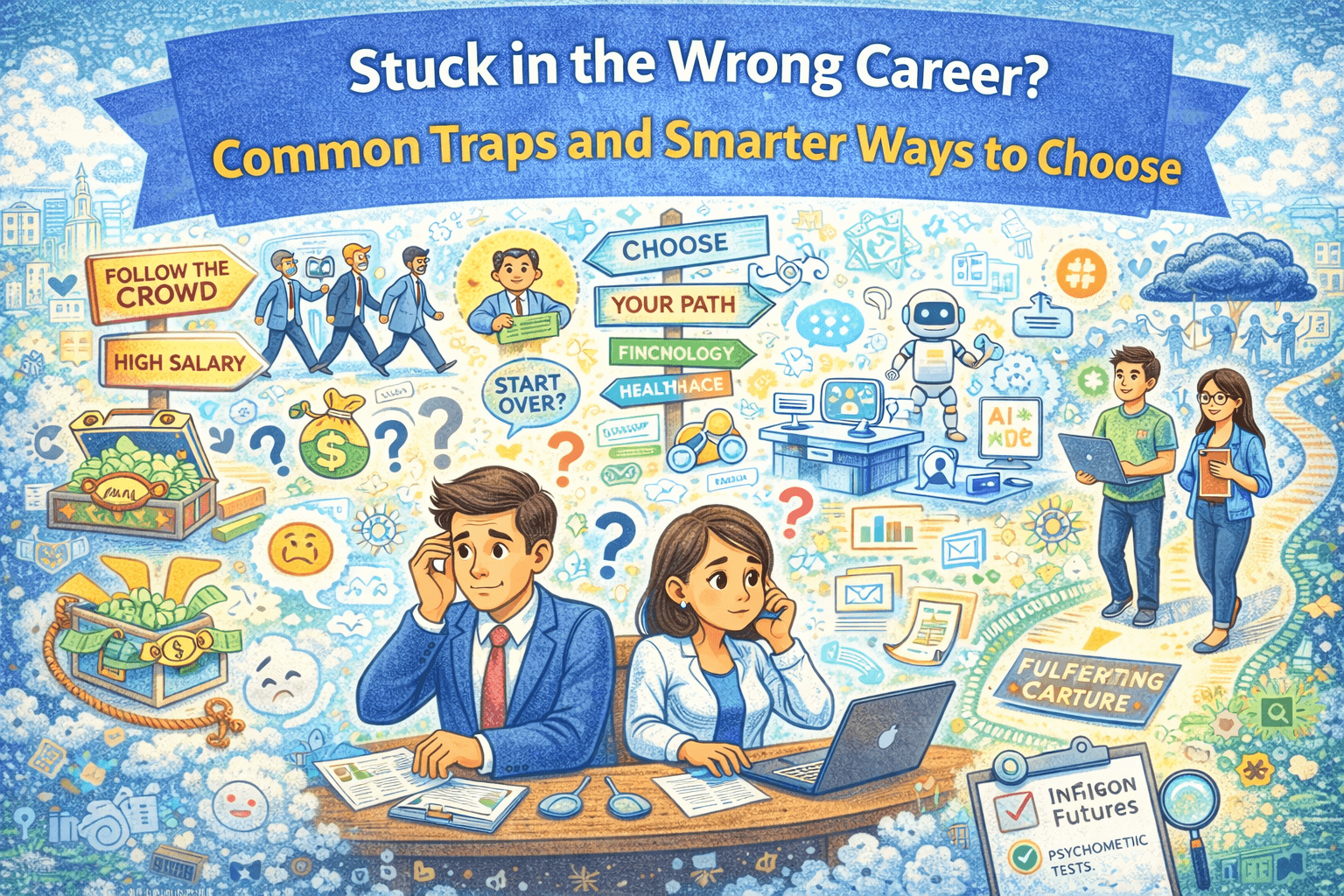
Feeling stuck in a career that no longer excites you is more common than most people admit. Many professionals reach a point where the job pays the bills but drains motivation, confidence, and purpose. Career confusion does not mean failure. It often signals growth, changing priorities, or a mismatch between skills and roles. Understanding why people get stuck and how to make smarter career decisions is the first step toward meaningful professional growth.
Why So Many People Feel Stuck in the Wrong Career
Career decisions are often made early, under pressure, and with limited information. Family expectations, social comparisons, salary fears, and market trends push people into roles that may not align with their interests or strengths. Over time, this mismatch shows up as burnout, low job satisfaction, and a constant feeling of being behind.
In today’s fast-changing economy, industries evolve quickly. Roles that once felt secure may now feel outdated, while new opportunities in technology, analytics, finance, and AI emerge. Without guidance, many people stay stuck simply because change feels risky.
Common Career Traps That Keep People Stuck
1. Choosing Salary Over Satisfaction
A high-paying job may look successful on paper, but without interest or growth, it can become exhausting. Long-term success depends on sustainability, not just income.
2. Following the Crowd
Popular fields like engineering, banking, or management attract many people simply because others choose them. Herd mentality often leads to career confusion later.
3. Fear of Starting Over
Many professionals stay in the wrong career because they believe it’s “too late” to switch. In reality, skills are transferable, and career transitions are more common than ever.
4. Ignoring Skills and Aptitude
Passion matters, but so does aptitude. Ignoring natural strengths can make even a “dream job” feel frustrating.
5. Not Understanding Industry Changes
Fields like finance, accounting, and business are rapidly integrating AI, data analytics, automation, and machine learning. Choosing a career without understanding future demand can lead to stagnation.
Smarter Ways to Choose the Right Career
Start With Self-Understanding
Before changing roles, understand your skills, interests, work style, and long-term goals. Career decision-making should begin with clarity about who you are, not just what the market offers.
Focus on Skill-Based Careers
Modern careers reward skills more than degrees. Fields such as data analytics, financial analysis, AI in finance, risk management, and forecasting value practical expertise and continuous learning.
Explore Growth-Oriented Fields
Careers combining technology and business are growing fast. Roles like financial analyst, data analyst, investment analyst, and professionals working with AI in finance offer strong future prospects.
Understand the Role of AI and Automation
Automation is reshaping jobs across industries. Rather than fearing it, choose careers where AI enhances human decision-making, such as analytics, strategy, and advisory roles.
Test Before You Commit
Short courses, internships, certifications, or project-based learning help validate interest before making a full transition.
The Changing Face of Finance and Business Careers
Finance and accounting are no longer limited to spreadsheets and compliance. Machine learning in finance, algorithmic trading, AI-driven risk management, and data analytics for finance are redefining roles. Professionals who combine domain knowledge with technology skills are better positioned for long-term success.
Similarly, careers in business and investment increasingly rely on forecasting, automation, and analytical thinking. Understanding these shifts helps professionals choose paths with resilience and relevance.
FAQs
Q1. How do I know if I’m in the wrong career?
Ans. If you feel constant dissatisfaction, lack motivation despite effort, or see no long-term growth, it may be time to reassess your career choice.
2. Is changing careers risky?
Ans. Every change involves risk, but informed decisions reduce uncertainty. Skill-based transitions and gradual shifts lower the risk significantly.
3. Can I switch careers after years of experience?
Ans. Yes. Transferable skills like analysis, communication, and problem-solving make mid-career transitions possible and increasingly common.
4. How important are skills compared to degrees today?
Ans. Skills often matter more than degrees, especially in technology, analytics, finance, and AI-driven roles.
5. Are AI and automation reducing job opportunities?
Ans. They are transforming jobs, not eliminating all of them. Roles that combine human judgment with technology are growing.
6. What careers have strong future potential?
Ans. Data analytics, financial analysis, AI-integrated finance roles, technology-driven business roles, and advisory positions show strong growth.