
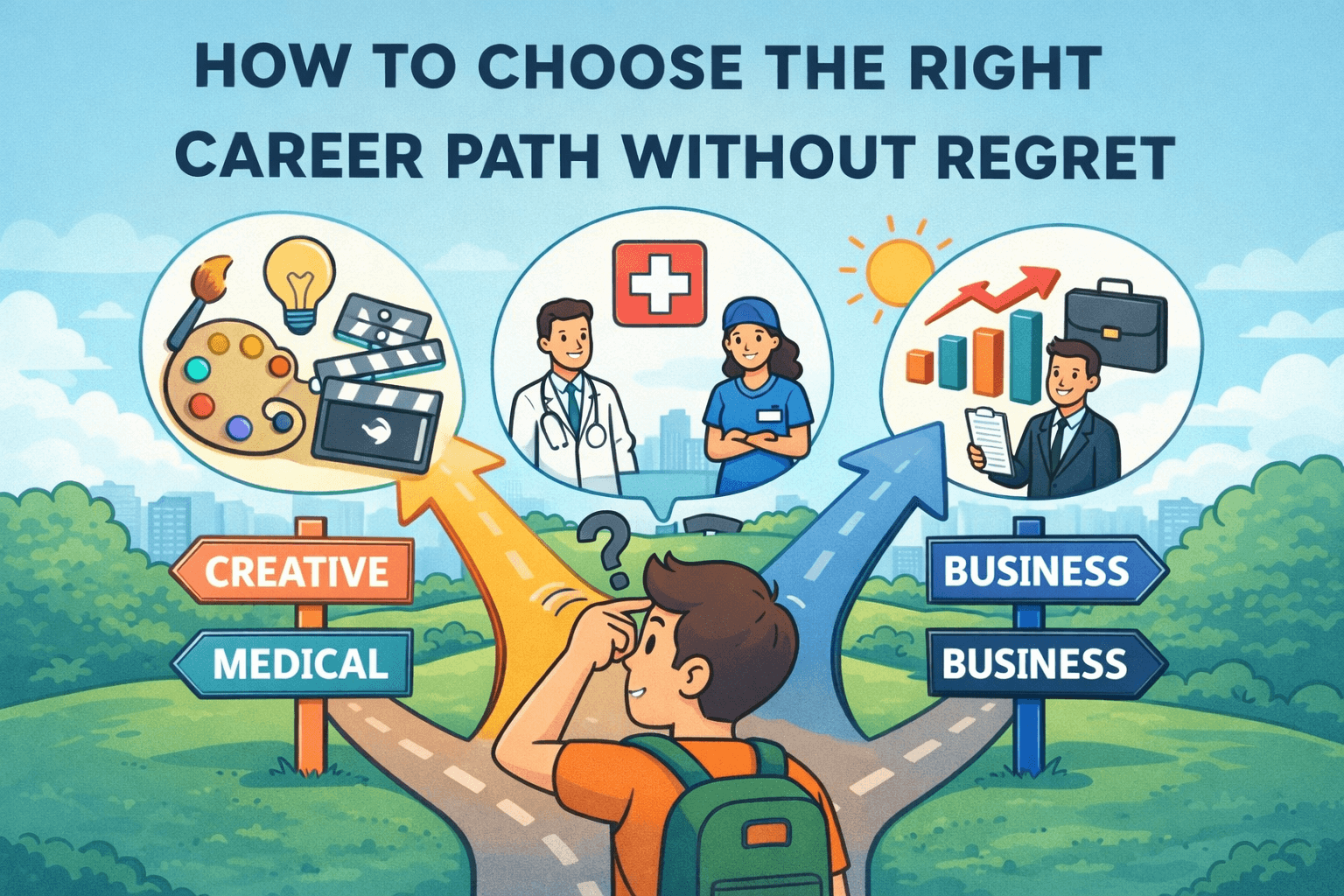
Choosing a career is one of the most important life decisions we make and also one of the most confusing. With endless options, societal pressure, and fear of making the “wrong” choice, it’s natural to feel stuck. But the truth is, a fulfilling career isn’t about finding a perfect path; it’s about choosing a direction that aligns with your skills, mindset and long-term growth.
This blog answers the most common career-related questions students and professionals ask, and helps you think clearly about your future.
Difference Between a Job and a Career
Before choosing a path, it’s important to understand the difference between a job and a career.
A job is primarily about income. It helps you pay bills and meet short-term needs. A career, on the other hand, is a long-term journey. It’s about purpose, professional growth, learning, and evolving over time.
Many people start with jobs, but fulfillment usually comes when those jobs connect to a meaningful career direction.
How to Choose a Career Path and Not Regret It Later?
Regret usually comes from choosing a career based on external pressure : salary, trends, or expectations..rather than self-awareness.
To avoid regret:
- Understand your strengths, skills, and interests
- Think long-term, not just about the first salary
- Choose a field that allows learning and growth
- Accept that careers are not fixed; they evolve
Instead of asking “What is the best career?”, ask What career fits who I am becoming?"
How to Know That You Are on the Right Professional Path?
You won’t always feel motivated or confident but some signs indicate you’re on the right path:
- You’re learning new skills regularly
- Your work feels meaningful, even when challenging
You can see professional growth over time
- You feel aligned with your values and goals
Clarity doesn’t come instantly; it builds through experience, reflection, and lifelong learning.
How to Choose the Right Career Path When You Feel Confused?
Career confusion is extremely common, especially among students and early professionals. Feeling confused doesn’t mean you’re lost, it means you’re questioning thoughtfully.
When confused:
- Explore different fields through internships or projects
- Focus on skill-based exploration, not titles
- Talk to mentors and professionals
- Reflect on what excites you vs. what drains you
Confusion is often the starting point of clarity.
Which Career Field Offers the Best Work-Life Balance?
There’s no single “best” field for work-life balance, it depends on the organization, role, and personal boundaries.
Fields often known for better balance include:
- Education and training
- Design and creative roles
- Certain tech and remote jobs
- Research and consulting roles
However, mindset matters more than the field. Setting boundaries, choosing the right workplace, and aligning work with your life priorities are key.
What Is More Important When Choosing a Career?
While income is important, growth, purpose, and mindset matter more in the long run.
The most sustainable careers balance:
- Skills you’re good at
- Work you enjoy
- Opportunities for professional growth
- A sense of purpose and contribution
Success isn’t just financial, it’s personal development, fulfillment, and adaptability.
The Role of Skills, Passion, and Mindset
Passion alone isn’t enough. Skills make you employable, and mindset helps you adapt. The most successful professionals focus on:
- Building future-ready skills
- Adopting a growth mindset
- Committing to lifelong learning
- Staying flexible as industries evolve
Your career is not a straight line, it’s a journey of continuous improvement.
FAQs
1. How can I choose a career path without regretting it later?
Ans. Focus on your skills, interests, and long-term growth instead of trends or pressure. Careers evolve, so choose a path that allows learning and flexibility.
2. How do I know if I’m on the right career path?
Ans. If you’re gaining new skills, feeling challenged, and growing professionally , even with occasional doubts you’re likely on the right path.
3. What should I do if I feel confused about my career?
Ans. Career confusion is normal. Explore options, gain practical exposure, and reflect on what excites you. Clarity comes through action, not overthinking.
4. Which career field offers the best work-life balance?
AnsWork-life balance depends more on the role and workplace than the field itself. Setting boundaries and choosing the right organization matter most.
5. What is most important when choosing a career?
Ans. A balance of skills, growth opportunities, purpose, and mindset is more important than salary alone for long-term success.