
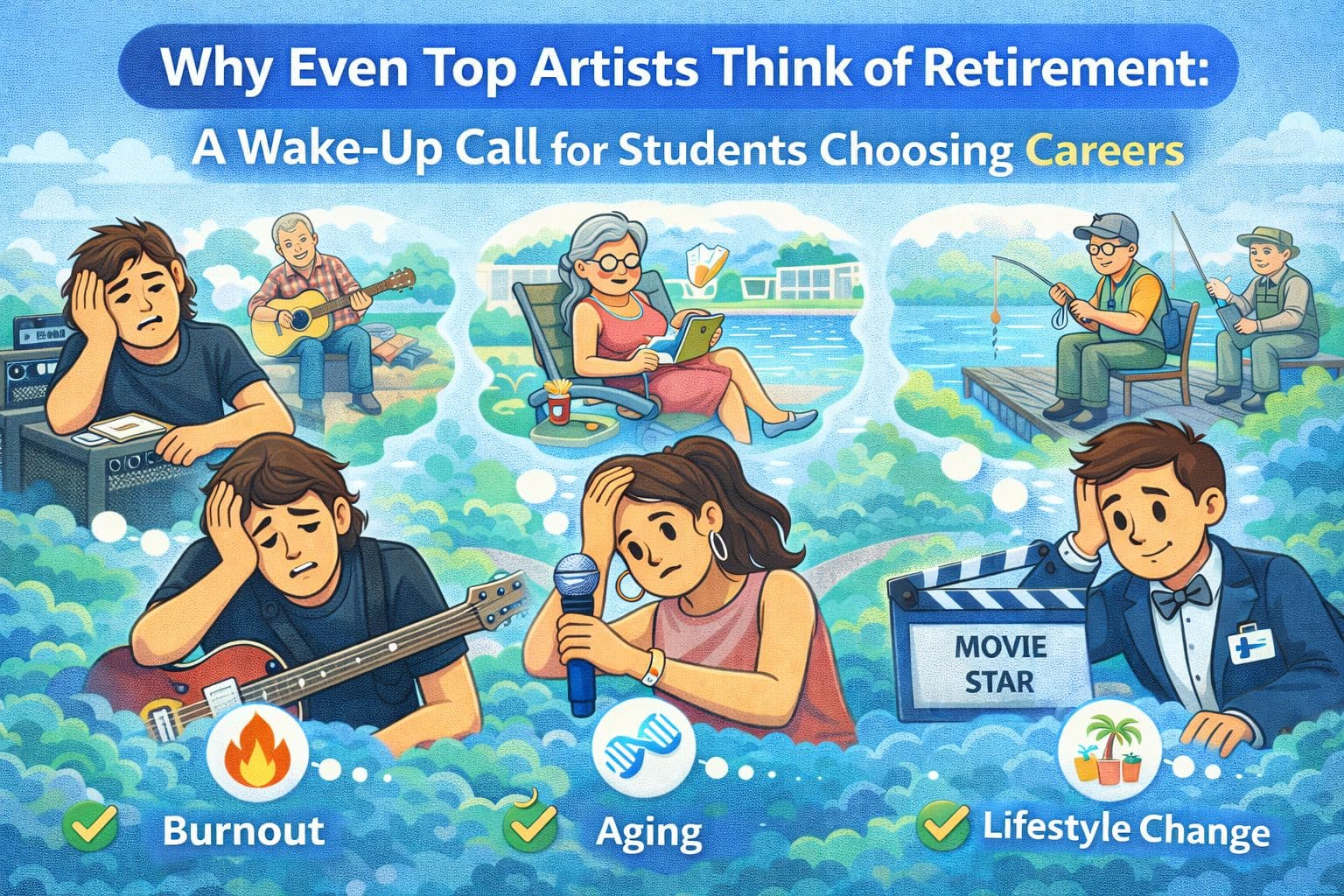
When students think of “successful careers,” they often picture fame, freedom, and financial security especially in creative fields like music, acting, sports, or digital art. From the outside, top artists seem to have it all: recognition, money, influence, and passion-driven work.
So when renowned artists openly talk about burnout, early retirement, or stepping away, it surprises people. But for students choosing careers, these moments are not just celebrity news they are important lessons.
Because if even the most successful artists rethink their paths, what does that mean for young people planning their future?
The Hidden Reality Behind Artistic Success
Success in creative careers often looks glamorous, but it comes with pressures that are rarely discussed.
Top artists face:
- Irregular income streams
- Intense public scrutiny
- Constant competition and relevance pressure
- Physical and mental burnout
- Short career peaks
Unlike traditional jobs, many artistic careers don’t come with job security, retirement plans, or long-term stability. Fame doesn’t guarantee sustainability.
For students, this highlights a crucial truth: Loving what you do is important but it’s not the only factor that matters.
Passion vs Profession: Where Many Students Get Stuck
Students are frequently told, “Follow your passion and success will follow.” While well-intentioned, this advice is incomplete.
Passion without planning can lead to:
- Financial stress
- Limited career growth
- Anxiety about the future
- Forced career switches later in life
Even top artists who followed their passion early on eventually ask:
- How long can I sustain this?
- What happens if my relevance fades?
- Do I have a backup plan?
These are the same questions students should ask before committing to a career path.
Why Education Still Matters Even in Creative Fields
Education is often misunderstood as a backup for “safe” careers only. In reality, it plays a critical role even for artists and creators.
Education provides:
- Transferable skills
- Career flexibility
- Financial literacy
- Long-term adaptability
- Confidence to pivot when needed
Many successful artists later return to education formally or informally to transition into teaching, entrepreneurship, production, or leadership roles.
For students, this reinforces the importance of education as a foundation, not a limitation.
Career Longevity Matters More Than Early Success
A career isn’t just about how fast you rise it’s about how long you can sustain it.
Students should think beyond:
- First job packages
- Early fame or recognition
- Social media validation
And focus more on:
- Sustainable careers
- Growth opportunities
- Mental well-being
- Long-term income stability
Early success without long-term planning often leads to burnout something even top artists experience.
Lessons Students Can Learn from Artists Considering Retirement
When artists talk about stepping back, they’re unintentionally offering career advice:
- No career is permanent without planning
- Skill diversification is essential
- Mental health matters as much as talent
- Income stability beats short-term fame
- Career decisions should evolve with you
These lessons apply to every field not just the arts.
Making Smarter Career Choices as a Student
Instead of choosing careers based on trends or pressure, students should aim for clarity.
Ask yourself:
- What are my natural strengths?
- Do my interests align with long-term opportunities?
- Can this career evolve with time?
- What skills will remain valuable in the future?
Career planning isn’t about restricting dreams it’s about protecting them.
FAQs
1. Why do successful artists think about retirement early?
Ans. Many artists face burnout, unstable income, and intense pressure to stay relevant. Without long-term job security or structured growth, even successful careers can feel uncertain over time.
2. What can students learn from artists stepping away from their careers?
Ans. Students can learn the importance of planning ahead, building multiple skills, and choosing careers that offer long-term stability alongside passion.
3. Is following your passion a bad career choice?
Ans. Following your passion isn’t wrong, but doing it without planning can be risky. A balanced approach combining passion with practical career planning leads to more sustainable success.
4. Why is education important for creative and non-traditional careers?
Ans. Education provides transferable skills, flexibility, and backup options. It helps individuals adapt, switch roles, or grow into leadership and entrepreneurial positions when career paths change.
5. How can students make better career decisions early on?
Ans. By understanding their strengths, interests, and personality traits, students can choose careers more wisely. Career guidance tools and psychometric assessments help align personal abilities with future opportunities.