
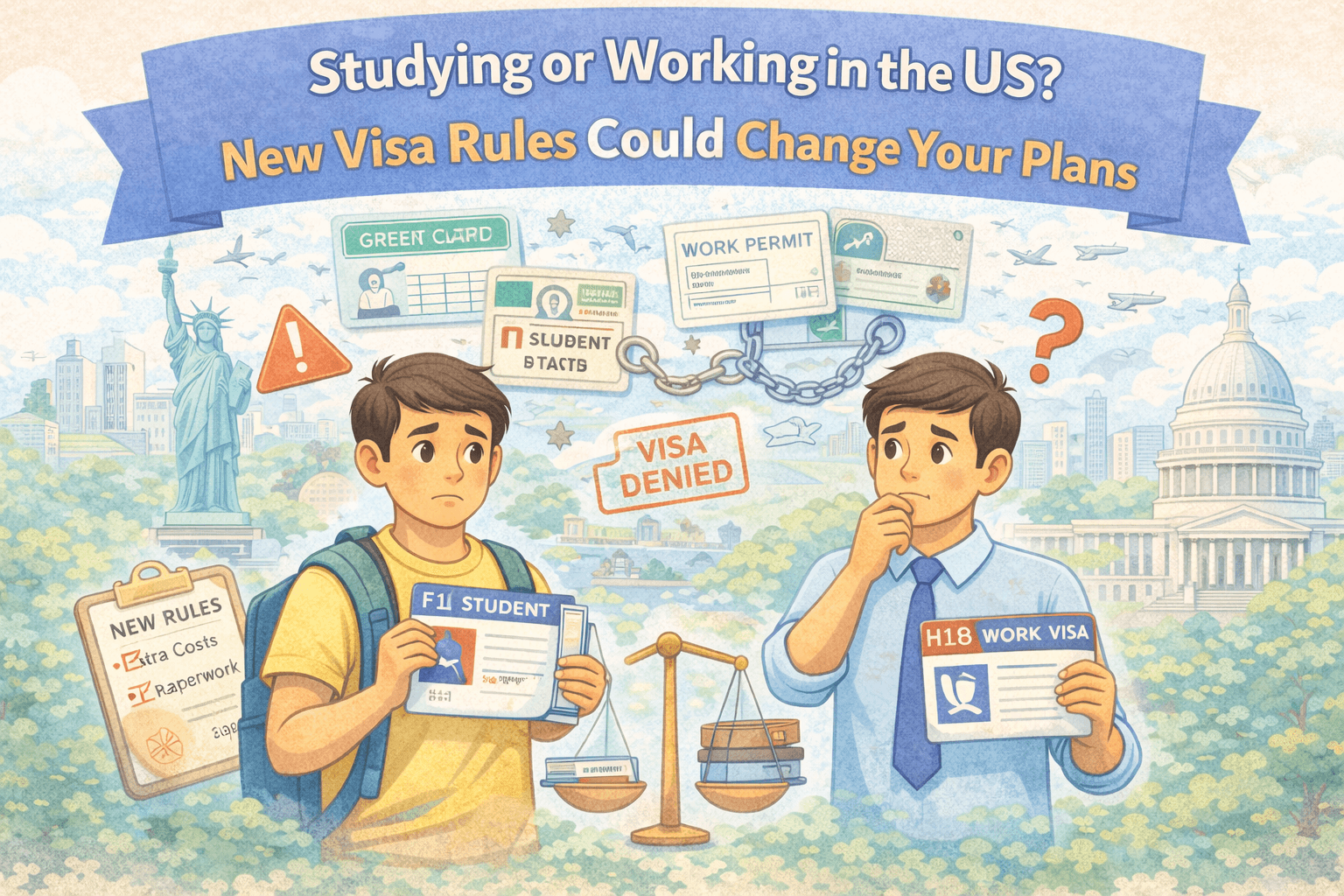
For decades, the United States has been a top destination for Indian students and professionals seeking global exposure, high-quality education, and better career opportunities. However, recent changes in US visa rules and immigration policies are reshaping how students and workers plan their future in the country. From stricter compliance requirements to higher costs and increased scrutiny, these updates could significantly impact those planning to study or work in the US.
Understanding these changes early can help students and professionals make informed, realistic decisions.
What Has Changed in US Visa Rules?
The US government has introduced tighter checks across student and work visas to ensure better compliance with immigration laws. Authorities are focusing on:
- Proper documentation and financial proof
- Clear intent behind studying or working in the US
- Genuine employment and academic pathways
- Reducing misuse of temporary visas
These changes affect F1 visa holders, students on OPT and CPT, and professionals applying for H1B visas or planning long-term immigration through a green card.
Impact on Students Planning to Study in the US
Stricter F1 Visa Scrutiny
Students applying for a US student visa (F1 visa) now face more detailed interviews and background checks. Visa officers are carefully evaluating:
- Course relevance
- University credibility
- Financial stability
- Post-study plans
Higher Compliance During Studies
International students in the USA must strictly follow rules related to:
- Course load
- Attendance
- Work limits
- University transfers
Even small violations can risk visa cancellation or future visa rejections.
OPT and CPT: Opportunities With Conditions
Optional Practical Training (OPT) and Curricular Practical Training (CPT) remain valuable for gaining US work experience, but enforcement has become stricter.
- Employment must be directly related to the field of study
- Employers must be compliant with US labor laws
- Documentation must be maintained accurately
Students using OPT or CPT improperly may face denial of future US work visas or immigration benefits.
Working in the US: Challenges for Foreign Professionals
H1B Visa Competition
The H1B visa continues to be highly competitive, with demand far exceeding available slots. Employers are now under greater pressure to:
- Justify hiring foreign talent
- Offer market-aligned salaries
- Maintain compliance records ### Green Card Delays Employment-based green card pathways remain slow, especially for Indian applicants. Longer waiting periods mean professionals must plan their careers with temporary visas in mind. ## Jobs in the US for Foreigners: What to Expect While the US still offers excellent opportunities, foreign nationals should be realistic about:
- Limited sponsorship roles
- Industry-specific demand (tech, healthcare, research)
- Increased legal and paperwork costs
Careful planning is essential to avoid visa gaps or forced exits.
Why Early Career Planning Matters More Than Ever
With changing US immigration policies, choosing the right course, country, and career path has become crucial. A wrong decision can result in:
- Financial loss
- Visa rejection
- Interrupted education or employment
Students and professionals must align their academic choices, skills, and long-term goals before committing to the US route.
FAQs
Q1. Are US student visas becoming harder to get?
Ans:Yes, visa scrutiny has increased, but genuine students with strong academic and financial profiles still have good chances.
Q2. Is OPT still safe for international students in the USA?
Ans:OPT is still valid, but misuse or non-compliance can lead to serious immigration consequences.
Q3. Can CPT affect future H1B or green card chances?
AnsImproper or excessive CPT use may raise red flags during future visa or green card applications.
Q4. Are deportation risks higher now?
Ans:Yes, violations such as unauthorized work or overstaying visas can lead to faster deportation actions.
Q5. Is studying in the US still worth it in 2026?
Ans:It can be, provided students choose the right course, university, and understand visa responsibilities clearly.
Q6. What alternatives should students consider along with the US?
Ans:Countries like Canada, Australia, Germany, and the UK are gaining popularity due to more predictable immigration pathways.
Q7. How can students reduce visa-related risks?
Ans:By choosing relevant courses, maintaining compliance, and seeking professional career and education guidance early.