
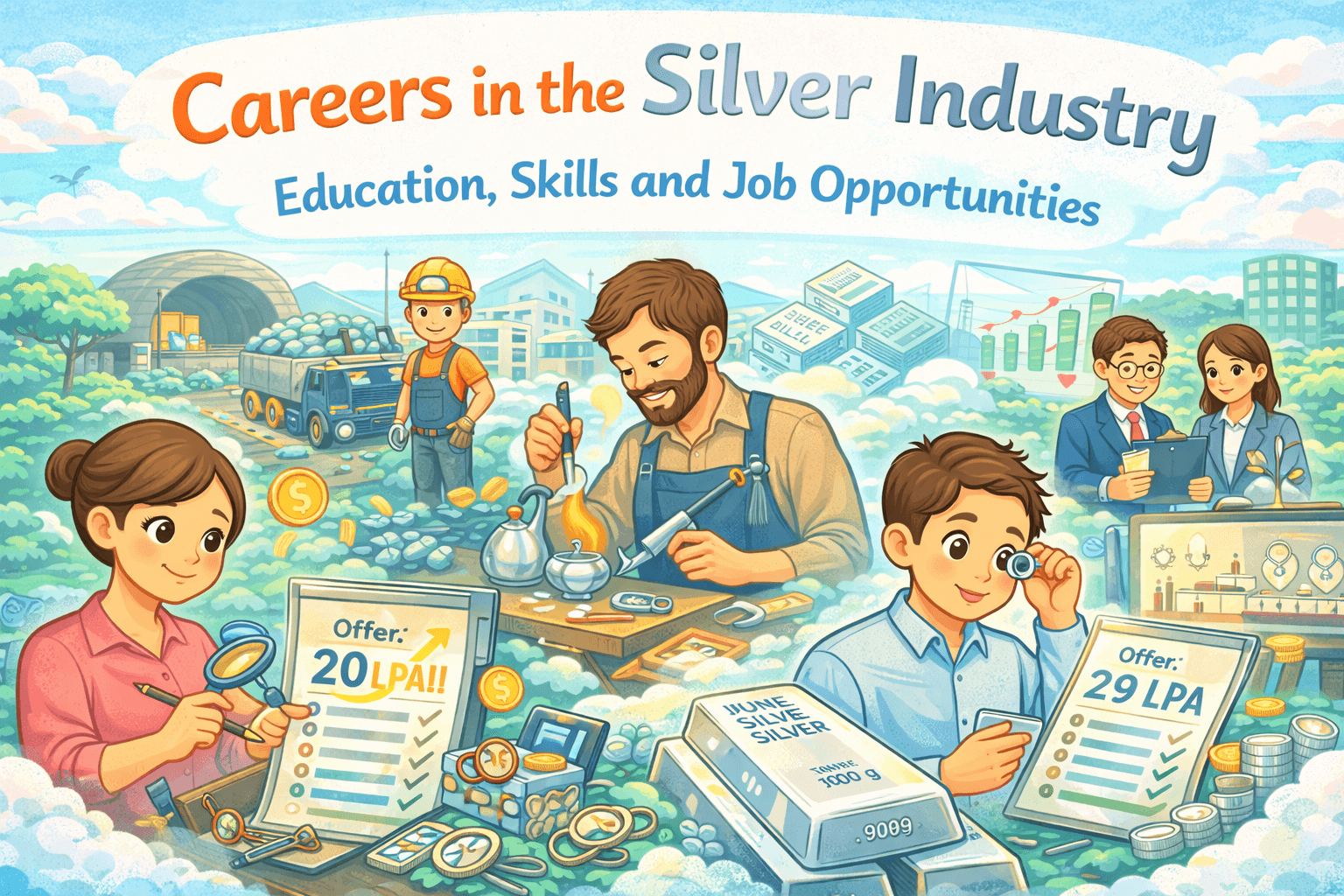
The silver industry is often discussed in terms of price trends and investment value, but behind the metal lies a wide range of stable and evolving career opportunities. From mining and metallurgy to industrial manufacturing and finance, silver continues to play a critical role in modern economies. As global demand rises for electronics, renewable energy, and precious metals, careers in the silver industry are becoming increasingly relevant for students and professionals alike.
Why the Silver Industry Matters Today
Silver is no longer limited to jewellery or coins. It is a key component in solar panels, electric vehicles, medical equipment, electronics, batteries, and industrial machinery. Because of its conductivity and durability, silver remains indispensable in both traditional and emerging industries. This expanding usage directly translates into long-term job opportunities across technical, industrial, and commercial domains.
Education Pathways for Careers in the Silver Industry
Your educational route depends on which part of the silver industry you want to enter:
Mining & Extraction:
- Degrees or diplomas in Mining Engineering, Geology, or Earth Sciences are common starting points. ### Metallurgy & Refining:
- Metallurgical Engineering, Materials Science, or Chemical Engineering programs are ideal for refining and processing roles. ### Manufacturing & Industrial Use:
- Mechanical Engineering, Industrial Engineering, or vocational technical courses support careers in silver-based manufacturing. ### Trade, Pricing & Finance:
- Commerce, Economics, Finance, or Business Management degrees help those interested in silver trading, pricing, and commodity markets. Short-term certifications in metallurgy, quality testing, or industrial safety can further strengthen employability. ## Essential Skills Needed in the Silver Industry While education opens doors, skills determine growth. Key skills include:
- Technical knowledge of metals and materials
- Process and quality control understanding
- Safety and compliance awareness
- Data analysis and forecasting (for pricing and markets)
- Problem-solving and operational efficiency
Communication and teamwork in industrial environments As automation increases, digital literacy and adaptability are also becoming essential.
Job Opportunities in the Silver Industry
The silver sector offers diverse job roles, including:
- Mining Engineer
- Metallurgist
- Quality Control Analyst
- Industrial Production Supervisor
- Manufacturing Technician
- Pricing Analyst
- Supply Chain & Operations Manager
- Research & Development Specialist
Jobs exist across mining companies, manufacturing units, jewellery firms, renewable energy companies, and global commodity markets.
How Silver Prices Influence Careers
Silver price fluctuations affect production, hiring cycles, and investment decisions. When prices rise, exploration, mining, and refining activities increase—leading to higher demand for skilled professionals. Understanding market trends can help individuals align their careers with growth phases in the industry.
FAQs
1. What education is required to work in the silver industry?
Ans. It depends on the role. Engineering, metallurgy, geology, commerce, and vocational courses are all relevant paths.
2. Are there non-technical jobs in the silver industry?
Ans. Yes. Careers in finance, trading, supply chain, marketing, and management are equally important.
3. Is the silver industry a stable career option?
Ans. Yes. Due to silver’s industrial and investment demand, the industry offers long-term stability.
4. Can freshers enter the silver industry?
Ans. Absolutely. Entry-level roles, apprenticeships, and trainee positions are common for graduates and diploma holders.
5. How does silver compare to gold in career opportunities?
Ans. Silver has broader industrial usage, which often creates more technical and manufacturing-related job roles.
6. Are international job opportunities available in this field?
Ans. Yes. Silver mining and manufacturing companies operate globally, offering overseas career options.