
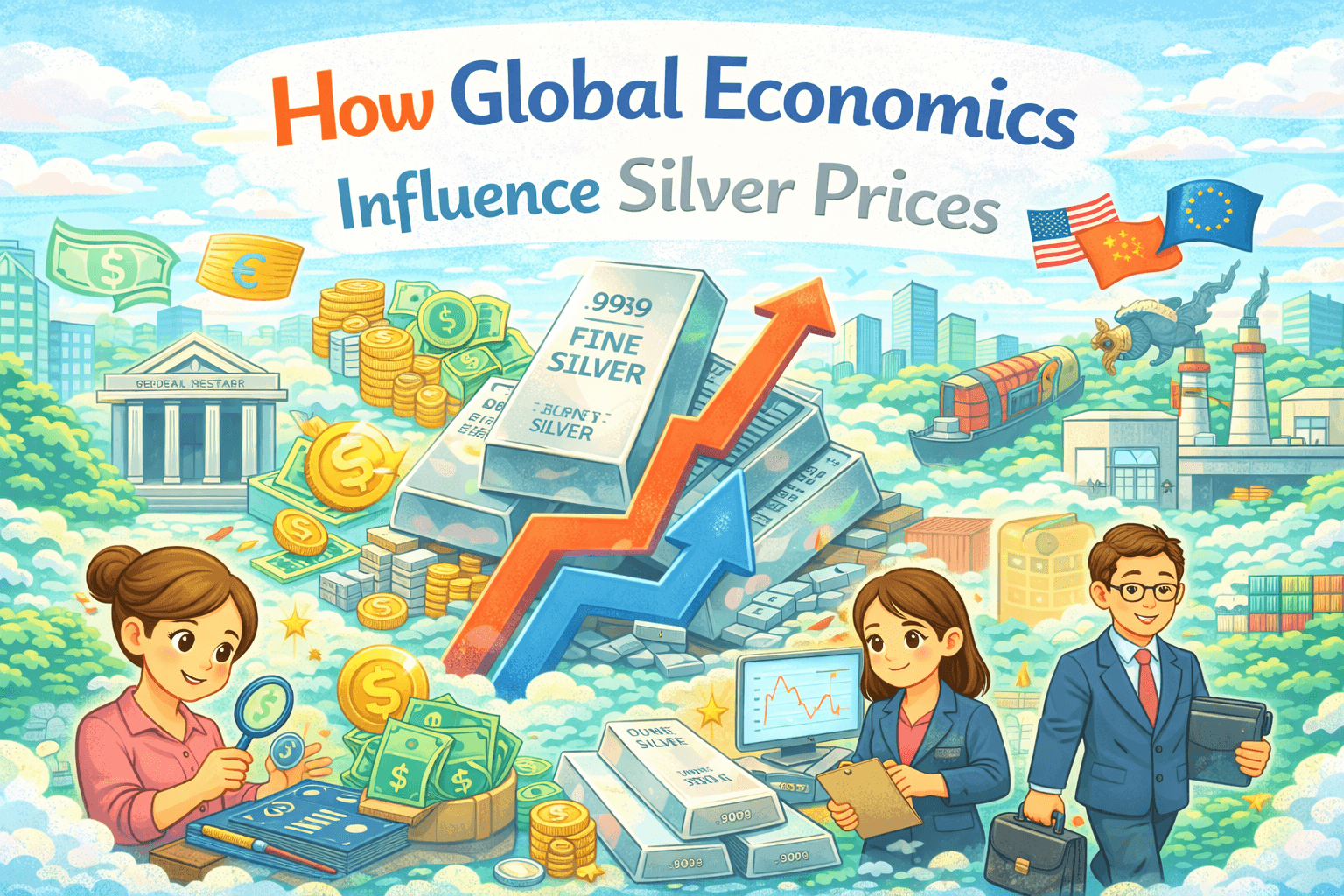
In the early months of 2026, the silver market has become a focal point of global financial discussions. After a historic rally in 2025, the "white metal" is no longer just a secondary sibling to gold; it has emerged as a high-volatility, high-reward asset influenced by complex macroeconomic shifts. Understanding the relationship between global economics and silver prices is essential for investors, manufacturers, and professionals entering the industrial workforce.
The US Dollar and the "Inverse Correlation" Rule
Historically, silver has maintained an inverse relationship with the US Dollar. Because silver is priced in dollars globally, a strengthening dollar typically makes silver more expensive for international buyers, leading to a dip in demand. Conversely, in periods of Inflation or dollar weakness—as seen during the fiscal shifts of late 2025—silver often sees a massive surge in Trading volume.
In 2026, we are witnessing a "de-dollarization" trend where central banks and private investors are diversifying into Metals to hedge against Currency devaluation. This shift has turned silver into a core macro trading asset rather than just a speculative commodity. For those looking to understand how these economic shifts impact their professional growth, exploring Infigon's guide on Jobs of the Future provides a deep dive into the skills needed in this evolving economy.
Interest Rates and the Opportunity Cost of Bullion
One of the most powerful drivers of silver price Volatility is the Federal Reserve's monetary policy. Silver is a non-yielding asset, meaning it doesn't pay dividends or interest.
- High Interest Rates: When rates are high, investors prefer bonds or savings accounts, increasing the "opportunity cost" of holding silver.
- Rate Cuts: As the market anticipates rate cuts in 2026, the opportunity cost drops, making silver a much more attractive investment. Lower real interest rates historically act as a catalyst for "bull runs" in the silver market, particularly when combined with rising industrial demand. Financial analysts often look to external sources like Bloomberg’s Commodity Analysis to track these real-time shifts. ## Industrial Demand vs. Economic Recession Fears Unlike gold, silver is an industrial workhorse. Over 50% of global silver consumption comes from the tech and energy sectors. This dual nature creates a unique economic tug-of-war:
- Manufacturing Growth: A booming Economy increases demand for silver in solar panels, EVs, and AI-driven data centers.
- Recession Hedging: During a Recession, while industrial demand might slow down, "safe-haven" buying of silver Bullion often picks up the slack.
In 2026, the explosion of the "Green Revolution" created a structural supply deficit. Understanding where you fit into this changing industrial landscape is crucial, and you can learn How to Choose the Right Career Path Without Regret through Infigon's career resources to stay ahead of market shifts.
Geopolitical Tensions and Supply Chain Disruptions
Silver prices are highly sensitive to geopolitical stability. Major silver-producing regions like Mexico and China often face export restrictions or mining strikes. In early 2026, new licensing requirements for silver exports sent shockwaves through the global supply chain, causing a sharp price spike.
Investors and companies must constantly monitor global Economics and trade policies to navigate the frequent gapping in silver price charts. For a technical perspective on how this affects production costs, the TechTarget report on technology costs offers a look at the enterprise impact of silver pricing.
FAQ's
Q1. Will the price of silver continue to rise?
Ans. While silver is currently experiencing extreme volatility, most analysts suggest the long-term trend remains bullish. The "structural deficit"—where demand for green technology outpaces mining supply—is expected to support higher price floors through 2030. However, short-term "mean reversion" corrections are common after massive rallies.
Q2. Why is there a disconnect between gold and silver prices?
Ans. The disconnect usually happens because silver is an industrial metal while gold is primarily a monetary one. In a booming economy, silver might outperform gold due to manufacturing demand. In a financial crisis, gold often leads. In 2026, the "Gold-Silver Ratio" has been highly erratic due to silver's critical role in the energy transition.
Q3. How does inflation affect my silver investments?
Ans. Silver is widely considered an "inflation hedge." As the purchasing power of paper currency drops, hard assets like silver typically retain or increase their value. This makes it a popular choice for long-term wealth preservation during periods of high fiscal spending.