
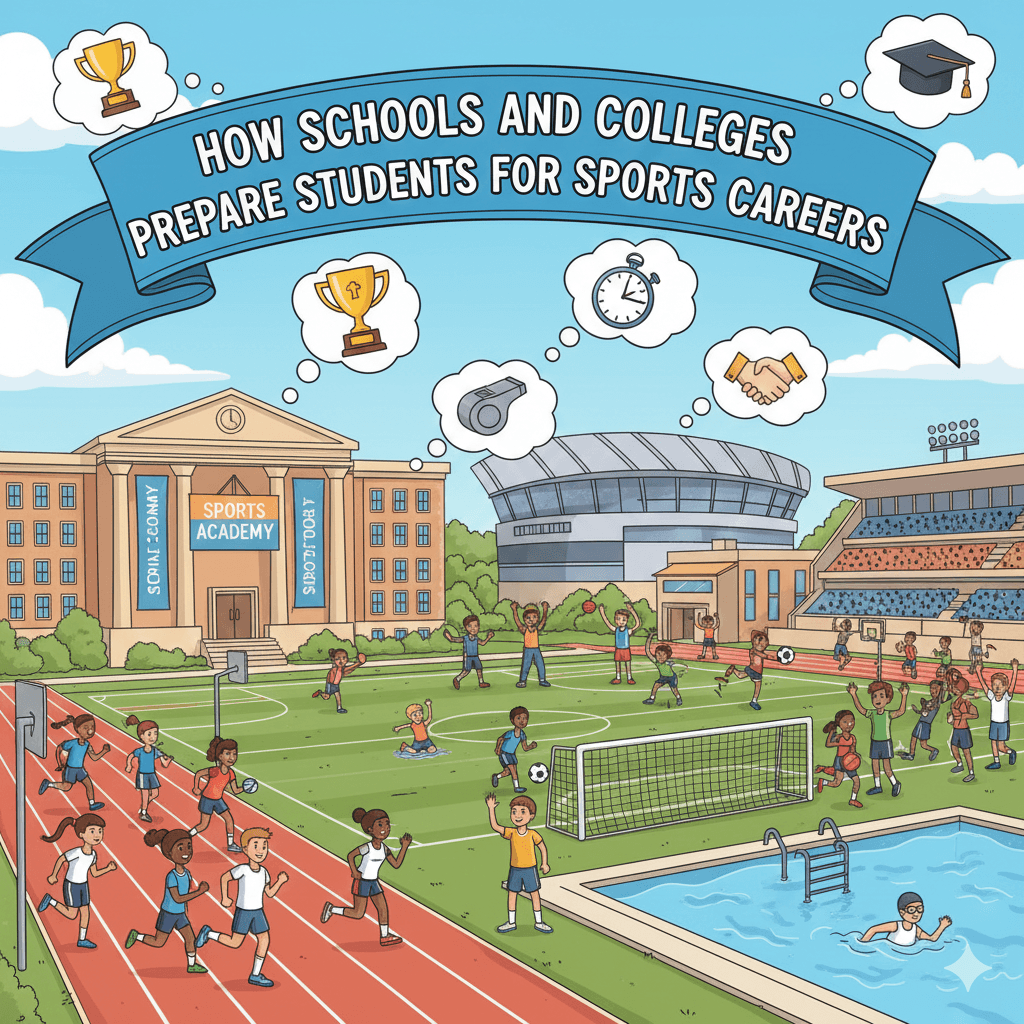
Sports today are no longer limited to just playing on the field. They have grown into a full-fledged career ecosystem that includes coaching, sports science, psychology, management, analytics, nutrition, and leadership roles. Schools and colleges play a crucial role in preparing students for these sports careers by shaping their skills, discipline, mindset, and long-term goals from an early stage.
Let’s understand how educational institutions help students turn their passion for sports into sustainable careers.
Early Exposure to Sports in Schools
Schools are often the first place where students discover their interest and talent in sports. Regular physical education classes, inter-school competitions, and sports days expose students to different games and athletic activities. Through structured sports programs, schools help students:
- Build physical strength and coordination
- Learn discipline, teamwork, and leadership
- Understand the importance of time management
- Develop a competitive yet healthy mindset
Many schools also identify talented athletes early and encourage them to participate in district, state, and national-level competitions. This early exposure builds confidence and lays the foundation for professional sports careers.
Skill Development Beyond the Playground
Modern schools don’t focus only on physical performance. They also emphasize psychological development, motivation, goal-setting, and emotional control. These aspects are essential for students who want to pursue sports professionally.
Sports participation helps students develop:
- Mental resilience
- Decision-making under pressure
- Leadership and teamwork skills
- Communication and discipline
These skills are not only useful in sports but also highly valued in future employment and management roles.
Role of Colleges in Shaping Sports Careers
Colleges take sports preparation to the next level. Unlike schools, colleges provide structured pathways for students to combine academics with athletics.
Many colleges and universities offer:
- Dedicated sports quotas and scholarships
- Professional coaching and training facilities
- Access to sports psychologists and nutrition guidance
Competitive exposure at university, national, and international levels Student athletes in college are trained to balance academics and sports, which prepares them for real-world responsibilities.
Academics + Athletics: A Balanced Approach
One of the biggest advantages of college sports programs is the balance between education and athletics. Students can pursue degrees while continuing serious sports training.
Popular academic pathways linked to sports include:
- Sports science courses
- Sports management degrees
- Sports coaching courses
- Psychology and performance studies
- Analytics and data-driven sports programs
This combination ensures that even if a student doesn’t continue as a professional athlete, they still have strong career opportunities in the sports industry.
Internships, Exposure, and Career Opportunities
Colleges often connect students with internships, training programs, and recruitment opportunities in the sports ecosystem. These include roles in:
- Coaching and training academies
- Sports event management
- Fitness and strength training
- Youth development programs
Sports analytics and performance tracking
Such exposure helps students understand real-world sports careers beyond just playing and prepares them for long-term employment.
Nutrition, Fitness, and Performance Training
Educational institutions now recognize the importance of nutrition and scientific training in sports. Colleges especially focus on:
- Strength and conditioning programs
- Injury prevention and recovery
- Diet planning and nutrition education
- Performance analysis
This scientific approach helps students improve performance while protecting their long-term health.
Leadership and Life Skills Through Sports
Sports naturally develop leadership qualities. Students who participate in athletics often take on roles like team captains, coordinators, or mentors. These experiences help them:
- Manage pressure
- Lead teams effectively
- Handle success and failure gracefully
- Build strong professional networks
Such skills are highly transferable and benefit careers in management, coaching, and corporate roles as well.
FAQs
Q1. What is the day in the life of a student athlete in college?
Ans. A student athlete’s day usually includes early morning training, academic classes, practice sessions, fitness workouts, and recovery time. Time management is key to balancing studies and sports.
Q2. In college, how do I manage sports, jobs, and studies?
Ans. Planning, discipline, and institutional support help student athletes manage all three. Colleges often provide flexible schedules and academic support for athletes.
Q3. How much do college sports help in your future career?
Ans. College sports significantly improve career prospects by building skills, networks, discipline, and access to sports-related job opportunities and higher education pathways.
Q4. Can sports help students get college scholarships?
Ans. Yes, many schools and colleges offer sports-based scholarships that support students financially while encouraging athletic and academic excellence.
Q5. Do colleges support students who want careers in sports other than playing?
Ans. Yes, colleges provide courses and training in sports management, coaching, sports science, psychology, analytics, and fitness-related careers.
Q6. Is it possible to build a sports career without becoming a professional athlete?
Ans. Absolutely.** Careers in coaching, sports science, management, analytics, nutrition, and rehabilitation offer strong opportunities beyond professional playing.
Q7. How important is academics for student athletes?
Ans.Academics are crucial as they provide career security and open doors to sports-related professions if athletic careers are short or change due to injuries.