
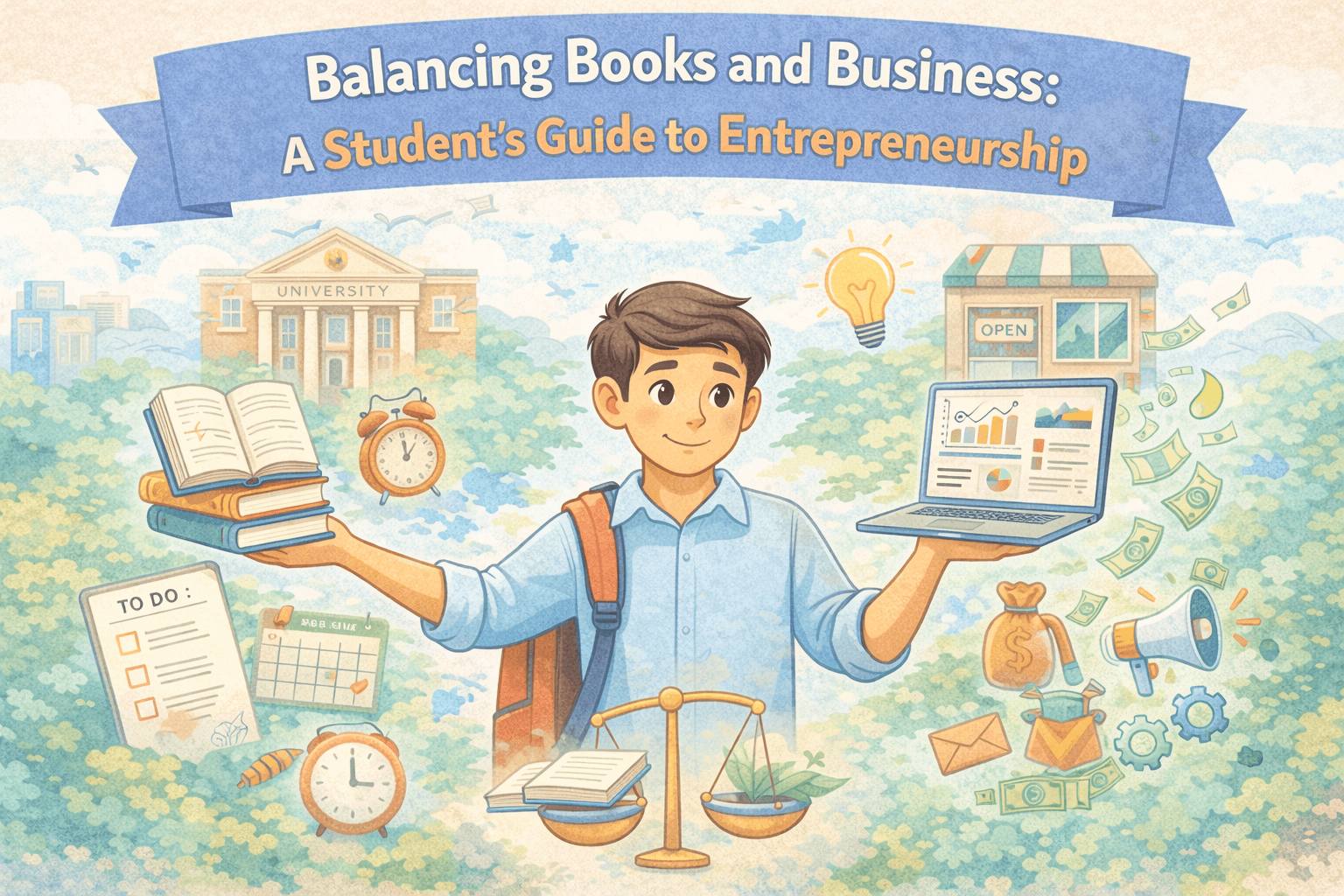
For today’s students, education is no longer limited to classrooms and exams. Alongside lectures and assignments, many young people are launching startups, freelancing online, building brands, or experimenting with side hustles. While entrepreneurship offers independence and real-world learning, balancing it with academics can be challenging. This guide explores how students can manage both books and business without burning out.
Why More Students Are Turning to Entrepreneurship
The rise of digital platforms, online businesses, and flexible work models has made entrepreneurship more accessible than ever. Students now explore startups not just for income, but to build skills in leadership, finance, marketing, and innovation. Many also see entrepreneurship as a way to gain practical exposure that traditional education may not always provide.
However, the excitement of running a business often clashes with deadlines, exams, and academic pressure. This makes balance essential.
How to Balance College and a Startup
Balancing academics and business starts with realistic expectations. Students must accept that they cannot do everything at once. Prioritizing tasks, setting achievable goals, and understanding peak productivity hours helps maintain control.
Time management plays a critical role. Successful student entrepreneurs often plan weekly schedules that allocate fixed hours for studies, business tasks, and rest. Using productivity tools, setting boundaries, and avoiding multitasking improves focus and reduces stress.
Managing Time as a Student Entrepreneur
Time is the most valuable asset for any entrepreneur, especially students. Breaking large goals into smaller tasks makes them easier to manage alongside coursework. Delegating work, using automation tools, and limiting unnecessary activities help students stay consistent.
Equally important is learning when to pause. Ignoring rest can lead to burnout, affecting both academic performance and business growth.
Skills Students Gain Through Entrepreneurship
Running a business while studying builds more than income. Students develop problem-solving abilities, communication skills, financial literacy, leadership qualities, and resilience. These skills are highly valuable, even if the startup does not succeed long-term.
Entrepreneurship also helps students discover their strengths, interests, and working style, which can guide future career decisions.
Books That Inspire Social Entrepreneurship
For students interested in social entrepreneurship, books that focus on purpose-driven business models can be helpful. Reading about ethical leadership, sustainable development, and impact-driven startups encourages students to think beyond profits and align business goals with societal needs.
Is Entrepreneurship Right for Every Student?
Not necessarily. While entrepreneurship is rewarding, it requires discipline, patience, and self-motivation. Some students thrive in structured environments, while others excel with flexibility.
Understanding personal aptitude, interests, and long-term goals is crucial before committing to a startup journey. This is where informed guidance and self-awareness become important.
FAQs
Q1. What are good books for social entrepreneurship?
AnsBooks focusing on impact-driven businesses, ethical leadership, and sustainable innovation are ideal for students interested in social entrepreneurship.
Q2. How can entrepreneurs best manage their time?
AnsBy setting clear priorities, planning weekly schedules, avoiding multitasking, and using productivity tools effectively.
Q3. How to balance between my startup and college?
AnsBalance comes from realistic goal-setting, disciplined time management, and knowing when to scale efforts up or down based on academic demands.
Q4. Can entrepreneurship affect academic performance?
AnsYes, both positively and negatively. When managed well, it improves skills and confidence. Poor balance, however, can lead to stress and declining grades.
Q5. Is freelancing a good start for student entrepreneurs?
AnsYes. Freelancing offers flexible income, skill development, and lower risk compared to full-scale startups.