
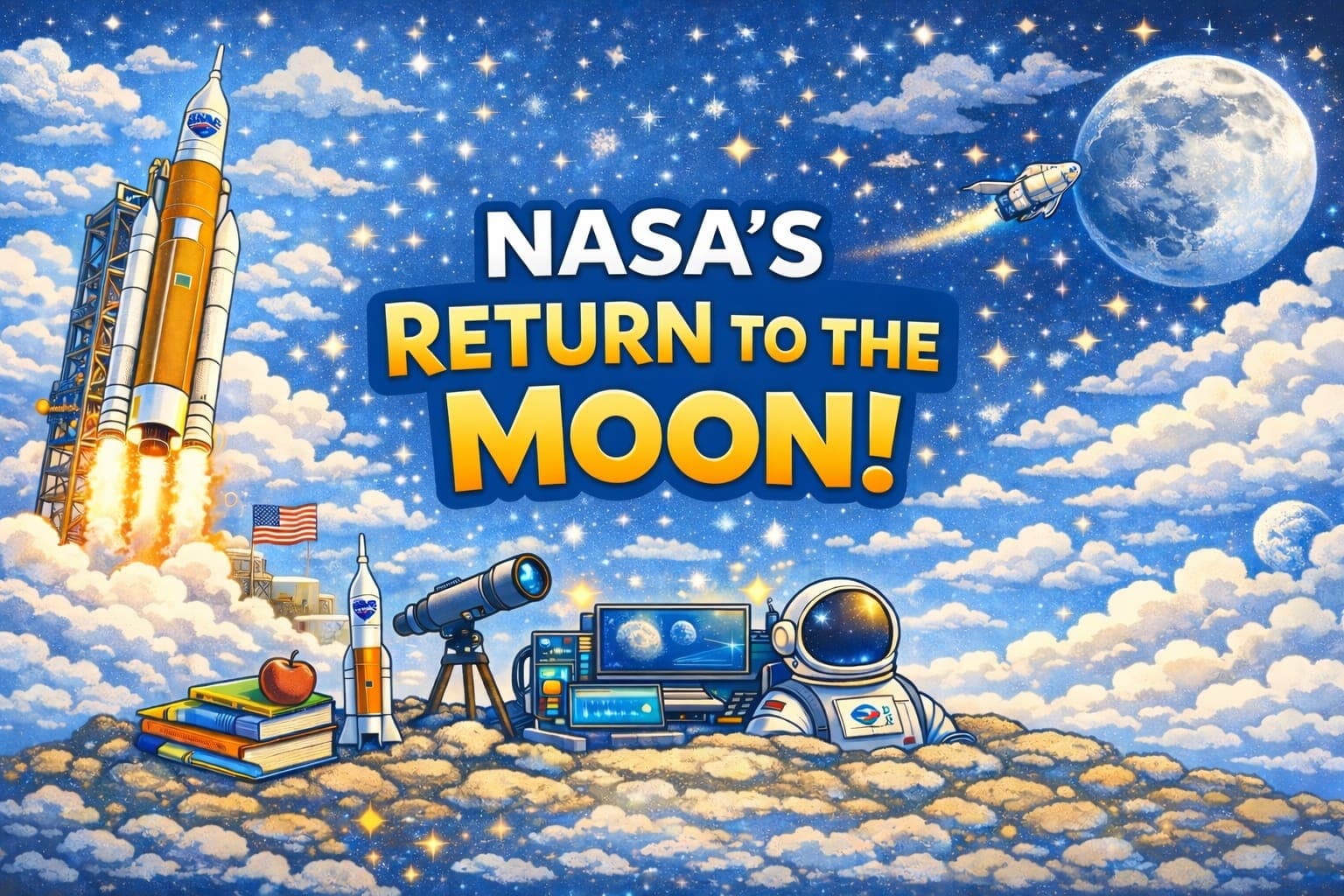
NASA’s return to the Moon isn’t just a historic space mission, it's a turning point for global education and future careers. With Artemis II, humanity is stepping into a new era of exploration, innovation, and learning. Unlike past missions, Artemis II is designed not only to test technology but to inspire an entire generation of students, educators, engineers, and future astronauts.
As space once again becomes a shared global ambition, the ripple effects are already being felt in classrooms, research labs, and career paths worldwide.
What Is Artemis II and Why It Matters
Artemis II is NASA’s first crewed mission under the Artemis program, sending astronauts around the Moon to test systems that will eventually land humans on the lunar surface again. It builds on Artemis I’s uncrewed success and sets the stage for long-term lunar exploration.
But beyond rockets and spacecraft, Artemis II represents:
- A renewed focus on STEM education
- A demand for new-age engineering and scientific skills
- A future where space careers extend far beyond astronauts
This mission marks the shift from “space as spectacle” to space as a sustainable ecosystem of careers and research.
How Artemis II Is Transforming Education
1. A New Spark for STEM Learning
The Artemis program has reignited curiosity in science, technology, engineering, and mathematics. Schools and universities are redesigning curricula to include space science, aerospace engineering, robotics, and planetary research.
Students today aren’t just learning theory, they're learning how those concepts apply to real missions happening right now.
2. Space Education Beyond Astronauts
Modern space missions need:
- Data analysts
- AI and software engineers
- Biomedical researchers
- Environmental scientists
- Materials and propulsion experts
Artemis II highlights that space exploration is a team effort, opening doors for students who may never wear a spacesuit but will still shape space missions.
3. Research-Driven Learning
From studying lunar soil to understanding human survival in deep space, Artemis II is influencing research-based education. Universities are partnering with space agencies, allowing students to work on real-world problems tied to ongoing missions.
This hands-on exposure is redefining how education prepares students for future challenges.
The Rise of New Space Careers
Engineering & Technology
Artemis II relies on cutting-edge advancements in aerospace engineering, propulsion systems, AI navigation, and spacecraft design creating long-term demand for highly skilled professionals.
Science & Exploration
Fields like planetary science, astrophysics, and space medicine are seeing renewed importance as humans plan longer stays on the Moon and future missions to Mars.
Training & Mission Operations
From astronaut training programs to mission control specialists, space exploration now requires multidisciplinary expertise blending psychology, technology, and human performance.
Inspiring the Next Generation of Innovators
Perhaps the most powerful impact of Artemis II is inspiration. Seeing humans return to the Moon changes how young people imagine their future. Space is no longer distant or unreachable; it's a career path, a research opportunity, and a place for innovation.
This inspiration fuels creativity, problem-solving, and ambition across industries far beyond aerospace.
The Bigger Picture: Shaping the Future
NASA’s return to the Moon signals something bigger than exploration; it signals preparation. Preparation for a future where:
- Space research supports life on Earth
- Innovation drives sustainable technologies
- Education evolves with global challenges
- Artemis II is not the destination; it’s the beginning.
FAQs
1. What is NASA’s Artemis II mission?
Ans. Artemis II is NASA’s first crewed mission under the Artemis program, testing systems for future Moon landings.
2. How does Artemis II impact education?
Ans. It boosts interest in STEM education and promotes research-based, real-world learning in schools and universities.
3. What careers does Artemis II create?
Ans. It opens opportunities in engineering, science, space technology, research, and mission operations.
4. Why is returning to the Moon important?
Ans. The Moon acts as a testing ground for future deep-space missions, including human exploration of Mars.
5. How does Artemis II inspire students?
Ans. By making space exploration relevant and achievable, it motivates students to pursue careers in science and innovation