
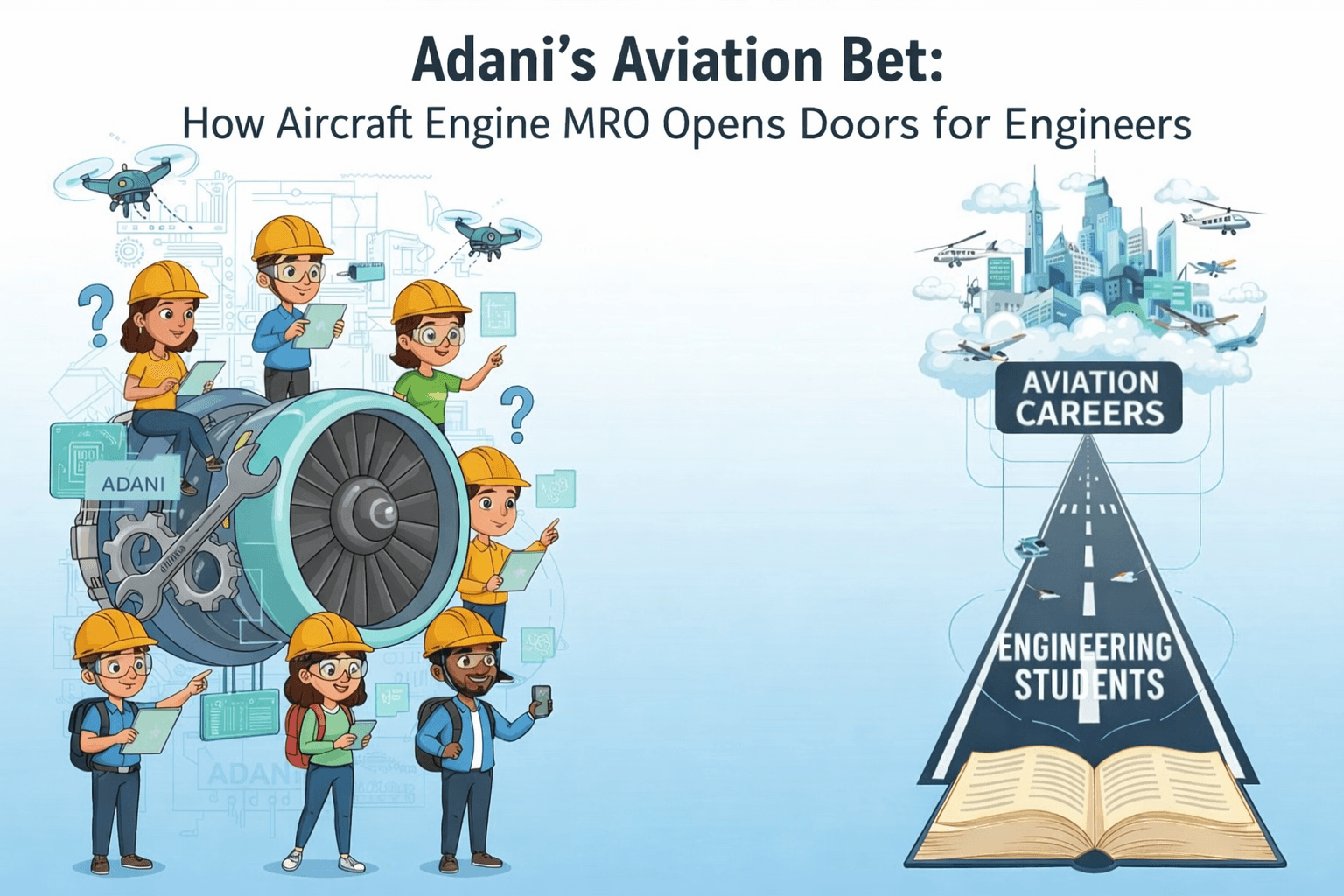
In a bold move that’s reshaping India’s aerospace landscape, the Adani Group is deepening its footprint in the aviation ecosystem — especially in Aircraft Maintenance, Repair & Overhaul (MRO) and potentially engine MRO (Maintenance, Repair & Overhaul). This isn’t just another corporate expansion; it signals transformative opportunities for engineering students, graduates, and aspiring aviation professionals across the country.
What’s Happening? Adani’s Aviation Expansion
Adani has been strategically acquiring and integrating major players in the aviation MRO segment:
- It acquired a controlling stake in Air Works India, one of India’s leading MRO companies with expertise in aircraft servicing and heavy maintenance.
- Through a 50:50 joint venture called Horizon Aero Solutions Ltd, it has taken full ownership of Indamer Technics Pvt Ltd, a large aircraft MRO facility based in Nagpur that serves both civil and defence aviation clients.
- The group is now combining these platforms into a unified MRO powerhouse, with plans to expand capabilities to landing gear, aircraft painting, passenger-to-freighter (P2F) conversions, and — in the near future — engine maintenance and overhaul.
This MRO push isn’t just about infrastructure — it’s about positioning India as a global centre for aviation services, reducing dependence on overseas MRO hubs, and supporting a fleet of thousands of new aircraft coming into service.
Why This Matters to Engineering Students
1. Exploding Demand for Aerospace Skills
India is rapidly becoming one of the world’s largest aviation markets. With carriers planning to induct over 1,500 aircraft in the coming years, there’s a corresponding surge in demand for aircraft maintenance engineers, avionics specialists, quality inspectors, and technical support personnel — especially in MRO.
Students pursuing or considering:
- Aeronautical/Aerospace Engineering
- Mechanical Engineering
- Electrical/Electronics Engineering
- Instrumentation & Control
- Mechatronics and Robotics
will find this sector an emerging frontier where skilled professionals are needed more than ever.
2. More Career Paths Beyond Airlines
Traditional aviation roles — like pilots or air traffic controllers — are well known. The Adani MRO expansion highlights the breadth of technical careers within aviation:
- Engine overhaul specialists
- MRO project engineers
- Avionics technicians
- Quality assurance & compliance engineers
- Aerospace manufacturing specialists
- Logistics and supply chain professionals
These are roles where engineering graduates can make a direct impact on aircraft safety, performance, and operational readiness.
3. Growth of Infrastructure Across India
With plans to establish new MRO bases in regions like Ahmedabad, Guwahati, and Bhubaneswar, plus the large Indamer facility in Nagpur, MRO jobs will be spread across the country — giving students and graduates more regional employment opportunities without requiring relocation to a few metro hubs.
Skills Students Should Build Now
To take full advantage of this MRO boom, students should focus on:
Core Technical Skills
- Aircraft Systems & Maintenance Practices
- Engine Mechanics & Overhaul Procedures
- Avionics & Electrical Diagnostics
- Quality Assurance & Safety Compliance
- Hydraulics, Pneumatics, and Structural Repair
Aircraft MRO demands precision and depth of technical knowledge — so internships, practical labs, and hands-on exposure are invaluable.
Cutting-Edge Tech Proficiency
The aviation MRO industry is increasingly using:
- Robotics and automation
- Digital twins for aircraft diagnostics
- Predictive maintenance analytics
- AI-assisted inspection systems
Students with exposure to AI, machine learning, IoT, and predictive analytics will stand out. These tech skills amplify traditional engineering strengths and are highly sought after in modern MRO environments.
Soft Skills & Professional Readiness
Beyond classroom know-how, employers increasingly value:
- Problem-solving and critical thinking
- Team collaboration in cross-functional projects
- Communication skills
- Adaptability in fast-paced technical settings
Building these skills early boosts employability — especially for fresh graduates entering competitive talent pipelines.
FAQ'S
1. What is Aircraft Engine MRO and why is Adani entering this space?
Ans. Aircraft Engine MRO involves maintaining, repairing, and overhauling aircraft engines. Adani’s entry aims to strengthen India’s aviation infrastructure and reduce dependence on foreign MROs.
2. How will Adani’s MRO expansion benefit engineering students?
Ans. It will create new jobs, internships, and training opportunities in aviation and aerospace. Engineering students gain exposure to real-world aircraft and engine technologies.
3. Which engineering branches are most relevant for MRO careers?
Ans. Aeronautical, mechanical, electrical, electronics, and avionics engineering are highly relevant. Skills in robotics, automation, and AI also add strong value.
4. What skills are required to work in aircraft engine MRO?
Ans. Strong technical knowledge, safety compliance, and problem-solving skills are essential. Hands-on experience and familiarity with modern maintenance technologies are important.
5. What are the future career prospects in India’s aviation MRO sector?
Ans. With rapid aviation growth, demand for skilled engineers and technicians will rise. India is set to become a global hub for aviation maintenance and services.