
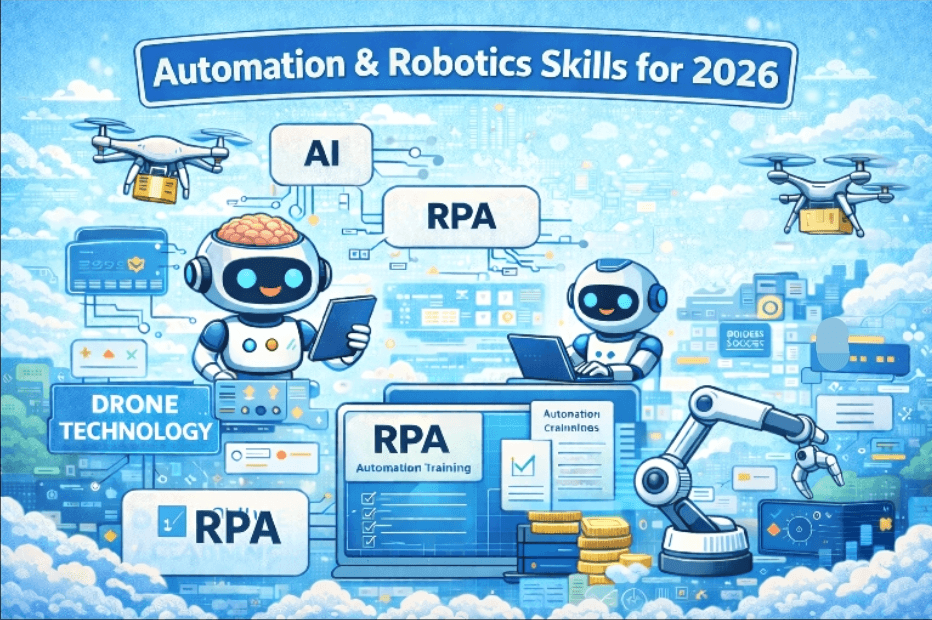
The future of work isn’t coming as it’s already here. Across industries, automation, robotics, and artificial intelligence (AI) are transforming how businesses operate and how professionals build their careers. From smart factories and AI robots to drone technology and robotic process automation (RPA), 2026 will demand a new blend of technical and human skills.
If you're a student, graduate, or working professional planning your next move, this guide will help you understand which automation and robotics skills will matter most and how to prepare for them.
The Rise of Automation and AI
Automation is no longer limited to factory floors. AI now powers:
- Smart manufacturing systems
- Self-learning robots
- AI-driven analytics platforms
- RPA tools in finance and HR
- Autonomous drones in agriculture and logistics
According to insights from research published by McKinsey Global Institute, automation is reshaping task structures rather than eliminating entire professions. This means roles are evolving not disappearing.
The real opportunity lies in developing automation-ready skills.
Top Automation & Robotics Skills for 2026
1. AI & Machine Learning for Robotics
AI is the brain behind modern robots. Machine learning enables robots to learn from data, recognize patterns, and make decisions.
Key focus areas:
- Machine learning for robotics
- Neural networks
- Reinforcement learning
Professionals who understand how to integrate AI into robotic systems will be highly valuable in 2026.
2. Control Systems Engineering
Robots don’t just move randomly; they rely on precise control systems.
Core skills include:
- Feedback systems
- Sensors and actuators
- PLC programming
- Embedded systems
Control systems engineering is critical in industries like manufacturing, aerospace, and automotive automation.
3. Robotics Programming & Simulation
Knowing how to program robots is fundamental. Popular tools and languages include:
- Python
- ROS (Robot Operating System)
- C++
Simulation tools allow engineers to test robotic behavior before physical deployment, reducing cost and risk.
4. RPA (Robotic Process Automation)
RPA automates repetitive digital tasks such as data entry, payroll processing, and report generation.
Skills to learn:
- Robotic process automation training
- Workflow automation
- Process mapping
- Business automation tools
RPA specialists are in high demand across banking, healthcare, and IT services.
5. Drone Technology & Automation
Drone technology is expanding rapidly in:
- Agriculture
- Construction
- Infrastructure inspection
- E-commerce delivery
Understanding drone systems, AI integration, and autonomous navigation can open doors in multiple high-growth sectors.
6. Human + AI Collaboration Skills
Automation doesn’t replace humans , it augments them.
The highest-paying professionals in 2026 will combine:
- Technical knowledge
- Critical thinking
- Problem-solving
- Communication skills
Being able to work alongside AI tools is more important than competing with them.
Which Skills Will Still Pay Well in 2026 as AI Replaces Jobs?
High-paying skills in 2026 will include:
- AI system design
- Robotics engineering
- Machine learning engineering
- Control systems engineering
- Automation architecture
- Data science integrated with robotics
Roles that require creativity, strategic thinking, and decision-making will remain highly compensated.
Routine and repetitive tasks are the most likely to be automated but designing, managing, and improving automation systems will pay well.
What Skills Will Matter Most in the Age of Automation and AI?
The most important skills in 2026 will be:
1. Technical + Analytical Skills
Understanding AI, robotics, automation, and system integration.
2. Adaptability
Technology evolves quickly. Continuous learning is non-negotiable.
3. Interdisciplinary Knowledge
Automation now combines mechanical engineering, software development, AI, and business strategy.
4. Ethical & Responsible AI Awareness
Companies increasingly value professionals who understand AI ethics, bias prevention, and responsible automation.
Best Courses to Prepare for Automation & Robotics Careers
To build automation-ready skills, consider:
- AI and machine learning courses
- Robotics engineering certifications
- RPA certification programs
- Drone technology training
- Control systems engineering courses
Look for programs that include hands-on projects and real-world simulations.
FAQs
1. Which skills will still pay well in 2026 as AI replaces jobs?
Ans. High-paying skills in 2026 will include AI system design, machine learning engineering, robotics programming, control systems engineering, and robotic process automation (RPA). Roles that involve creativity, system thinking, and AI integration will remain in strong demand.
2. What skills will matter most in the age of automation and AI?
Ans. The most important skills will be AI literacy, machine learning, robotics engineering, automation architecture, data analysis, and problem-solving. Professionals who can collaborate effectively with AI tools will have a competitive advantage.
3. Is robotics a good career choice in 2026?
Ans. Yes, robotics is expected to be a high-growth field in 2026. Industries like manufacturing, healthcare, logistics, agriculture, and aerospace are increasingly adopting automation and AI-powered robotics systems.
4. What is the difference between AI and robotic process automation (RPA)?
Ans. AI focuses on creating intelligent systems that can learn and make decisions, while RPA automates repetitive digital tasks using predefined rules. Combining AI with RPA creates smarter, more adaptive automation solutions.
5. How can students prepare for automation and robotics careers?
Ans. Students should pursue AI and robotics courses, learn programming languages like Python, understand control systems engineering, and gain hands-on project experience. Taking career guidance and psychometric assessments can also help identify the right specialization path.