
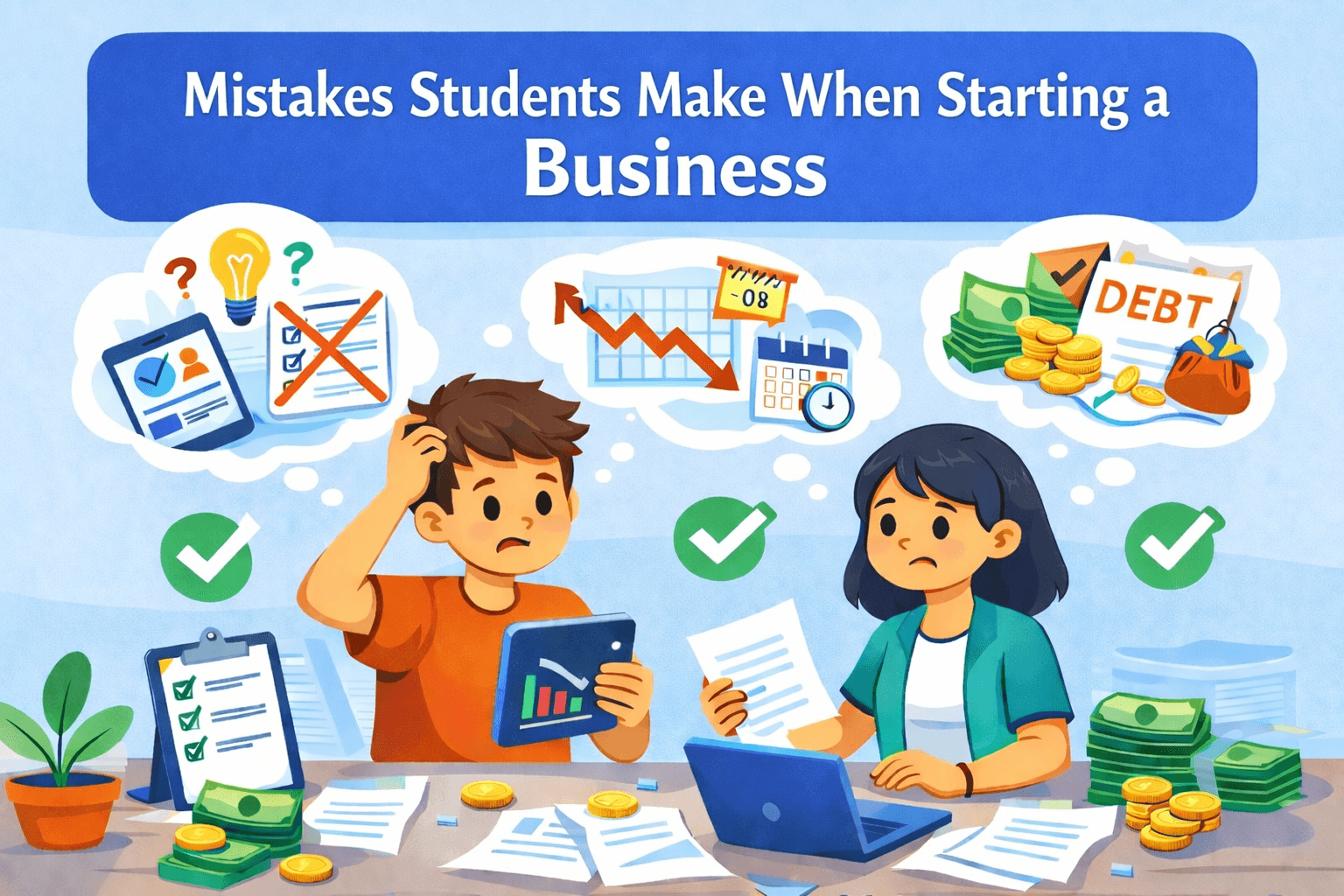
Starting a business as a student is exciting, empowering, and a powerful way to learn real‑world skills. But passion alone isn’t enough — and many young entrepreneurs stumble into avoidable mistakes that slow growth or even cause failure. Learning from others’ experiences can give you a head start and boost your chances of success.
Here are the key pitfalls students often face — and practical ways to avoid them.
Skipping Market Research
One of the most common and costly mistakes is building something without truly knowing who it’s for or whether people actually want it. Many young founders fall in love with their idea before validating it with real potential customers.
How to avoid it:
✔ Conduct surveys, interviews, and competitor research before investing time and money.
✔ Use tools like pilot tests or Minimum Viable Products (MVPs) to get early feedback.
Not Creating a Clear Business Plan
Failing to plan is planning to fail. A business plan doesn’t have to be massive, but it should lay out your goals, target audience, revenue model, and financial projections. Without this roadmap, decisions become reactive instead of strategic.
How to avoid it:
✔ Draft a simple plan before launch and revisit it regularly as your business evolves.
Trying to Do Everything Alone
As students, it’s tempting to go it alone — but multitasking across marketing, finance, product development, and customer service leads to burnout and mistakes.
How to avoid it:
✔ Build a small team or find mentors who complement your strengths.
✔ Delegate tasks that are outside your skillset.
Underestimating Startup Costs
New founders often misjudge how much money a business really needs, leading to cash shortages and stress. Planning only for best‑case scenarios is risky.
How to avoid it:
✔ Create a realistic budget that includes operating costs, unexpected delays, and emergency funds.
✔ Track expenses carefully from day one.
Avoiding Legal and Operational Essentials
Ignoring legal basics — like business registration, contracts, and intellectual property protection — can cost time, money, and reputation later.
How to avoid it:
✔ Set up the correct business entity for your venture.
✔ Always use written agreements with partners, suppliers, and clients.
Hiring Too Soon or Too Quickly
Recruiting full‑time employees too early can drain funds without delivering results. Many student startups are better served by part‑time help, interns, or freelancers.
How to avoid it:
✔ Only expand your team when you have a clear need and the finances to support it.
Ignoring Customer Feedback
Some founders get so attached to their idea, they overlook what customers actually want — and that disconnect can sink a business fast.
How to avoid it:
✔ Establish feedback channels early and use them to improve your product or service continuously.
Launching Before You're Ready
Eagerness to launch can lead to releasing a product or service before systems and processes are truly ready — hurting your reputation and customer trust.
How to avoid it:
✔ Ensure backend systems (e.g., payment, delivery, support) are solid before you go public.
Overwhelming Yourself with Perfectionism
Waiting for “perfect” ideas, branding, or products can delay your launch indefinitely. It’s better to iterate and improve over time than stall at the starting line.
How to avoid it:
✔ Set deadlines and aim for “good enough” early versions that evolve based on real‑world use.