
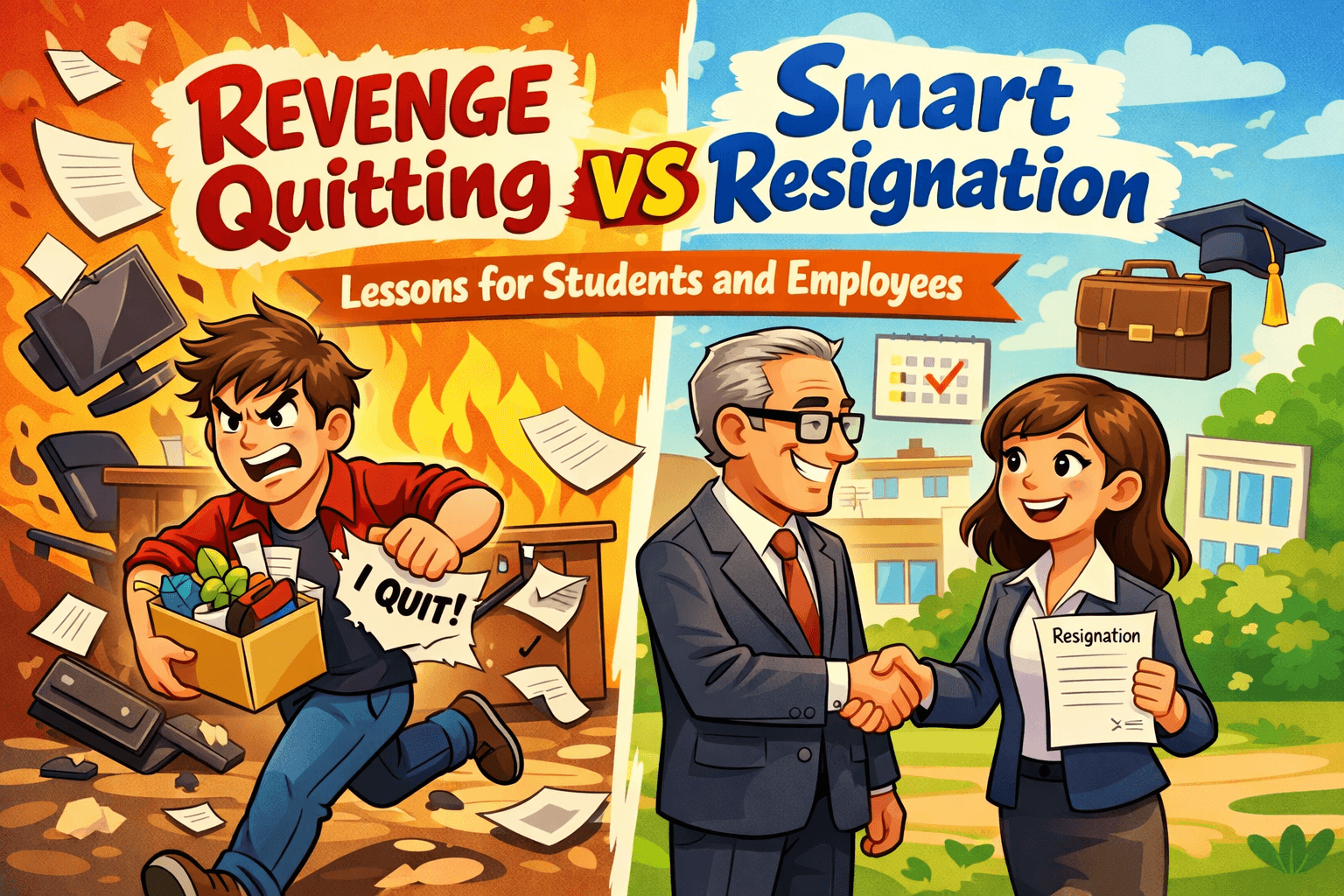
Leaving a job or an internship is never just about signing a paper. For many, it feels like a heavy weight being lifted, but how that weight is dropped matters more than most people realize. We are seeing a massive shift in how Students and Employees view their exits. The term Revenge quitting has started popping up everywhere, describing that sudden, dramatic exit where someone leaves just to watch the office struggle. On the other side, there is the Smart Resignation, which is all about playing the long game for Career growth. It is easy to get caught up in the heat of a toxic work environment, but making a career decision making move based on anger often backfires. This blog explains why some people quit suddenly out of anger and why leaving in a calm and planned way is usually better for long-term career success.
Understanding the Spark Behind the Exit
➤Workplace stress often builds up over months before it leads to a sudden outburst.
➤Burnout is a primary driver, making people feel like they have no other option but to leave immediately.
➤A toxic workplace often lacks the communication needed to fix problems before they explode.
➤Many students entering their first jobs might not realize that a dramatic exit can follow them for years.
➤Revenge quitting usually happens when someone feels their hard work has been ignored or disrespected.
➤It is often a reaction to poor leadership rather than the work itself.
➤When motivation hits zero, the desire to "punish" the company becomes stronger than the desire to stay professional.
➤Understanding the psychology of revenge quitting explained can help individuals recognize these patterns in themselves before acting impulsively.
| Feature | Revenge quitting | Smart Resignation |
|---|---|---|
| Primary Emotion | Anger and Resentment | Calm and Focused |
| Notice Period | Often none (Walking out) | Standard 2 weeks or more |
| Future Impact | Damaged reputation | Strong professional network |
| End Goal | Immediate satisfaction | Long-term Career success |
| Communication | Confrontational or silent | Professional and clear |
The Impact of Workplace behavior on Your Future
➤How you leave a company is often the only thing people remember about you.
➤HR departments across different companies often communicate, and a "burned bridge" can block future employment.
➤Maintaining Professionalism even when you are unhappy shows high emotional intelligence.
➤A job switch should be a step toward something better, not just a run away from something bad.
➤Employees who leave gracefully often find it easier to get high-quality references later.
➤For those looking to level up, understanding the skills required to get a 2022 LPA package as a fresher is more productive than focusing on past grievances.
➤Work culture is a two-way street; your exit contributes to your personal brand.
➤Thinking about the future, such as future jobs in the silver industry, helps shift the focus from current drama to future potential.
Navigating the Toxic work environment
➤Identify the red flags early, such as constant overtime without pay or lack of support from Leadership.
➤Document your achievements so you have a clear record when you decide it is time for a resignation.
➤Look for Student career guidance if you are just starting out and feel overwhelmed by your first role.
➤Don't let a bad manager ruin your motivation for the entire industry.
➤Sometimes, the best career advice is to simply stay quiet and plan your exit in the background.
➤If you are a student planning your next academic move while working, keep an eye on requirements like the GATE eligibility criteria 2026 to ensure you are ready for the next step.
➤A toxic workplace thrives on chaos; don't give it more by quitting in a way that causes a scene.
| Scenario | Revenge quitting Action | Smart Resignation Action |
|---|---|---|
| Denied a Promotion | Quitting on the spot during a meeting | Asking for feedback and starting a job search |
| Overworked | Deleting important files before leaving | Handing over all tasks with a clear manual |
| Micromanagement | Ghosting the employer entirely | Having a firm conversation and giving notice |
| Better Offer Received | Leaving without finishing current projects | Ensuring a smooth transition for the team |
How to Handle the Quitting Process Like a Pro
➤Always write a formal letter even if you are leaving because of a toxic work environment.
➤Check the legalities and resign from a job the right way to avoid any contract breaches.
➤Be honest but polite in the exit interview with HR.
➤Focus on your own Career growth rather than trying to fix the company on your way out.
➤Keep your plans private until the Resignation is officially accepted.
➤Use your remaining time to strengthen ties with colleagues you actually like.
➤Many experts agree that revenge quitting is a dramatic trend that often hurts the worker more than the boss.
➤Consider these tips to turn revenge into smart quitting to keep your sanity and your reputation intact.
Why Career growth Depends on Professionalism
➤The industry is smaller than it looks, and people talk.
➤A Smart Resignation allows you to leave with your head held high.
➤Workplace conflicts are temporary, but a reputation for being difficult can last.
➤Career advice usually centers on building bridges, not burning them.
➤Students should focus on gaining as much as possible from every Jobs experience, even the bad ones.
➤Career decision making should be logical, not emotional.
➤Effective Workplace behavior includes knowing when to walk away without making it a war.
FAQs
Q1. How does Revenge quitting differ from rage quitting?
Ans. While both involve leaving a job suddenly, they have slightly different vibes. Rage quitting is usually an impulsive, heat-of-the-moment reaction to a specific event, like a bad meeting. Revenge quitting is often more calculated; the person waits for a time when their absence will cause the most damage or inconvenience to the company as a way to "get back" at them.
Q2. What is the best way to resign from a toxic workplace?
Ans. The best way is to stay as neutral as possible. Give your standard notice period, keep your resignation letter short and professional, and avoid getting into emotional arguments during your final days. This ensures you get your experience letter and any pending dues without a fight.
Q3. What revenge did you get when you quit that lousy job?
Ans. Many people think "revenge" is a big scene, but the best revenge is actually living well and finding a much better career path. Leaving a gap that the company struggles to fill because you were so efficient is a natural consequence, but you don't need to do anything extra to make it happen. Success is the ultimate response to a bad employer.
Q4. How do managers react to Resignation?
Ans. Reactions vary. Some managers might be supportive, while others in a Toxic work environment might take it personally or try to make your last few weeks difficult. Regardless of their reaction, staying professional keeps the power in your hands.
Q5. Can a bad exit affect student career guidance and future prospects?
Ans. Absolutely. Many internships and entry-level roles for Students are closely connected through university networks. If a student leaves a role unprofessionally, it can lead to a negative reputation that makes it harder to secure future employment or recommendations from professors and mentors.