
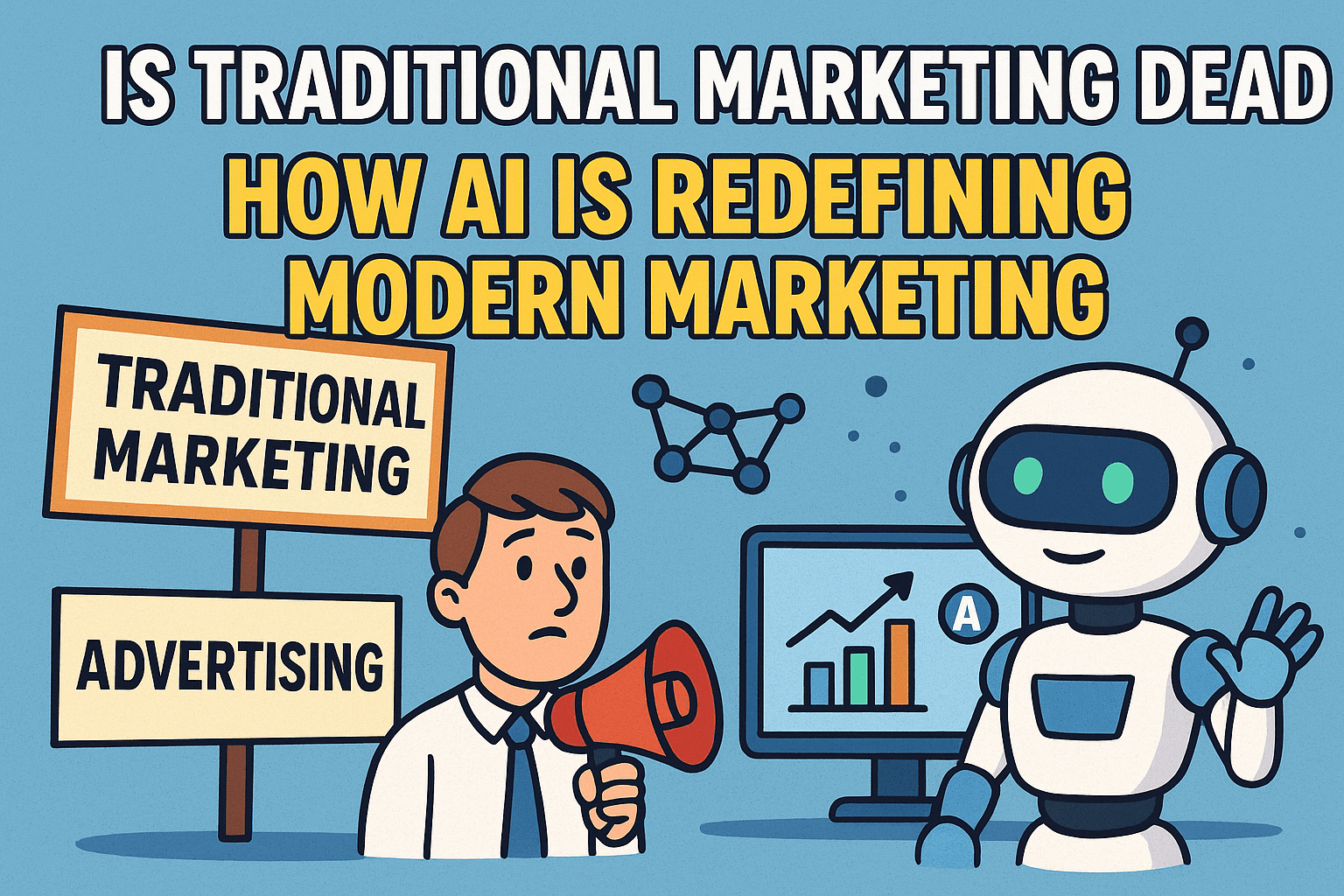
Marketing has always evolved with time—from newspaper ads and billboards to social media campaigns and influencer collaborations. But today, a bigger question is being asked across the business world: Is traditional marketing dead, or is it simply being reshaped by artificial intelligence?
The truth lies somewhere in between. Traditional marketing isn’t disappearing, but AI is completely redefining how modern marketing works, how decisions are made, and how brands connect with consumers.
The Role of Traditional Marketing in a Digital World
Traditional marketing methods like print ads, TV commercials, radio, and outdoor advertising still hold value, especially for brand awareness and mass reach. They build credibility and trust, particularly among audiences who are less digitally active.
However, traditional marketing has clear limitations:
- Limited audience targeting
- Higher costs
- Difficulty in measuring exact ROI
- One-way communication
This is where AI-driven digital marketing steps in.
How AI Is Transforming Modern Marketing
Artificial Intelligence has changed marketing from guesswork to data-driven strategy. Today, brands no longer rely only on intuition; they rely on insights.
Smarter Customer Targeting
AI analyzes massive amounts of data—search behavior, social activity, purchase history—to identify exactly who the customer is and what they want. This makes campaigns more precise and cost-effective.
Personalized Content at Scale
From email subject lines to product recommendations, AI helps create personalized experiences for each user. Customers no longer feel like just another number—they feel understood.
Marketing Automation Tools
AI-powered marketing automation tools handle repetitive tasks like email campaigns, ad placements, and customer follow-ups. This saves time, reduces errors, and allows marketers to focus on creativity and strategy.
Predictive Analytics and Campaign Optimization
AI doesn’t just analyze past data—it predicts future trends. Marketers can adjust campaigns in real time, improve engagement, and reduce wasted ad spend.
AI vs Traditional Marketing: Not a Battle, but a Balance
AI doesn’t eliminate traditional marketing; it enhances it. A billboard campaign can be supported by AI-driven social ads. A TV commercial can be backed by data analytics to track digital engagement.
Modern marketing is no longer about choosing one over the other—it’s about integrating both to maximize growth and innovation.
Benefits of AI in Marketing
- Better audience insights
- Higher conversion rates
- Faster decision-making
- Cost efficiency
- Improved customer experience
- Measurable performance analytics
For businesses and brands, AI is no longer optional—it’s becoming essential.
The Future of Marketing: Skills Over Tools
As AI becomes more powerful, the demand for skilled marketers who understand both technology and human behavior is increasing. Knowing how to use tools is important, but knowing why and when to use them matters more.
FAQs
1. Is Traditional marketing still relevant in the age of AI?
Ans. Yes, traditional marketing is still relevant, especially for brand awareness and mass reach. However, it works best today when combined with AI-driven digital strategies for better targeting and measurable results.
2. How does AI improve marketing campaigns?
Ans. AI improves marketing by analyzing customer data, predicting trends, automating repetitive tasks, and personalizing content. This helps brands reach the right audience at the right time with higher efficiency.
3. What are marketing automation tools?
Ans. Marketing automation tools use AI to manage tasks like email marketing, social media scheduling, ad optimization, and customer follow-ups. They save time and help marketers focus on strategy and creativity.
4. Do marketers need technical skills to use AI in marketing?
Ans. Basic technical knowledge is helpful, but deep coding skills are not mandatory. Understanding data, consumer behavior, and how AI tools work is more important than being highly technical.
5. Will AI replace marketing jobs in the future?
Ans. AI will not replace marketers but will change job roles. Professionals who adapt by learning AI tools, analytics, and strategic thinking will have more career opportunities in modern marketing.