
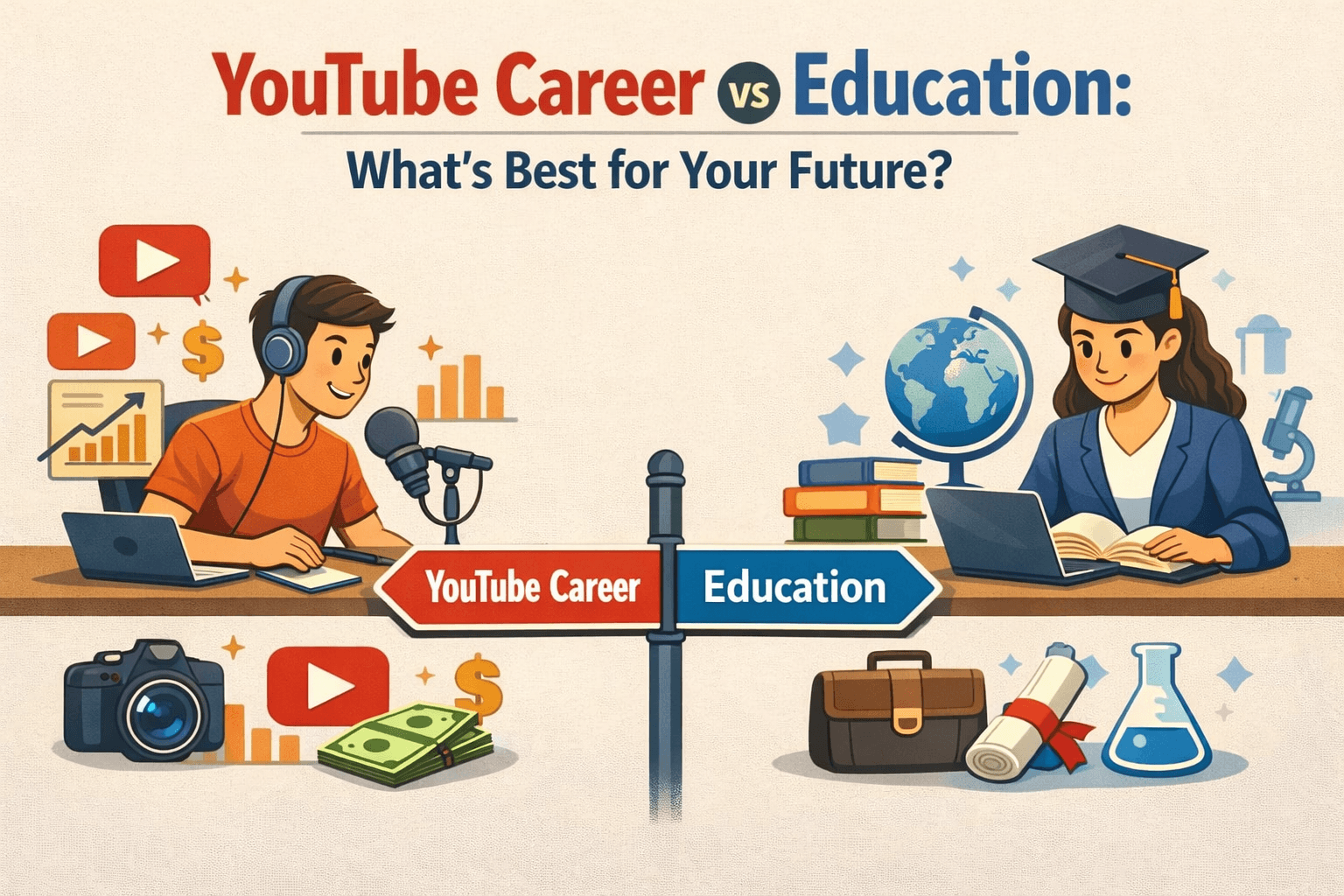
In the last decade, YouTube transformed from a casual video-sharing platform into a full-fledged career dream. Teenagers aspire to become content creators, parents worry about job security, and students often face a tough question:
Should I chase YouTube success or focus on education?
The truth lies somewhere in between. While YouTube can offer fame, income, and creative freedom, it also comes with instability. On the other hand, education, often seen as “boring” or “slow” still plays a crucial role in building sustainable careers in the future job market.
Let’s break it down honestly.
The Rise of YouTube as a Career
YouTube has created opportunities that didn’t exist before. People earn through:
- Ad revenue
- Brand collaborations
- Affiliate marketing
- Online courses and merchandise
Top creators make impressive incomes, and success stories dominate social media. This visibility makes YouTube look like a fast track to success especially for students who feel traditional education doesn’t guarantee jobs anymore.
But here’s the part we don’t talk about enough.
Is a YouTube Career Really Sustainable?
While YouTube is a valid career option, it has limitations that many overlook.
1. Income Is Unpredictable
YouTuber income depends on algorithms, audience engagement, and brand trends. A single policy change can cut earnings overnight.
2. High Competition
Every minute, thousands of new channels are created. Standing out requires not just creativity but consistency, marketing skills, and patience.
- Burnout Is Real
Content creation demands constant output. Many creators quit due to pressure, mental fatigue, or declining views.
4. No Job Security
There’s no guaranteed monthly income, no retirement plan, and no safety net if things go wrong.
This raises a serious question: what happens if YouTube stops working?
Why Education Still Matters in the Future of Work
Education is not just about degrees anymore it’s about skills, adaptability, and long-term growth.
1. Education Builds Transferable Skills
Critical thinking, communication, problem-solving, and analytical ability are essential across industries from technology to healthcare to digital careers.
2. Future Jobs Demand Multi-Skilled Professionals
AI, automation, and technology are reshaping careers. Jobs of the future require a mix of technical skills, creativity, and emotional intelligence something structured education helps develop.
3. Education Offers Career Flexibility
Unlike a single platform-based career, education allows you to pivot. A student with strong foundations can move into new roles, industries, or even entrepreneurship.
4. Credibility Still Matters
In fields like psychology, healthcare, education, engineering, and management, qualifications are non-negotiable. Passion alone isn’t enough.
YouTube vs Education: It’s Not Either Or
The biggest myth is that students must choose one.
In reality, the most successful creators today are:
- Educated in marketing, communication, or technology
- Skilled in storytelling and audience psychology
- Aware of branding, finance, and long-term planning
- Education strengthens a YouTube career, it doesn't weaken it.
Similarly, students with educational backgrounds are using YouTube as a skill amplifier, not a replacement for learning.
Passion vs Education: Finding the Balance
Passion without structure can fade. Education without interest can feel meaningless.
The sweet spot lies in understanding:
- What you’re naturally good at
- What skills the future job market values
- How your interests can turn into sustainable careers
This clarity is often missing when students blindly follow trends whether it’s YouTube or conventional degrees.
Alternative Career Options for YouTubers
If content creation doesn’t work long term, creators can transition into:
- Digital marketing
- Content strategy
- Brand consulting
- Video production
- Social media management
- Online education and coaching
All of these require skills and learning beyond the platform itself.
FAQs
1. Is YouTube a good career option for students?
Ans. Yes, YouTube can be a good career option for students with creativity, consistency, and strong skills. However, it should not be the only career plan due to income instability and lack of long-term job security.
2. How much income can a YouTuber earn in India?
Ans. YouTuber income in India varies widely. Beginners may earn little to nothing, while successful creators can earn from ads, brand deals, and other sources. Income depends on views, niche, audience, and platform policies.
3. Can education help in building a successful YouTube career?
Ans. Absolutely. Education helps creators develop communication, marketing, financial planning, and analytical skills, which are essential for growing and sustaining a YouTube channel long-term.
4. Is YouTube a stable career for the future?
Ans. YouTube offers opportunities but lacks stability. Algorithm changes, competition, and burnout make it risky as a sole career. Combining YouTube with education or alternative skills is a safer approach.
5. What should students focus on for future jobs?
Ans. Students should focus on building adaptable skills, continuous learning, and self-awareness. Education, practical experience, and understanding personal strengths play a key role in future-ready careers.