
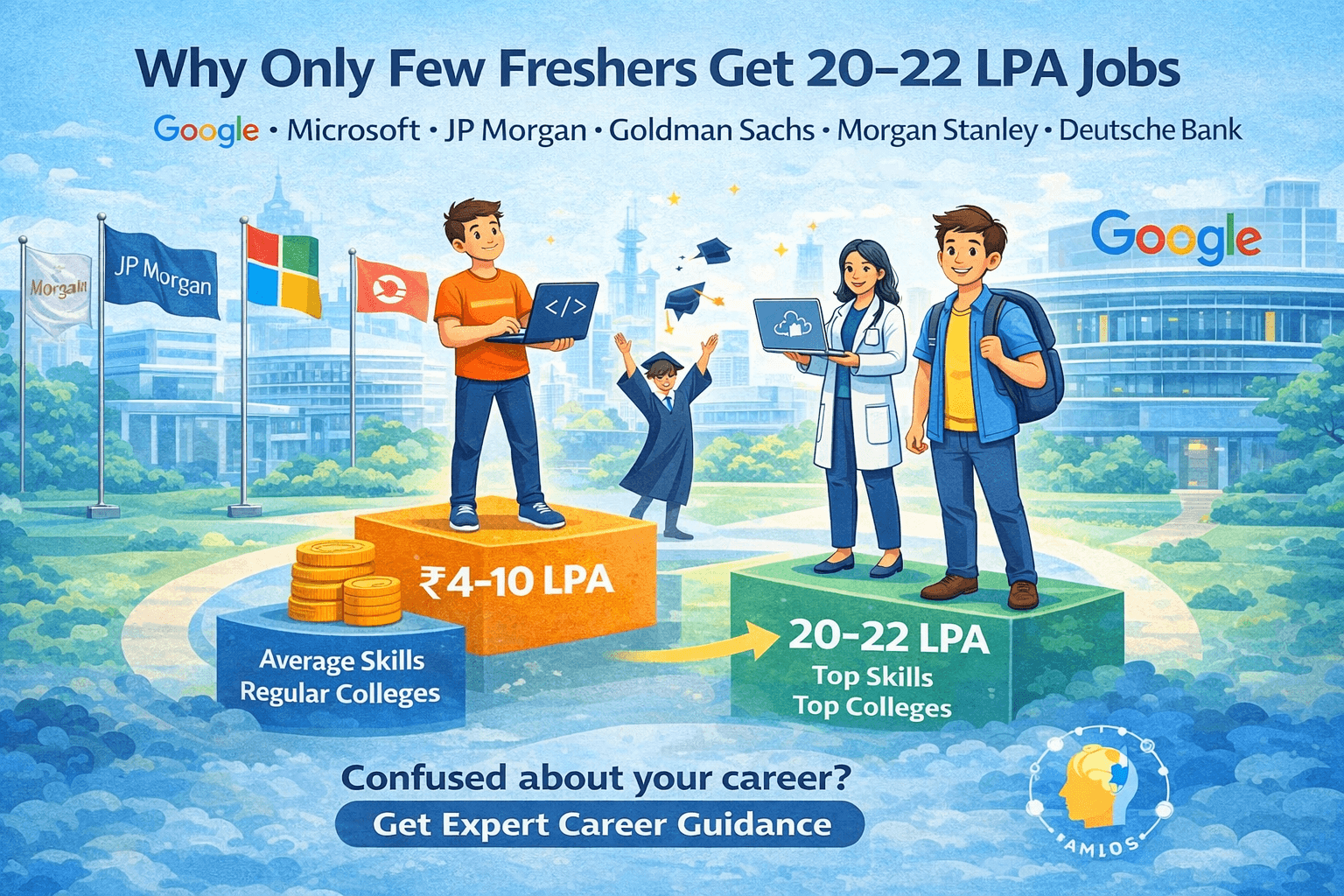
Every year, headlines spark excitement: “Google pays ₹20 LPA to freshers”, “Microsoft offers ₹22 LPA package”. For students and parents, it creates a powerful belief to work hard, get a degree and land a high-paying job.
But reality tells a different story.
Out of lakhs of engineering and management graduates in India, only a tiny fraction actually secure packages in the ₹20–22 LPA range. This isn’t luck or favoritism, it's a mix of skill gaps, hiring strategy, and market demand.
Let’s break down why these high-paying fresher jobs are rare and what really separates those who get them.
1. These Packages Are for Very Specific Roles
Top packages are not offered to all freshers. They are reserved for niche roles such as:
- Software Development Engineer (SDE)
- Quantitative Analyst
- Cloud Architect (entry-level)
- AI / ML Engineer
- Cybersecurity Analyst
Most freshers apply for general software or analyst roles, which usually start between ₹4–10 LPA. The ₹20+ LPA jobs demand deep technical expertise, not just basic coding knowledge.
2. Tier-1 Colleges Get First Preference
Companies like Google, Microsoft, JP Morgan, Goldman Sachs, Morgan Stanley, and Deutsche Bank primarily hire for top packages from:
- IISc
- Top NITs
- Select global universities
This doesn’t mean students from other colleges can’t make it but the competition becomes 10x tougher off-campus.
Campus brand matters because it signals:
- Academic rigor
- Peer competition
- Proven placement success
3. Skills Matter More Than Degrees
High-paying firms don’t hire for marks they hire for problem-solving ability.
Successful candidates usually have:
- Strong data structures & algorithms
- Real-world projects or internships
- Experience with cloud computing, system design, or scalable apps
- Competitive programming or open-source contributions
A fresher with average grades but strong skills will beat a topper with no practical exposure.
4. Global Pay ≠ In-Hand Salary
A ₹22 LPA “package” often includes:
- Base salary
- Performance bonus
- Stock options (ESOPs)
- Joining bonus
The monthly in-hand salary is usually much lower than what students imagine. These packages are structured for long-term retention, not instant cash.
5. Hiring Is Extremely Selective
For every high-paying fresher role:
- 10,000+ applications
- Multiple interview rounds
- Coding tests, case studies, behavioral interviews
Even brilliant candidates get rejected not due to lack of talent, but because companies hire very limited numbers.
6. Timing and Market Conditions Matter
Hiring depends on:
- Global tech demand
- Economic cycles
- Company expansion plans
During slowdowns, even top companies reduce fresher hiring, making high-salary roles even rarer.
7. Career Clarity Plays a Huge Role
Many students chase high packages without understanding their strengths. Some are better suited for finance, analytics, product roles, or research but blindly prepare for software jobs because they pay more.
This mismatch leads to frustration and missed opportunities.
FAQs
1. What are the top paying software firms in Bengaluru?
Ans. Some of the highest-paying firms include Google, Microsoft, Goldman Sachs, JP Morgan, Morgan Stanley, and Deutsche Bank, especially for specialized technical roles.
2. Do all Google freshers get 20 LPA packages?
Ans. No. Only a small number of roles offer such packages, usually to candidates with exceptional skills and strong interview performance.
3. Can students from non-IIT colleges get high packages?
Ans. Yes, but it requires strong projects, internships, problem-solving skills, and often off-campus applications.
4. Is cloud computing a good skill for freshers?
Ans. Absolutely. Cloud computing is in high demand and can significantly improve salary potential when combined with practical experience.
5. Should freshers focus only on salary while choosing careers?
Ans. No. Long-term growth, skill relevance, and personal aptitude matter far more than the first salary figure.