
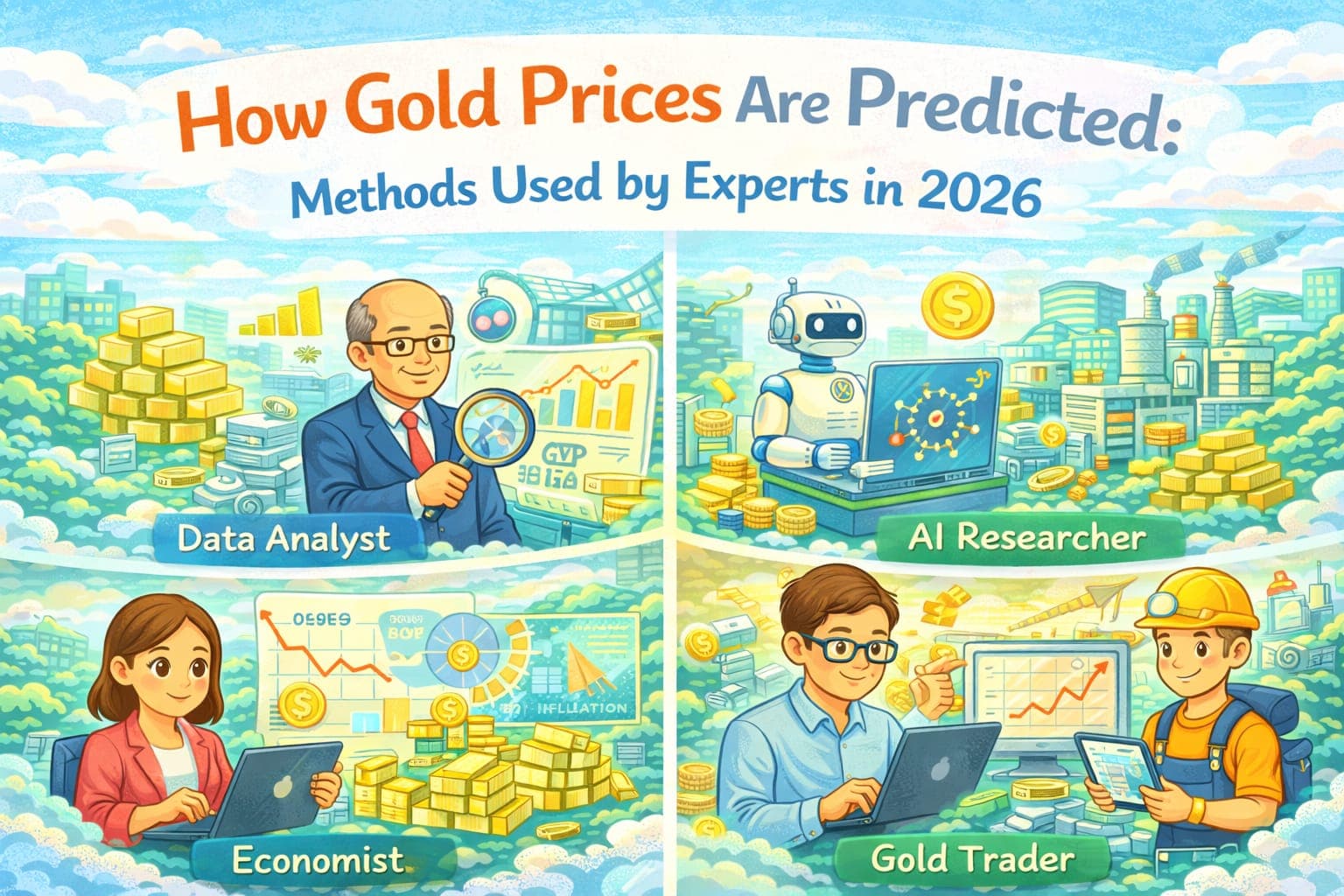
Gold has always been more than just a metal; it's a global indicator of fear, stability, and long-term value. As we move through 2026, predicting gold prices has become both more complex and more data-driven than ever before. Experts no longer rely on a single indicator. Instead, they blend economics, market psychology, technology, and historical patterns to forecast gold price movements.
So how exactly do professionals analyze and predict gold prices in 2026? Let’s break it down.
1. Demand and Supply Dynamics
At its core, gold price analysis still begins with basic economics.
Key demand drivers:
- Jewelry demand (especially from India and China)
- Central bank gold purchases
- Investment demand (ETFs, digital gold, physical bullion)
Supply factors:
- Gold mining output
- Recycling of existing gold
- Geopolitical or environmental disruptions affecting mining
When demand rises faster than supply, gold prices tend to climb and vice versa.
2. Inflation and Interest Rates
One of the strongest predictors of gold prices is inflation.
When inflation rises, gold is seen as a hedge against currency devaluation.
When real interest rates fall or turn negative, gold becomes more attractive than bonds or savings.
In 2026, experts closely monitor:
- US Federal Reserve policy
- RBI interest rate decisions
- Global inflation trends
Lower interest rates often mean higher gold prices.
3. Currency Strength and the US Dollar
- Gold is priced globally in US dollars.
- A weaker dollar usually pushes gold prices higher
- A stronger dollar can suppress gold demand
Forex market trends, trade deficits, and global capital flows are now deeply integrated into gold market analysis models.
4. Geopolitical and Economic Uncertainty
Gold thrives during uncertainty.
Experts track:
- Wars and geopolitical tensions
- Trade conflicts
- Recession signals
In 2026, with shifting global alliances and economic slowdowns in some regions, geopolitical risk remains a major factor affecting gold prices.
5. Technical Analysis and Price Patterns
Modern gold price prediction relies heavily on technical analysis.
Traders study:
- Support and resistance levels
- Moving averages
- RSI and MACD indicators
- Long-term price trends
AI-powered trading tools now scan decades of gold price data to identify patterns that human analysts might miss.
6. Market Sentiment and Investor Behavior
Gold is as much about psychology as it is about numbers.
Experts analyze:
- Investor sentiment
- Fear and greed indexes
- ETF inflows and outflows
- News sentiment analysis
In 2026, behavioral finance plays a bigger role, as emotional reactions to global news can move gold prices rapidly even before fundamentals change.
7. Central Bank Policies and Reserves
Central banks are major players in the gold market.
Increased gold reserves signal long-term confidence in gold
Reduced dependence on the US dollar boosts gold demand
Emerging economies continue to diversify reserves, making central bank activity a key element in gold price forecasting.
Expected Gold Price Trend in 2026
While no prediction is guaranteed, most analysts expect gold prices in 2026 to remain volatile but structurally strong, supported by:
- Persistent inflation risks
- Global economic uncertainty
- Long-term investment demand
Rather than sharp crashes, experts foresee gradual upward movements with short-term corrections.
FAQs
1.What will be the expected price of gold in 2026?
Ans. Most experts predict steady to moderately higher gold prices due to inflation, geopolitical risks, and central bank demand.
2.What are some simple tricks to predict gold prices?
Ans. Track inflation trends, interest rates, US dollar strength, and major global events. These factors influence gold prices the most.
3.Is gold a good investment in 2026?
Ans. Yes, gold remains a strong hedge against inflation and economic uncertainty in 2026.
4.Which factors affect gold prices the most?
Ans. Inflation, interest rates, US dollar strength, and global geopolitical events have the biggest impact.
5.Can beginners predict gold price trends?
Ans. Beginners can follow basic indicators like inflation data, central bank news, and long-term price trends.