
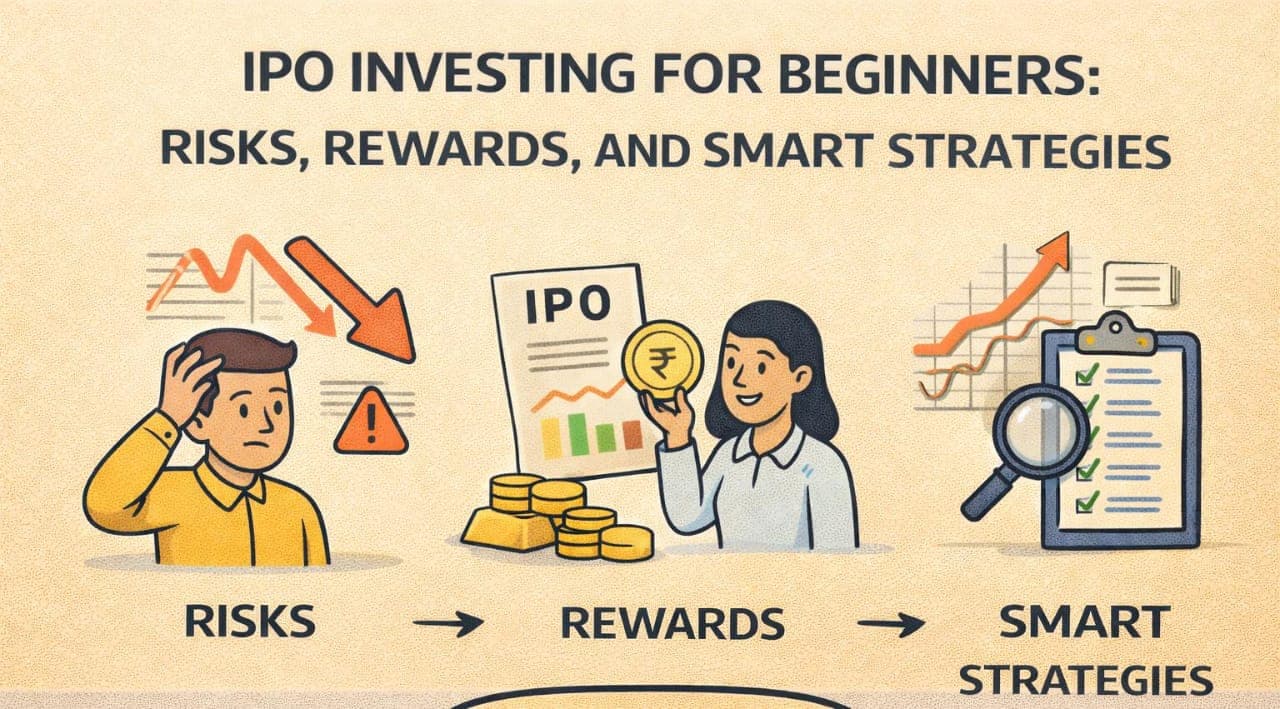
Initial Public Offerings (IPOs) often create buzz in the stock market. From news headlines to social media hype, IPOs promise early access to fast-growing companies. But for beginners, IPO investing can be both exciting and risky. Understanding how IPOs work, their potential rewards, and the hidden risks is essential before putting your money in.
This guide breaks down IPO investing in a simple, practical way to help beginners make smarter decisions.
What Is an IPO?
An IPO (Initial Public Offering) is the process through which a private company offers its shares to the public for the first time and gets listed on a stock exchange. Once listed, anyone with a trading account can buy or sell its shares.
Companies launch IPOs to raise capital for expansion, reduce debt, or provide exit opportunities to early investors.
Why Do Investors Find IPOs Attractive?
1. Early Investment Opportunity
IPOs allow investors to buy into a company at an early stage of its public journey, sometimes before major growth happens.
2. Listing Gains
Many IPOs debut at prices higher than their issue price, offering short-term profits known as listing gains.
3. Portfolio Diversification
Adding IPOs from different sectors can help diversify an investment portfolio beyond traditional stocks.
Risks of IPO Investing
1. Limited Financial History
Unlike established companies, IPOs often have limited public financial data, making it harder to evaluate long-term stability.
2. Overvaluation
Hype and media attention can push IPO prices higher than their actual worth, leading to losses after listing.
3. High Volatility
IPO stocks can experience sharp price swings in the initial days due to speculation and low market depth.
4. Lock-In Expiry Pressure
When lock-in periods for early investors end, sudden selling can negatively impact share prices.
Rewards of IPO Investing
1. Strong Long-Term Growth
Some IPOs grow into market leaders, delivering substantial returns over time.
2. Access to Innovative Businesses
IPOs often introduce companies from emerging industries like technology, renewable energy, and fintech.
3. Wealth Creation Potential
When backed by solid fundamentals, IPO investments can significantly enhance long-term wealth.
Smart IPO Investing Strategies for Beginners
1. Read the Red Herring Prospectus (RHP)
The RHP provides insights into the company’s business model, risks, financials, and future plans.
2. Study the Industry
Understand the sector’s growth potential, competition, and regulatory environment before investing.
3. Avoid Blind Hype
Social media excitement should never replace research. Evaluate facts, not noise.
4. Decide Your Objective
Are you investing for listing gains or long-term growth? Your strategy should align with your financial goals.
5. Don’t Over-Allocate
Avoid investing a large portion of your capital in a single IPO. Balance is key.
Common Mistakes Beginners Should Avoid
- Investing without reading company fundamentals
- Following influencers blindly
- Expecting guaranteed listing gains
- Ignoring long-term business sustainability
FAQs
1. Is IPO investing safe for beginners?
Ans. IPO investing carries higher risk than regular stocks, but beginners can invest safely with proper research and limited allocation.
2. Can I make guaranteed profits from IPOs?
Ans. No, IPOs do not guarantee profits. Listing gains depend on market conditions and company fundamentals.
3. How much money should I invest in an IPO?
Ans. Beginners should invest only a small portion of their capital and avoid overexposure to a single IPO.
4. Is it better to hold IPO shares long-term or sell early?
Ans. It depends on the company’s growth potential and your financial goals—both strategies can work.
5. What should I check before applying for an IPO?
Ans. Review the company’s financials, business model, industry outlook, and risk factors in the prospectus.