
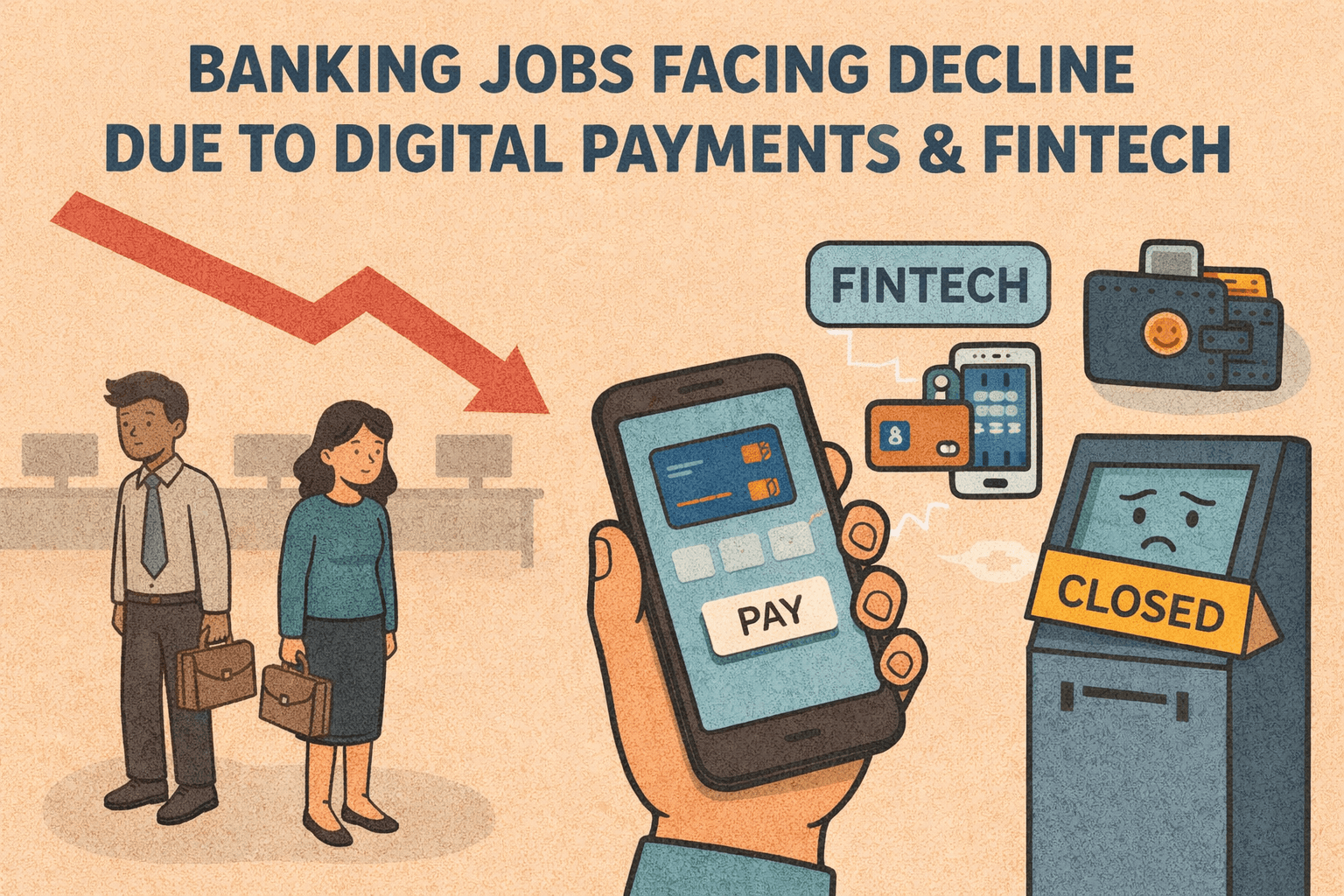
The banking industry is undergoing one of the biggest transformations in its history. Traditional banking jobs that once relied heavily on manual processes, paperwork, and in-branch services are now being reshaped—or even replaced—by digital payments, fintech platforms, and automation.
With the rapid growth of UPI, mobile wallets, digital banking apps, AI-driven customer support, and fintech startups, the way banks operate has fundamentally changed. While technology has improved speed, convenience, and efficiency for customers, it has also raised serious concerns about the future of traditional banking jobs.
How Digital Payments Are Changing Banking Jobs
Digital payment systems like UPI, mobile banking apps, internet banking, and contactless cards have reduced the need for physical bank visits. Tasks that once required multiple employees can now be completed instantly through apps.
As a result:
- Fewer customers visit bank branches
- Manual cash-handling roles are declining
- Clerical and entry-level roles are shrinking
- Customer service is increasingly handled by chatbots and AI systems
Banks are no longer just financial institutions—they are becoming technology-driven service platforms.
The Rise of Fintech vs Traditional Banks
Fintech companies focus on speed, innovation, and user experience. Unlike traditional banks, fintech firms:
- Operate digitally with fewer employees
- Use AI and data analytics extensively
- Offer faster loan approvals and payments
- Require less physical infrastructure
This has increased competition and forced banks to cut costs, automate processes, and reduce dependence on large workforces.
According to global financial studies, banks that fail to digitally transform are losing market share to fintech platforms, which directly impacts job stability in traditional banking roles.
Banking Roles Most at Risk
Not all banking jobs are disappearing, but many are changing in nature. The roles most affected include:
- Bank tellers
- Clerical staff
- Cash handlers
- Manual data entry operators
- Call-center roles without tech skills
These roles involve repetitive tasks that can be easily automated or digitized.
Skills for Banking Jobs in the Digital Era
While some jobs are declining, new opportunities are emerging for professionals with the right skills. The future of banking belongs to those who can combine finance knowledge with technology.
High-demand skills include:
- AI and machine learning in banking
- Cybersecurity
- Risk management
- Digital compliance
- Fintech operations
- Product management
Banking professionals who adapt and upskill will remain relevant despite technological disruption.
AI in Banking: Threat or Opportunity?
Artificial intelligence is often seen as a threat to jobs, but in reality, it is reshaping roles rather than completely eliminating them. AI handles repetitive tasks, fraud detection, and customer queries, allowing humans to focus on:
- Strategic decision-making
- Relationship management
- Risk assessment
- Regulatory compliance
The real challenge is not AI itself, but the lack of upskilling among the workforce.
Workforce Transformation in the Banking Sector
The banking workforce is shifting from volume-based hiring to skill-based hiring. Instead of large numbers of employees performing routine tasks, banks now prefer smaller teams with advanced digital and analytical skills.
This transformation means:
- Fewer but higher-skilled jobs
- Continuous learning is essential
- Career paths are becoming more specialized
FAQs
Q1. What are the top challenges facing FinTech HR firms?
Ans. FinTech HR firms struggle with finding talent that has both financial knowledge and strong technical skills. High competition, fast-paced innovation, and talent retention are major challenges.
Q2. Are most banking companies being defeated by technology?
Ans. Not defeated, but forced to adapt. Banks that fail to embrace digital transformation face declining relevance, while tech-driven banks continue to grow.
Q3. Is fintech replacing banks completely?
Ans. No. Fintech is complementing and competing with banks. Many banks are partnering with fintech firms to stay competitive.
Q4. Which banking jobs are safest in the future?
Ans. Jobs related to risk management, compliance, cybersecurity, data analytics, and strategic roles are more secure.
Q5. Can banking employees survive this change?
Ans. Yes, but only through upskilling and continuous learning. Adaptability is key.
Q6. Should students still consider banking as a career?
Ans. Yes, but they should focus on future-ready roles rather than traditional clerical positions.