
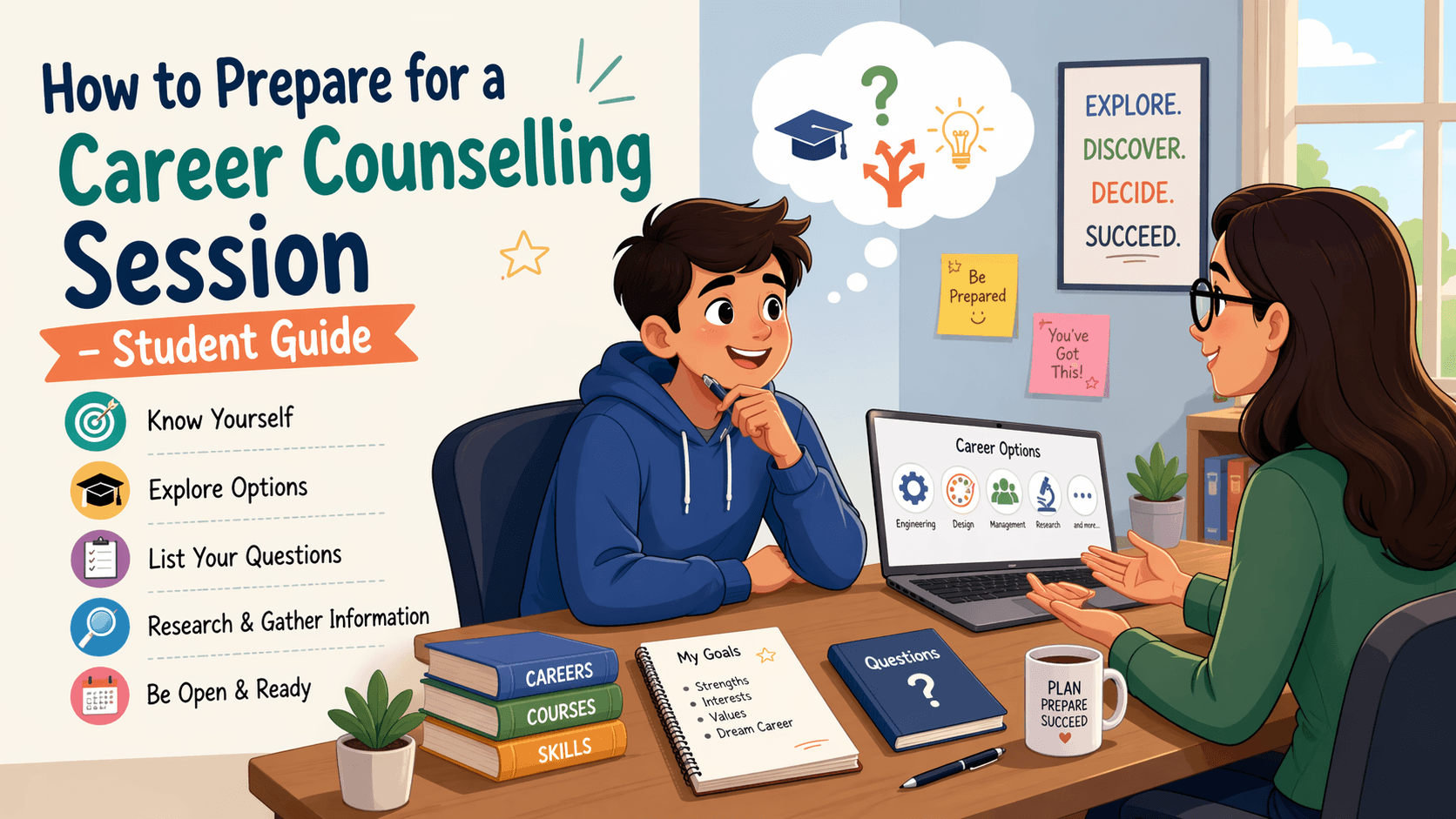
Entering a career counselling office can feel like walking into a maze without a map. Most of us just show up, hoping a magic test will tell us exactly what to do for the next forty years. But that is not how it works. Think of it more like a collaborative project between you and an expert. If you walk in empty-handed, you leave with very little. When you take the time to prepare for career counselling, the entire experience shifts from a boring lecture to a clear roadmap. It is about knowing what you want and, more importantly, what you don’t want. Being a student is already stressful enough with exams and social pressure, so your guidance session should be a place of clarity, not more confusion. By doing a bit of homework on yourself before the meeting, you can turn a simple chat into a life-changing strategy.
Getting Your Headspace Right
Approaching a professional for advice requires a mix of honesty and curiosity. You need to be ready to talk about your strengths and the things you struggle with.
Mindset Prep: Setting the stage for a great talk.
➤ Stay open to new ideas.
➤ Be honest about your grades.
➤ Forget about what your friends are doing.
➤ Focus on your own interests.
➤ Trust the process of discovery.
Knowing how the system works helps lower anxiety. Many schools are now taking this seriously, especially since the CBSE revises affiliation rules to make student counseling mandatory.
Essential Research Before You Go
You shouldn't go in knowing nothing about the world of work. Spend some time looking at different fields. This helps you understand what to expect counselling session discussions to cover.
Research Tasks: Things to look into before your appointment.
➤ List five jobs that sound cool.
➤ Check the salary for those roles.
➤ Look at the degrees required.
➤ Research the daily routine of those jobs.
➤ Find out if those industries are growing.
| Task | Purpose | Time Needed |
|---|---|---|
| Self-Reflection | Knowing your likes | 20 mins |
| Job Search | Market awareness | 40 mins |
| Note Taking | Remembering questions | 10 mins |
Creating Your Personal Profile
The counsellor needs to know who you are beyond your marksheet. Writing down your hobbies and even your side projects can provide a lot of context for your student counselling preparation steps.
Personal Details: What to share with your mentor.
➤ Your favorite subjects in school.
➤ Hobbies you do for fun.
➤ Any volunteer work you have done.
➤ Your dream company to work for.
➤ Locations where you want to live.
If you have ever thought about starting your own thing, check out this student's guide to entrepreneurship for some inspiration.
The Logistics of the Session
Knowing the practical side makes things smoother. It helps to have a career session guide India students can rely on for local context.
Practical Prep: The physical things you need.
➤ Bring a notebook and pen.
➤ Have your latest marksheet ready.
➤ Keep a list of your achievements.
➤ Carry a laptop if you have digital work.
➤ Print out any certificates.
Government initiatives are also helping out. For example, a portal launched for career guidance is a great resource for students in grades 9 to 12.
Questions are Your Best Tool
The quality of your session depends on the questions you ask. You need a list of questions to ask counsellor experts so you don't forget anything important at the moment.
Query List: Things you must ask during the talk.
➤ Which entrance exams should I take?
➤ What is the cost of these courses?
➤ Are there any good scholarships available?
➤ What are the backup options for this field?
➤ How do I build a strong resume?
| Question Category | Example Question |
|---|---|
| Academic | What subjects should I pick? |
| Financial | What is the total fee? |
| Career | Where can I work later? |
Mastering the Follow-Up
One meeting is usually just the start. You need to keep the momentum going by following these counselling tips students often overlook.
Action Plan: What to do after the session ends.
➤ Review your notes the same day.
➤ Research the colleges mentioned.
➤ Talk to your parents about the plan.
➤ Set a date for the next meeting.
➤ Start working on the suggested skills.
For those in specific regions, the Career Prayanam platform offers a great overview of available paths.
Understanding the Bigger Picture
Career planning isn't just about the next year; it is about your whole life. Using a career planning session India focused approach helps you see how local markets are evolving.
Strategic Thoughts: Long term planning ideas.
➤ Think about job stability.
➤ Consider work-life balance.
➤ Look for remote work options.
➤ Check for global opportunities.
➤ Plan for future studies.
If you are still in school, keeping an eye on the CBSE Class 9 syllabus is a good way to stay on track.
Common Mistakes to Avoid
Don't let simple errors ruin your progress. Knowing how counselling works means knowing what not to do as much as what to do.
Pitfalls: Things that can hold you back.
➤ Arriving late to the session.
➤ Being too shy to speak up.
➤ Expecting the counsellor to decide for you.
➤ Hiding your true interests.
➤ Ignoring the advice given.
| Mistake | Consequence | Fix |
|---|---|---|
| Silence | No helpful advice | Speak your mind |
| Lack of Prep | Wasted time | Use a checklist |
| Unrealistic Goals | Frustration | Be practical |
Making the Most of Resources
There are plenty of free and paid tools out there to help you. A student guidance session tips list should always include looking for expert help.
Helpful Resources: Where to find more info.
➤ Educational websites and blogs.
➤ Free seminars in your city.
➤ Online career community groups.
➤ Career exhibitions and fairs.
➤ Professional networking sites.
Even organizations like the ICAI hold free career counselling for students in government schools, which is amazing for accessibility.
Final Preparations
Before you step out the door, do a quick check. This counselling preparation checklist ensures you are 100% ready for the conversation.
Final Checklist: The last-minute scan.
➤ Is your phone on silent?
➤ Do you have your list of doubts?
➤ Are you wearing comfortable clothes?
➤ Do you have a positive attitude?
➤ Is your water bottle packed?
If you are wondering about the timing of all this, read about the right age to begin career counselling to see if you are on schedule.
Future Proofing Your Choices
The world changes fast, so your career plan should be flexible. Finding how to choose the right career in 2026 is about looking ahead at new trends.
Future Focus: Staying ahead of the curve.
➤ Learn about AI and technology.
➤ Develop soft skills like empathy.
➤ Stay curious about different industries.
➤ Adapt to changing job markets.
➤ Keep learning even after graduating.
There is also a huge scope and growth in career counselling if you are interested in the field itself as a professional path.
Frequently Asked Questions
Q1. What happens in counselling session?
Ans. A typical session involves a deep conversation about your interests, skills, and academic history. The expert might use tests or tools to understand your personality and then suggest specific career paths that match your profile.
Q2. How to prepare?
Ans. You should start by researching different jobs and making a list of what you like and dislike. Gather your academic records and write down any specific goals or fears you have about your future career.
Q3. What questions to ask?
Ans. Ask about the top colleges for your chosen field, the entrance exams required, and the average starting salary. It is also smart to ask about the day-to-day reality of different jobs to see if they actually suit you.
Q4. How long session takes?
Ans. Most sessions last between 45 minutes to over an hour. This gives enough time to discuss your background and dive into a few potential career options without feeling too rushed or overwhelmed.
Q5. What outcomes to expect?
Ans. You should leave with a clearer understanding of your strengths and a list of actionable steps. While it might not give you one final answer, it will definitely narrow down your choices and provide a sense of direction.