National Student Laptop Scheme 2026 Is Fake: How to Check
PIB Fact Check has said no such scheme was announced, so the free laptop message is fake. This guide shows how to check any student scheme in about two minutes.

Arham Ansari
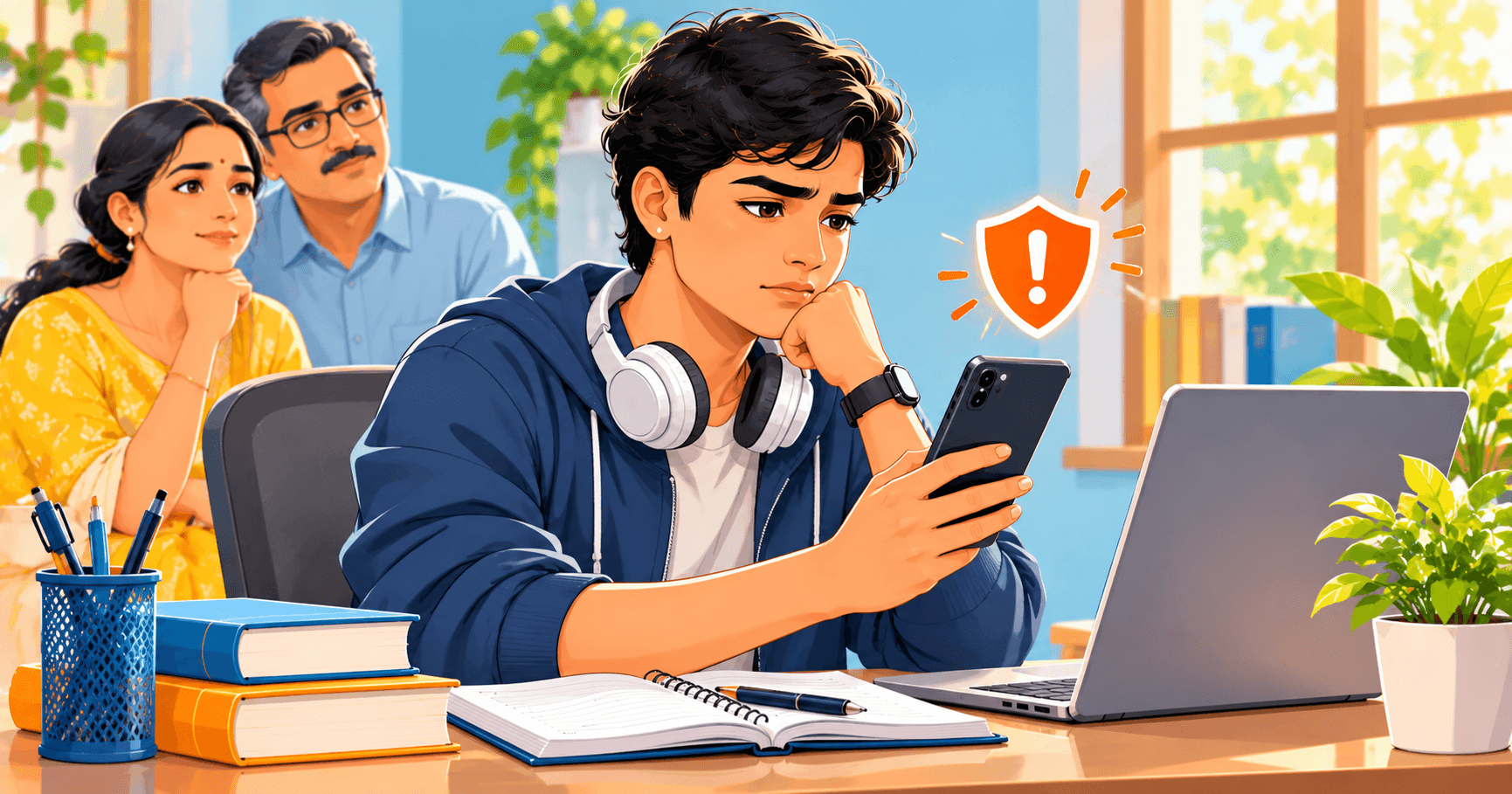
False. The message promising free laptops under the National Student Laptop Scheme 2026 is fake, and the Government of India has not announced any such scheme. It is spreading on WhatsApp and social media, and the forgeries look convincing, so it is easy to be taken in. This guide explains the claim, what it is really after, and how to check any student scheme yourself in about two minutes.
The verdict: the viral National Student Laptop Scheme 2026 message is fake
The message says, 'the government is offering free laptops under the Students Laptop Scheme 2026', and asks students to apply. False. PIB Fact Check, the government's fact-check unit, has said that the Government of India has NOT announced any such scheme.
PIB Fact Check flagged a version of this message in January 2026, and it has flagged the 'National' version again in 2026. You can read its latest findings on factcheck.pib.gov.in or in its post on the National Student Laptop Scheme 2026.
The name changes from one forward to the next, but the official answer stays the same. A real scheme is announced through official channels and listed on official portals, so you do not need to rely on a forwarded link to learn about it.
Why this message spread so easily
The message works because it looks like the real thing. It uses a plausible scheme name, a format that resembles an official notice, and a link or button that asks you to apply today.
Forwards from a relative or a class group carry trust, so they travel faster than any notice. A message can also name a real ministry and still be fake. The ministry's name does not make a message genuine.
The pattern is not new. In April 2024, AICTE, the technical education regulator, denied a 'Prime Minister's Free Laptop Scheme for Students' that students were supposedly asked to apply for through its website. A 'Free Laptop Scheme 2025' has also been flagged as fake.
Each version changes its name slightly, and some are well made enough to fool careful families. Being caught out is not a sign of carelessness. Learning to pause before you click is a skill, and our guide on digital literacy and digital fluency explains the difference between using a device and judging what you see on it.
What the message is actually after
Fake scheme messages usually want one of three things.
Your personal data
The form asks for your name, date of birth, Aadhaar number, address and school or college. Put together, these details can be misused to open accounts or commit fraud in your name.
A phone verification
You may be asked for an OTP, or to confirm a call or SMS. An OTP is a one-time code that lets someone complete an action from your account, so never share it, even with someone who says they are from the government.
A small registration fee
A 'registration' or 'processing' fee is the most direct trap. Once paid, the money is hard to get back, and the promised scheme never arrives. PIB Fact Check does not charge any fee for checking a message, as stated in the official PIB FAQ.
Once someone has your details, they may send a second message or make a call that sounds more convincing than the first. Stop at the first request for money or an OTP, not the second.
How to check any scheme in two minutes
Run these four checks in order. If a scheme fails even one, do not submit anything.
- Search on the official portal yourself. Type myscheme.gov.in into your browser rather than tapping a link in a message. As of 28 September 2026, the Digital India myScheme page reports more than 5,056 schemes on the platform.
- Ask the fact-checker. Search the scheme name on PIB Fact Check, which is run by the Press Information Bureau, or on X under the handle @PIBFactCheck. A fake version may already have been flagged.
- Look for it on india.gov.in. The national web portal links to union, state and local government sites. A real central or state scheme can be found there or through its links.
- Check the address and the money. The official portals in this guide all end in .gov.in. A lookalike site with a similar name and a different ending, such as .org or .com, is not a government portal. A real scheme never asks you to pay a fee over WhatsApp.
Typing the address yourself protects you, because a forwarded link can lead to a page that copies the real one. The first time may take a few minutes, but the habit quickly becomes second nature.
If you are still unsure after these checks, do not submit anything yet. Ask a teacher, or a career counsellor who knows the scholarship process, to look at it with you.
The real student schemes that do exist
Genuine government support for students does exist. Scholarships are the best place to start, and the main national route is the National Scholarship Portal. For the 2026-27 session:
- The portal is open for the 2026-27 academic year from 1 June 2026.
- One Time Registration (OTR) is mandatory to avail scholarships.
- From 2026-27, a student may apply for one merit-based scholarship scheme and one or more welfare-based scholarship schemes.
Each scheme has its own eligibility rules and dates, and these can change from one year to the next. Read the scheme page on the portal before you apply, and check each condition against the student's own details. Our National Scholarship Portal guide walks through the process step by step.
State governments run their own scholarship and student schemes too. You can reach state government sites from india.gov.in, which links to them. If you are not sure which scheme or course fits, a psychometric test can show your strengths before you choose.
What to do if you already submitted your details
Stay calm, and work through these steps in order.
- Stop and share nothing more. Do not pay any fee, reply to the sender, or give out an OTP.
- Contact your bank if card, account or login details were shared. Use the number on your card or the bank's official app, not a number from the message. Ask them to monitor or block the account.
- Report any money lost, quickly. Call the Cyber Crime Helpline 1930, listed on the official complaint page, or file at cybercrime.gov.in. Choose the financial fraud option. You will need to register with a valid Indian mobile number to file.
- Report the message itself. Send it to PIB Fact Check through the WhatsApp hotline and other channels described in the unit's official release. Keep a screenshot, but do not open the link again.
- Protect your accounts. Change passwords for email and banking apps, switch on two-step verification where it is offered, and check your statements for transactions you do not recognise.
Mistakes happen, and reporting quickly makes a real difference.
Checklist: how to spot the next version of this message
Use this list on any new scheme message:
- It asks you to apply, register or claim through a link you were sent.
- It promises a free gadget, cash or a grant, and pushes you to act 'today'.
- It asks for an OTP, UPI PIN, card number or Aadhaar number.
- It asks for a 'registration', 'processing' or 'verification' fee.
- The scheme name does not appear on myScheme, india.gov.in or PIB Fact Check.
- The web address does not match the official portal's address, or it looks slightly different.
- The name keeps changing from one forward to the next.
Frequently Asked Questions
Is the National Student Laptop Scheme 2026 real?
No. PIB Fact Check has said that the Government of India has NOT announced any National Student Laptop Scheme 2026, and it has flagged the message as fake. The same offer has appeared under other names, including Students Laptop Scheme 2026 and Get Government Free Laptops. Do not click any link or share personal details.
Is the PM free laptop scheme real or fake?
Fake. AICTE denied a 'Prime Minister's Free Laptop Scheme for Students' in April 2024, and similar messages have returned since under new names. Before applying for any scheme, search for it on myscheme.gov.in and india.gov.in. Never pay a fee to apply.
How can I check if a government scheme is real?
Type www.myscheme.gov.in or www.india.gov.in directly into your browser instead of tapping a link. Search the scheme name, then search it on PIB Fact Check at factcheck.pib.gov.in. A real scheme is listed on official government portals, and no genuine scheme asks you to pay a registration fee over WhatsApp.
Does PIB Fact Check charge a fee to check a message?
No. According to the official PIB FAQ, the PIB Fact Check Unit does not charge any fee for fact checking. You can send a suspicious message through the complaint channels listed on factcheck.pib.gov.in. If anyone asks you to pay to have a scheme or message verified, they are not the fact-check unit, and you should stop.
Where do I report a fake scheme message?
Report it to PIB Fact Check through the WhatsApp hotline and other channels listed on factcheck.pib.gov.in. If you lost money or someone misused your bank details, call the Cyber Crime Helpline 1930 or file a complaint at cybercrime.gov.in, choosing the financial fraud option. Act quickly, because the sooner you report, the better your chances of stopping a transfer.
What should I do if I already shared Aadhaar or bank details on a scheme form?
Stop sharing anything more and do not pay any fee. Call your bank on the number printed on your card or in its official app, and ask them to monitor or block the account if card or login details were shared. If money has gone out, call 1930 or file at cybercrime.gov.in. Change your passwords and watch for unfamiliar activity.
Which scholarship portal is official?
The official National Scholarship Portal is scholarships.gov.in. For the 2026-27 academic year it is open from 1 June 2026, and One Time Registration is mandatory to avail scholarships. Students can apply for one merit-based scheme and one or more welfare-based schemes. Any site that charges a fee to register for scholarships is not the official portal.
Conclusion
If you are still confused about which schemes, scholarships or courses are genuine, you can connect with Infigon Futures and talk to a career expert. You can also start with our psychometric career assessment to see which paths fit you.
Before you decide: four free quick checks
- 2 min · freeAre your skills safe from AI?AI will replace people who only do work a machine can do. Answer 10 quick questions to see your score and what to work on.Check my skills
- 1 min · freeWhen will you earn your dream salary?Pick a career and the monthly salary you want. We show at what age people in that career usually earn that much, or if most never do.Check my salary
- 2 min · freeCompare your favourite careersPick 2 or 3 careers. See which is safer from AI, pays more at the start and has more jobs open right now.Compare careers
- 1 min · freeWhat's going on in your career?Is your career hiring or cutting jobs? See the last 30 days of news and the jobs open right now.See the latest