
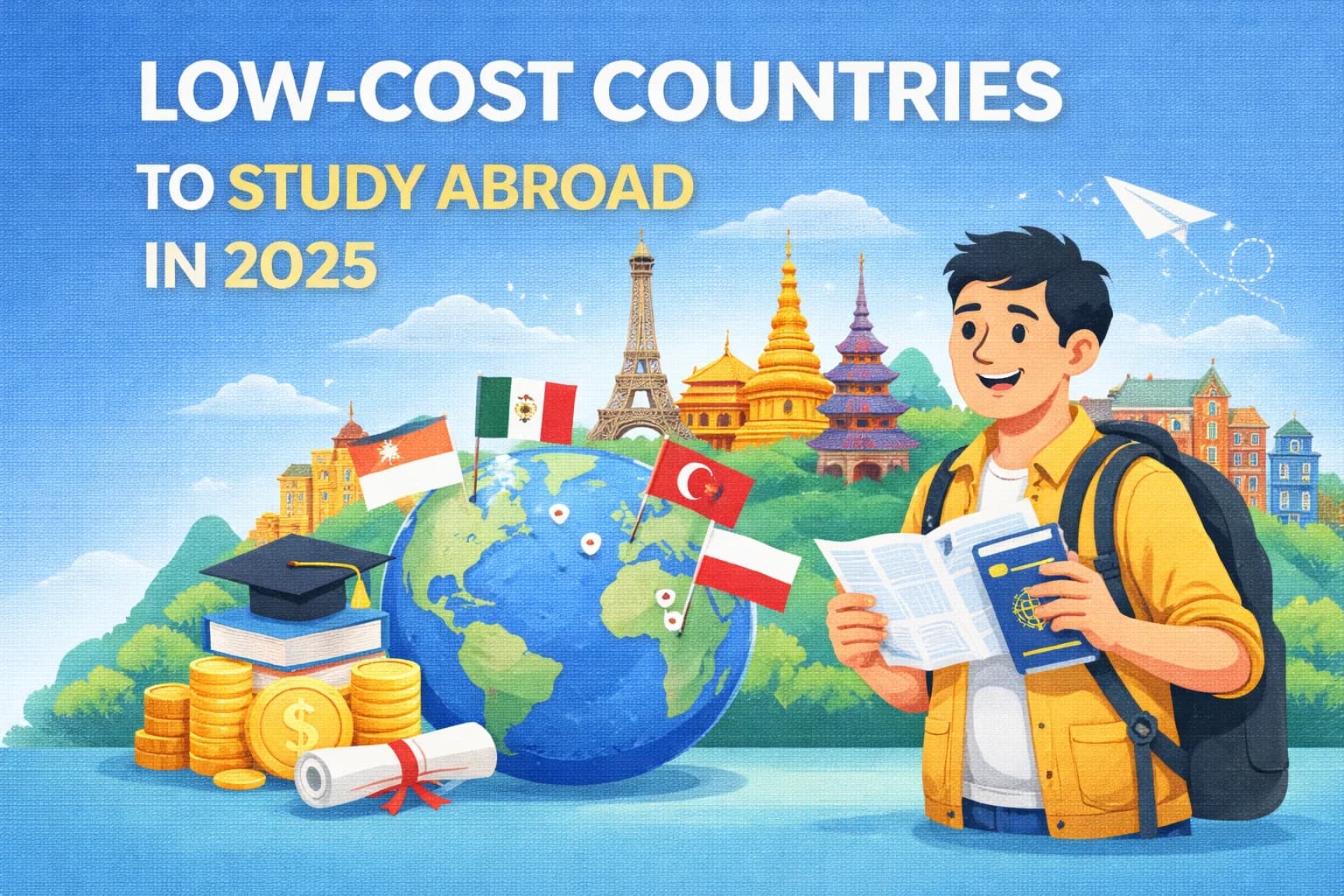
Many students who aspire for an international study journey come with a high financial tag. But in reality, Low-Cost Countries to Study Abroad in 2025 are something different from people’s perspectives.
Not every good degree needs an expensive tuition bill or luxury living costs. In fact, several countries now offer quality education, globally accepted degrees, and student-friendly living expenses—all without draining savings.
Let’s look at where smart students are heading in 2025.
Scholarships and Education Opportunities That Reduce Costs
One major reason studying abroad is becoming affordable is scholarships. Governments and universities are actively supporting international students.
Many universities now offer:
1. Merit-based scholarships
2. Tuition fee waivers
Research grants for Masters and PhD programs
Scholarships for students aren’t limited to academics alone. Sports, research, and even cultural exchange programs can help reduce costs significantly.
For students planning ahead, admissions with financial support are no longer rare—they’re expected.
Best Countries Study Options for Students on a Budget
Choosing the right country matters more than choosing the most famous one.
Some of the best countries to study in 2025 balance tuition, living costs, and part-time job opportunities very well.
Most international students are focusing on countries like Germany, Poland, Hungary, Malaysia, and Vietnam for overseas study journeys. As they offer recognised and affordable universities, reasonable expenses for living and trending degrees, the destinations are very popular now-a-days.
Living costs in these countries are often half of what students spend in traditional study destinations.
Tuition, Living Costs, and Student Budget Planning
Budget planning is where most students feel stressed. Tuition fees are one of those.
The budget for living like accommodation, food, transport and health insurance vary from country to country. But, the good thing is that it can be compensated by doing some part-time jobs in these low-cost countries.
It is legal in some countries to work and study at same time to gain real world experiences and most importantly, cover daily expenses.
Universities, Colleges, and Affordable Degree Programs
Low-cost means low financial burden, but not to be misunderstood as low quality education.
Even with low-cost financial tag, universities in those countries offer strong and renowned programs in the sectors of engineering, IT, healthcare, business, and social sciences.
Students can pursue:
1. Bachelor’s degree
2. Masters programs
3. PhD and research-based courses
Getting international degrees from those countries is also widely accepted and rewarded when applying for internships or jobs.
Study Abroad Programs With Part-Time Work and Visas
One key advantage of studying abroad in budget-friendly countries is visa flexibility.
Several countries allow students to work part-time during semesters and full-time during holidays. This helps students manage costs while building skills.
Some destinations even offer post-study work visas, opening doors to employment after graduation.
For students focused on long-term careers, this is a major plus.
Overseas Living: What Students Should Expect
Living abroad isn’t just about money—it’s about adjustment.
Low-cost countries often have welcoming student communities, shared housing options, and affordable public transport.
International students usually find it easier to settle in cities where education is a major industry. Daily expenses remain manageable, and student discounts are common.
Over time, many students say they live more comfortably than expected.
Why 2025 Is the Right Time to Study Abroad
Education systems worldwide are becoming more flexible. Online learning, blended programs, and international partnerships are expanding.
In 2025, students have more choices, more scholarships, and more affordable destinations than ever before.
With careful planning, studying abroad no longer belongs only to the wealthy.
FAQs
Q1. Which country is best for studying and a part-time job?
Ans. Countries like Germany, Poland, and Malaysia offer good education along with legal part-time work options.
Q2. What are the best and cheap countries to study abroad?
Ans. Some affordable study destinations include Hungary, Vietnam, Poland, and certain Eastern European nations.
Q3. What are the best destinations for studying abroad in 2025?
Ans. In 2025, students are choosing countries that balance education quality, costs, and post-study work opportunities.
Q4. How to study abroad for free and work part-time?
Ans. By securing scholarships, choosing low-tuition universities, and working part-time, students can reduce costs significantly.