Is IT a Safe Career for Your Child? A Parent's Test
Is IT still a safe career for your child? The short answer is yes, if they build problem-solving, learning and communication skills along with technical ones. This guide includes a quick IT sector test for parents and students.

Lakshay Bogal

Is IT a safe career for your child? Yes, it can still be a safe and rewarding choice, but 'safe' means something different today than it did a generation ago. Roles built around repeating the same routine task are the most exposed to automation, while people who understand a business problem, work well with technology and can explain their ideas to others are in a much stronger position. So the real question is not whether IT is safe in general, but whether your child is building skills that stay useful as the tools change.
This guide helps parents think that question through. It gives you a short IT sector test to try with your child, explains what makes a career safe, compares which IT roles are more exposed and which are more resilient, and lists the skills worth building from school onwards.
Is IT a safe career for your child? The IT sector test
Before looking at any job title, sit down with your child and answer these five questions together. Mark each one yes, partly or no. There are no right or wrong answers. The point is to see where your child naturally stands and what to build next.
- Do they enjoy solving problems step by step, even when the answer is not obvious at first?
- Are they curious about how things work, whether it is an app, a game, a machine or a website?
- Are they willing to keep learning a new tool or language every year or two?
- Can they explain a technical idea in simple words to someone who is not technical?
- Do they enjoy building something real, such as a small app, a website or a project, and not only studying for exams?
How to score the test
Give one point for each yes and half a point for each partly, then add them up.
- 4 to 5 points: IT is a strong fit. Explore it seriously and start building practical skills early.
- 2 to 3.5 points: IT could work, especially if your child pairs it with a field they care about, such as design, finance, healthcare or law.
- Below 2 points: Look at a wider range of options before choosing IT, and get a proper career assessment to understand your child's interests and strengths.
A quick test is only a starting point. Infigon Futures offers career counselling with psychometric assessments that go deeper into personality, aptitude and interests. This is useful when a child is torn between IT and another field.
What makes a career safe in the first place
Parents often think of a safe career as one with plenty of openings today. That matters, but it is only part of the picture. A career is safer when the skills behind it are needed in many places, when the person can keep growing and earning over time, and when they can move to a new employer or a new kind of work if needed.
Demand is only one part of safety
A field can be busy and still leave people stuck if they only know one narrow tool or one repeated task. Look at the skills, not just the job title. Two people who both say they work in IT can have very different futures depending on what they do every day.
Why technology change is the real risk
Technology changes faster than most degrees are updated. Tools that automate routine coding, testing, reporting and customer support are already part of many workplaces, and their reach is likely to grow. That does not mean IT jobs will disappear. It means the content of many IT jobs is shifting, and people who only do the routine part are more exposed than people who design, check, manage and improve the systems.
Which IT roles are more exposed, and which are more resilient
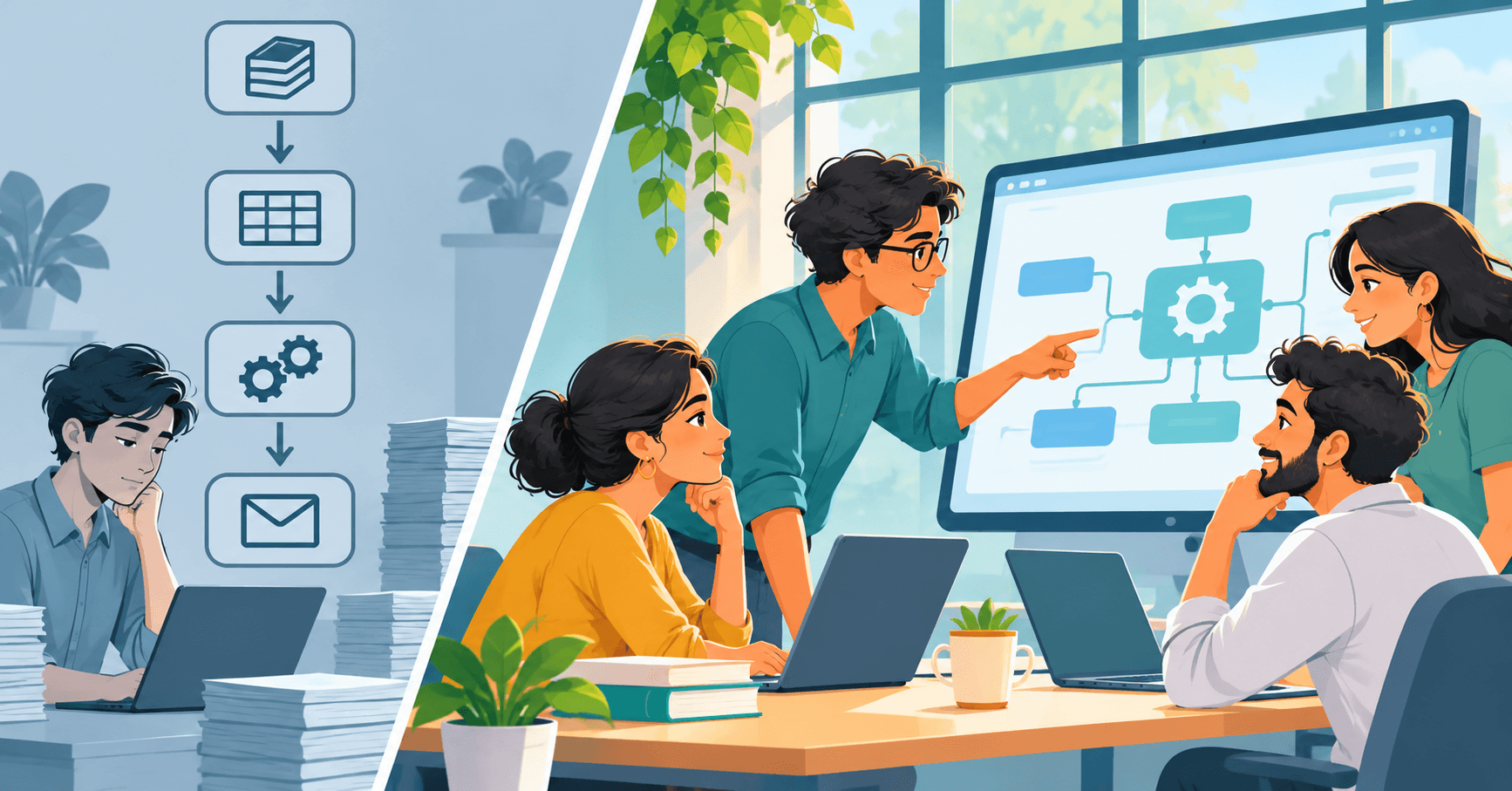
The table below is a way to think about the difference, not a verdict on any one job. Most roles mix both kinds of work.
| IT work | Why it is more exposed | Why it tends to be more resilient |
|---|---|---|
| Routine manual testing | Repetitive, rule-based checks are easy to automate | Testers who understand user needs and design smart test cases |
| Basic coding for simple, well-defined tasks | Code generation tools can produce standard code quickly | Engineers who design systems, make trade-offs and own the outcome |
| Level-one helpdesk support | Scripted answers and common fixes can be automated | Support specialists who solve complex problems and explain them clearly |
| Standard reporting and data entry | Fixed reports and repeat data work can be automated | Analysts who ask the right questions and link data to business decisions |
| Alert checking that follows fixed steps | Playbook-based tasks are easy to automate | Security professionals who investigate, design defences and respond to new threats |
Two things stand out. Work that is repetitive and follows fixed steps is easier to automate. Work that needs judgement, context and communication is harder to replace.
If your child is drawn to software, the software engineer career guide shows the range of work involved. Those interested in data can explore the data scientist path, while those drawn to protecting systems may like the cybersecurity analyst role. Our blog on whether AI will replace software developers gives a more detailed look at how the developer role is changing.
Skills that keep an IT career safe
Whatever branch of IT your child chooses, the same core skills make the difference between a job that changes with technology and one that gets left behind.
Problem-solving and business understanding
Employers value people who can break a messy problem into parts and understand why it matters to the business or the user. A student who knows how a hospital, bank or school actually works has an edge over someone who only knows a programming language.
Learning speed and adaptability
Tools change, so the habit of learning matters more than any single tool. Encourage your child to pick up one new skill each term, read documentation and try small projects in their free time.
Communication and teamwork
Writing clearly, presenting an idea and working with people from other teams are skills that automation finds hard to copy. These are often the difference between a good engineer and one who is trusted to lead a project.
Strong fundamentals before specialisation
Logic, mathematics, databases, networking and basic security give a student something solid to build on. Specialised tools come and go, but fundamentals carry over from one job to the next.
Routes into IT after school and college
Most students enter IT through a degree or diploma in computing, but there are several paths. Eligibility rules differ by college and by course, so check each institute's requirements before applying.
| Route | Typical starting point | Best suited for |
|---|---|---|
| BE or B.Tech in Computer Science | Class 12 with Physics and Maths | Students who want deep technical roles and product engineering |
| BCA | Class 12, with entry rules set by each college | Students who want an applied, career-focused computer degree |
| B.Sc in Computer Science | Class 12, subject rules vary by university | Students who enjoy theory and may want a Master's later |
| Diploma in computer engineering | Class 10 or 12, depending on the institute | Students who want hands-on skills sooner |
Certifications and short courses can add to any of these routes, but they work best alongside a solid degree or diploma and some real projects. Your child does not need to decide everything at Class 10. Many students change direction after Class 12 or after graduation. If you are still choosing a stream, our guide on stream selection after 10th walks through the options.
Common myths about IT careers
- 'IT means only coding.' Many IT roles involve testing, design, support, analysis, project management and security. Coding is one part of the field.
- 'AI will make IT jobs disappear.' Change is more likely to reshape job content than remove the field altogether, and people who can work with new tools are better placed to adapt.
- 'Only toppers can succeed.' Steady practice, curiosity and project work often matter more than a perfect score.
- 'A degree alone guarantees a job.' Employers look at what a student can do, so projects, internships and a portfolio carry real weight.
What parents can do next
Your role is to help your child test the idea, not to decide it for them. A few practical steps help:
- Encourage one small project a term, such as a simple website, a spreadsheet model or a basic app.
- Let them try free introductory courses in areas that interest them, and notice which ones they return to.
- Talk about what they enjoy as well as their marks. Interest and aptitude matter for long-term motivation.
- Keep a backup route open. A child who studies computing with some maths or science can still move into adjacent fields later.
- If the picture is still unclear, a certified career counsellor can review the test results alongside marks, interests and budget.
Frequently Asked Questions
Is IT still a safe career for students in India?
IT can still be a sound choice, but its safety depends on the work a person does rather than the label. Routine tasks are more exposed to automation, while roles that combine technical skill with problem-solving, business understanding and communication tend to be better placed. Students who keep learning, build real projects and stay curious about new tools are the ones who usually stay relevant over a long career.
Will AI replace IT jobs?
AI is changing many IT tasks, especially repetitive coding, testing, reporting and basic support work. It is more accurate to say AI is reshaping IT jobs than removing the whole field. People who understand the systems, check AI output and handle complex or unusual problems are likely to remain valued. Parents can help by encouraging children to learn how tools work, not just how to use them.
Which IT jobs are safest for a fresher?
No job is completely safe, but freshers often do well in roles that involve understanding users and systems. Examples include software development with a focus on design, cybersecurity, data analysis that drives decisions, and product support that solves real problems. Roles that only repeat fixed steps tend to be more exposed. Strong fundamentals, a few projects and clear communication matter more than picking one perfect job title.
Can a student who is not strong in maths still do well in IT?
Maths helps, particularly for core computer science and data-heavy roles, but it is not the only route. Many IT jobs, such as testing, support, design, business analysis and cybersecurity operations, rely more on logic, attention to detail and communication. A student who finds maths difficult should check the subject requirements of each course and consider a career assessment before deciding.
Should my child choose BE or B.Tech in Computer Science or BCA?
Both can lead to IT careers, but they suit different students. A BE or B.Tech in Computer Science is more technical and suits students who enjoy deep engineering and maths-heavy problems. BCA is more applied and can suit students who prefer practical software work. Entry rules, fees and syllabus differ by college, so compare specific institutes and their placement records before applying.
Can my child switch to IT after choosing another stream?
In many cases, yes. Students often change direction after Class 12 or after a degree by taking a diploma, a short certification or a Master's programme. The key is to build core skills early and show them through projects. A career counsellor can help map the right bridge course based on your child's current background and goals.
How do I know if IT suits my child?
Start with the five-question IT sector test in this guide, which looks at problem-solving, curiosity, learning habits, communication and interest in building projects. A high score suggests IT is worth exploring seriously, while a lower score means looking at other fields too. A psychometric assessment and a session with a career counsellor can add depth, especially if your child has several interests.
Conclusion
IT is not automatically safe or risky. Its safety depends on whether your child builds problem-solving, adaptability and communication alongside technical skills, and on the kind of work they choose within the field. Use the test above as a conversation starter, then look at the roles and routes that match what your child enjoys.
If you are still unsure whether IT is the right choice for your child, you can connect with Infigon Futures and talk to a career expert.