
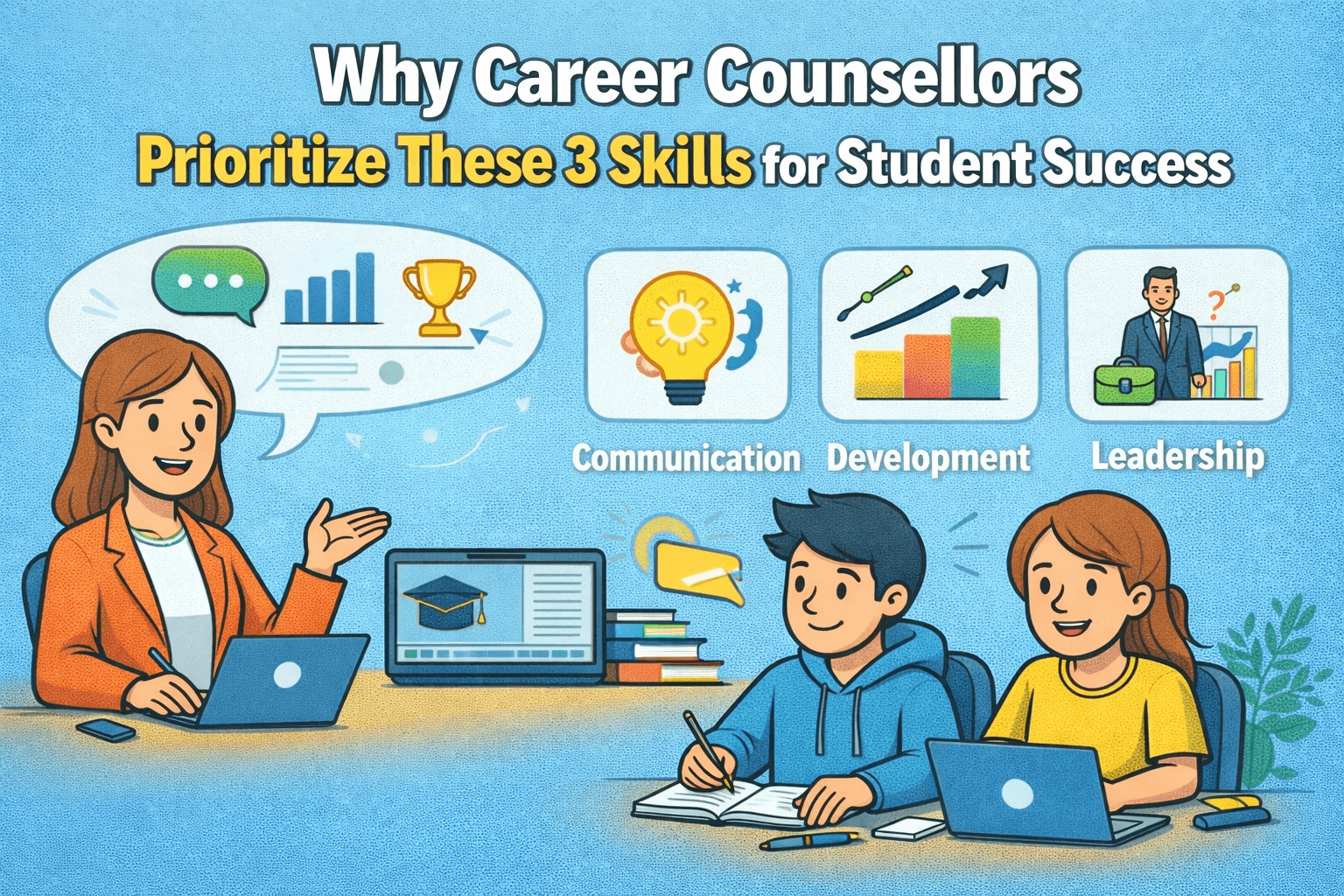
In today’s fast-changing world, academic scores alone are no longer enough to guarantee career success. Career counsellors increasingly focus on skills development because the right skills shape how students learn, adapt, and grow in real-world environments.
Across career counselling for students, one pattern stands out clearly: counsellors consistently prioritize three core skills that directly influence long-term career success and employability.
Let’s break down why these skills matter and how they support students at every stage of their career journey.
1. Communication Skills: The Foundation of Career Growth
Among all skills, communication skills for students remain the most essential. Whether a student plans to become an engineer, designer, doctor, entrepreneur, or manager, their ability to express ideas clearly plays a major role in success.
Career counsellors emphasize communication because it impacts:
- Academic performance and classroom participation
- Confidence during interviews and group discussions
- Leadership opportunities and teamwork
- Professional networking and career guidance interactions
Strong communication is not just about speaking fluently. It includes listening, writing, presenting ideas, and emotional awareness. Through structured career guidance courses and coaching programs, students learn how to articulate their strengths, goals, and interests effectively.
In short, communication transforms knowledge into opportunity.
2. Career Development & Learning Mindset
The second skill career counsellors prioritize is a career-focused learning mindset. Many students struggle not because they lack ability, but because they lack direction. Career counsellors help students understand how to learn, adapt, and grow as their careers evolve.
This skill focuses on:
- Self-awareness and interest discovery
- Decision-making and goal setting
- Continuous learning and adaptability
- Understanding industry expectations and career pathways
Career guidance for students is no longer a one-time conversation, it’s an ongoing process. Counsellors guide students to see learning as a lifelong journey, not just a phase limited to school or college.
This mindset builds clarity, reduces confusion, and prevents career misalignment later in life.
3. Leadership, Growth & Employability Skills
The third skill set revolves around leadership and employability. Even students who do not aim for managerial roles benefit greatly from leadership skills such as initiative, responsibility, and problem-solving.
Career counsellors focus on leadership because it supports:
- Personal growth and confidence
- Team collaboration and adaptability
- Workplace ethics and professionalism
- Long-term career success across industries
Leadership today is less about authority and more about growth, guidance, and impact. Coaching programs often help students build these qualities early, making them more employable and resilient in competitive career environments.
Why Career Counselling Focuses on Skills, Not Just Careers
Modern career counselling for students goes beyond suggesting job options. It focuses on building core skills that help students succeed regardless of how industries change.
By strengthening communication, learning mindset, and leadership abilities, career counsellors prepare students for:
- Smarter career decisions
- Higher confidence and clarity
- Better employability and adaptability
- Sustainable long-term success
FAQs
1. What are the top skills students should learn for future jobs?
Ans. The top skills students should learn for future jobs include communication skills, critical thinking, adaptability, leadership, and continuous learning ability. These skills help students succeed across industries and remain employable as job roles evolve with technology and market demands.
2. How do career counsellors help students develop essential skills?
Ans. Career counsellors help students identify skill gaps through assessments, structured guidance, and personalized coaching programs. They provide practical career advice, learning plans, and career guidance courses that focus on building communication, decision-making, and leadership skills.
3. Why are communication skills important for student career success?
Ans. Communication skills are important because they help students express ideas clearly, perform better in interviews, collaborate effectively in teams, and build professional relationships. Strong communication improves confidence and plays a key role in long-term career growth.
4. How does career counselling improve employability for students?
Ans. Career counselling improves employability by aligning a student’s strengths, interests, and skills with suitable career paths. It prepares students with industry-relevant skills, career clarity, and professional guidance, making them better prepared for real-world job requirements.
5. When should students start focusing on skill development for their careers?
Ans. Students should start focusing on skill development as early as middle or high school. Early career guidance helps students make informed academic choices, build essential skills gradually, and reduce confusion and stress during key career decision stages.