
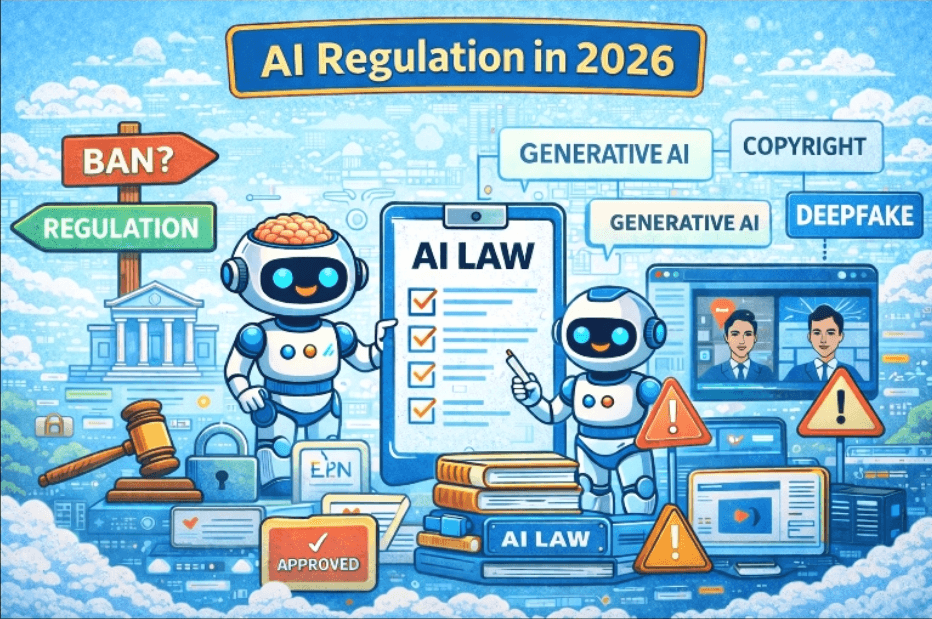
In 2026, conversations around AI are louder than ever. From viral deepfake videos to AI-written articles and automated customer support, artificial intelligence is shaping how we work, communicate, and consume content. But with rapid growth comes serious concerns. Governments across the world are introducing new AI regulations not to ban it entirely, but to control misuse.
So the real question is: Is AI being banned, or are we just entering a new phase of rules and accountability?
The Rise of AI-Generated Content
AI tools like ChatGPT and other generative platforms can now create essays, images, music, and even realistic human videos. While this innovation boosts productivity and creativity, it also creates risks:
- Deepfakes that spread false information
- Copyright violations through AI-generated art
- Automated misinformation campaigns
- Data privacy concerns
The problem is not artificial intelligence itself, but how it is used.
Why Governments Are Introducing AI Rules
In countries like India, the government has introduced stricter digital and cyber regulations to manage AI-generated content. Platforms are now expected to:
- Clearly label AI-generated content
- Remove harmful or misleading material
-;Prevent the spread of deepfakes
- Strengthen data protection measures
The goal is accountability, not prohibition.
Globally, regions such as the European Union have introduced AI-specific legal frameworks to categorize AI systems based on risk levels. High-risk systems face stricter compliance requirements, while low-risk tools have lighter oversight.
Is AI Going to Be Banned?
No, AI is not being banned.
Artificial intelligence plays a major role in:
- Automation in industries
- Financial services
- Education technology
- Content creation
Banning AI would slow economic and technological progress. Instead, governments are focusing on regulation and responsible innovation.
The shift is similar to how social media platforms were regulated and rules were introduced to reduce harm, not eliminate the technology.
Key Areas of AI Regulation in 2026
1. Deepfake Control
Governments want platforms to quickly remove manipulated videos that can damage reputations or influence elections.
2. Copyright Protection
Creators are demanding transparency about how AI models are trained and whether copyrighted material is being used without permission.
3. Content Moderation
AI-generated posts must follow the same community guidelines as human-created content.
4. Data Privacy
AI systems collecting personal data must comply with digital privacy and cyber laws.
What This Means for Users
For everyday users, new AI rules may result in:
- Labels on AI-generated posts
- More verification for content uploads
- Stricter community guidelines
- Improved transparency about AI tools
For businesses, compliance will become essential. Companies using generative AI must ensure their systems follow AI law and data protection standards.
FAQs
1. Is AI going to be banned?
Ans. No. AI is not being banned. Governments are introducing regulations to prevent misuse while allowing innovation to continue.
2. What is AI-generated content?
Ans. AI-generated content refers to text, images, videos, or audio created by artificial intelligence systems rather than humans.
3. Why are deepfakes a concern?
Ans.Deepfakes can spread misinformation, damage reputations, and manipulate public opinion.
4. Will social media platforms be responsible for AI content?
Ans. Yes. Platforms are increasingly required to monitor, label, and remove harmful AI-generated content.
5. How will AI regulation affect businesses?
Ans. Businesses must ensure compliance with copyright laws, data privacy regulations, and AI transparency requirements.