
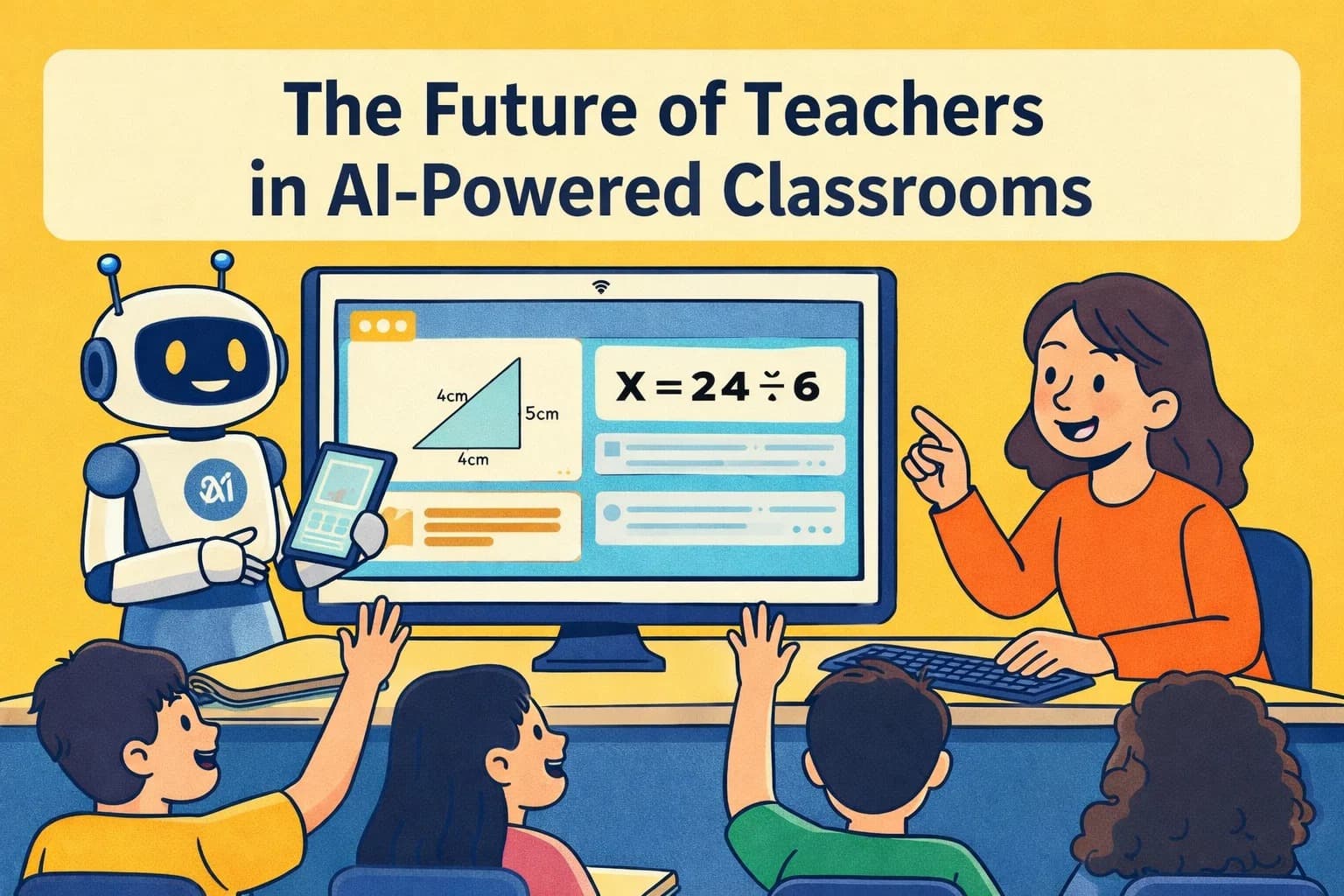
The old image of a teacher at a chalkboard is disappearing fast. By 2025, education is changing a lot because of technology. Some fear machines will take over teachers' jobs, but it's actually better than that. Teachers aren't going away; they're becoming more like mentors and guides. Now, it's less about just giving facts and more about helping students think for themselves and understand their feelings. Teachers now have the newest tools to get to know their students better. This piece looks at how classrooms are changing and why teachers are still key to learning. By accepting these changes, we're not just teaching stuff; we're getting kids ready for a world where tech and people come together to make things better for everyone.
How Learning is Changing
Schools aren't just classrooms with set times anymore. Digital classrooms let you learn anywhere, anytime. This flexibility is what education will be like in the future, where real and online learning are mixed together.
➤Teachers are now helping guide interactive learning instead of just giving lectures.
➤Students can get resources from all around the world right away, so learning is more varied.
➤Talking between students and teachers is quicker and easier.
➤Tech for teachers makes the school day more organized and less stressful.
➤Classrooms are becoming more open to everyone, helping students with different needs.
➤UNESCO's research on AI in classrooms is about how these can help teachers lead better.
| Feature | Traditional Classroom | Digital Classrooms |
|---|---|---|
| Location | Physical school building | Hybrid and remote options |
| Tools | Textbooks and paper | Tablets and interactive software |
| Pace | One size fits all | Personalized and flexible |
| Engagement | Passive listening | Active participation |
Personalization Through Smart Data
Education AI's best part is that it can adapt to how each student learns best. Before, it was almost impossible for a teacher to make thirty different lesson plans. Now, personalized learning is becoming normal.
➤Adaptive Learning systems watch how a student is doing and change the difficulty of assignments right away.
➤Teachers get reports that show exactly where a student needs help.
➤With this data, we can make sure every child keeps up with the class.
➤Students who are doing well can move forward, and those who need more time get the help they need.
➤Smart Learning platforms suggest extra reading or practice based on how well someone is doing.
➤You can find a full look at these changes in the NCERT report on E-Learning.
| Benefit of Personalization | Impact on the Student |
|---|---|
| Individual Pace | Reduced stress and better understanding |
| Targeted Feedback | Faster improvement in weak areas |
| High Engagement | Increased interest in the subject matter |
| Skill Mastery | Solid foundation before moving to new topics |
Hybrid Models: Best of Both Worlds
The future isn't just digital; it's all about mixing things up! Blended Learning does just that, mixing in-person stuff with what's good about teaching online. It makes a nice, balanced setup where tech helps out, but people still come first.
➤Think of it like this: students watch lesson videos at home, then spend class doing projects together..
➤AI tools can take care of the boring grading stuff, which frees up teachers to actually help students one-on-one.
➤Interactive sims let students do science experiments safely in a virtual space.
➤Online tools also help students work together, even when they're not in the same place.
➤A recent report looked at how AI is used in schools and showed different platforms being launched to assist schools with this move.
| Hybrid Aspect | Role of Technology | Role of the Teacher |
|---|---|---|
| Content Delivery | Providing videos and interactive modules | Curating the best resources for students |
| Assessment | Grading multiple-choice and basic quizzes | Providing deep feedback on creative work |
| Support | Offering 24/7 help through chatbots | Offering emotional support and mentorship |
| Project Work | Providing digital collaboration spaces | Guiding the teamwork and final results |
Helping Teachers Get Creative
Teaching isn't just about computers; it's about new ways to get students excited. Teachers are seeing that tech can really boost creativity.
➤AI can give teachers ideas for lessons or help make cool pictures and videos for class.
➤E-learning tools can turn lessons into lots of languages right away so everyone gets it.
➤Teachers can also use data to see who might need extra help early on.
➤When things like taking attendance and making schedules happen automatically, teachers get a lot more free time.
➤You can read more about this in the Journal of Educational Technology.
➤To see how things have changed, take a look at how AI changed teaching back in 2025.
| Innovation Area | AI Tool Capability | Teacher Benefit |
|---|---|---|
| Lesson Planning | Generates outlines and quiz questions | Saves hours of preparation time |
| Visual Aids | Creates images and diagrams for complex topics | Makes lessons more memorable |
| Language Support | Real-time translation and transcription | Reaches a wider range of students |
| Performance Tracking | Alerts teacher to declining grades | Allows for early and effective intervention |
Tackling Today's Problems
AI in schools is cool, but we gotta watch out for the downsides. It brings up questions about what's right and wrong, keeping stuff private, and making sure work is real.
➤Plagiarism is a concern, but it is also an opportunity to teach students about academic integrity.
➤We have to make sure everyone gets a fair shot with this tech so some folks don't get left behind.
➤People skills are something machines can't copy. Feeling for others and teaching right from wrong still matter a lot.
➤Teachers need to keep learning, so they know how to use all this new tech.
➤These tools are shaking things up, just like AI is changing how companies sell stuff or how graphic artists create designs.
| Challenge | Proposed Solution |
|---|---|
| Digital Divide | Government and school funding for devices |
| Data Privacy | Strict regulations on student information |
| Loss of Human Touch | Prioritizing social-emotional learning in class |
| Academic Integrity | Using AI-detection tools and oral exams |
Frequently Asked Questions
Q1. How will AI change education?
A. AI helps teachers by taking over some of the routine work, so they can spend more time with students. It also gives us info that lets us create learning plans that fit each student, making sure they learn at their own pace.
Q2. Will AI ever replace teachers?
A. Nah, machines can't really understand emotions or care about students like real people do. A computer can give you facts, but a teacher inspires you, gives you advice, and makes learning matter.
Q3. What's good about AI for students?
A. Students get feedback right away, can study whenever they want, and get lessons made just for them. This makes learning more fun and helps them get better at tough subjects easier than normal.
Q4. Any privacy issues with AI in schools?
A. Yeah, keeping student data safe is a big deal. Schools need to use secure sites and be super careful so personal info isn't used wrong or shared without permission.
Q5. How can teachers get ready for AI?
A. Teachers should stay curious and try out new things. Training programs and using teaching software can help them add tech to their classes in a way that still feels personal.