
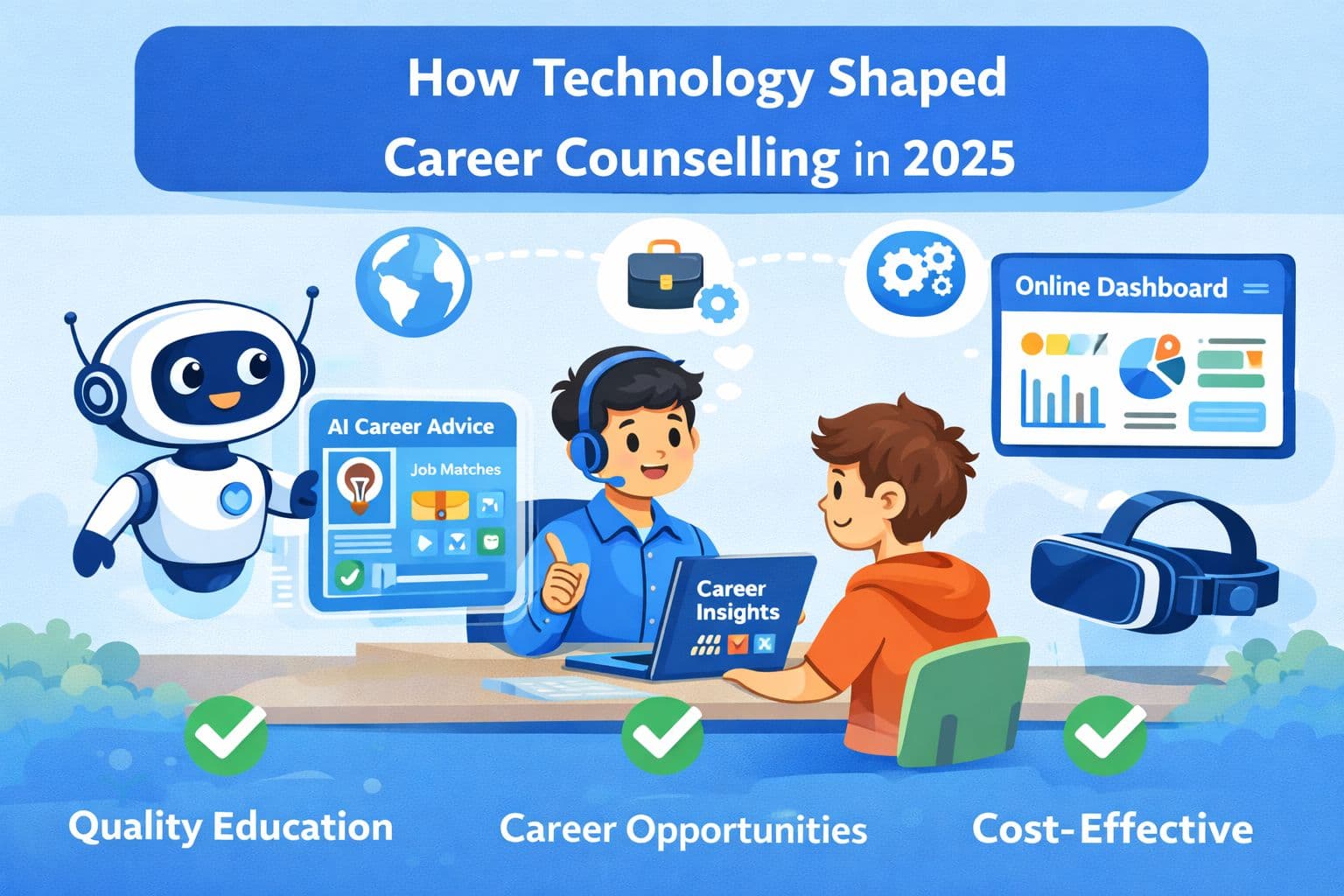
Career counselling in 2025 looks very different from what it was just a few years ago. Gone are the days when guidance meant a one-time session based only on marks or popular career trends. With rapid technological growth, career counselling has become more personalized, data-driven, and accessible to students across backgrounds.
Let’s take a closer look at how technology reshaped career counselling in 2025 and why it matters more than ever.
The Shift from Traditional to Tech-Driven Career Guidance
Earlier, career counselling depended heavily on face-to-face sessions, limited assessments, and general advice. In 2025, technology transformed this process by:
- Making counselling available online, anytime and anywhere
- Replacing guesswork with data-backed insights
- Helping students explore non-traditional and emerging careers
This shift empowered students to make informed decisions instead of following societal pressure or outdated career paths.
Role of AI in Modern Career Counselling
Artificial Intelligence became a backbone of career guidance in 2025. AI tools helped counselors and platforms understand students better by analyzing:
- Interests and personality traits
- Academic strengths and learning patterns
- Skill gaps and future industry demands
AI-driven recommendations ensured that students received customized career paths, rather than generic advice. This made counselling more relevant and realistic for each individual.
Online Counselling: Breaking Barriers for Students
One of the biggest changes was the rise of online career counselling. Technology removed geographical and financial barriers by offering:
- Virtual counselling sessions
- Affordable guidance plans
- Access to global mentors and experts
Students from small towns and underserved areas could now access the same quality of guidance as those in big cities. This democratization of career counselling was a major milestone in 2025.
Integration of Education Technology and Career Planning
EdTech platforms played a crucial role in linking education with career planning. Instead of treating them as separate journeys, technology helped combine both by:
- Mapping courses to real-world career outcomes
- Suggesting skill-based learning paths
- Offering certifications aligned with industry needs
This helped students understand why they were learning something and how it connected to their future careers.
Focus on Digital Skills and Automation Awareness
With automation reshaping industries, career counselling in 2025 focused heavily on future-ready skills. Technology helped students identify:
- High-demand digital skills
- Careers less vulnerable to automation
- Fields where human creativity and problem-solving matter
Counsellors used real-time market data to guide students toward careers with long-term growth and stability.
Technology’s Influence on Learners’ Lives
Technology didn’t just change counselling—it changed how students learned and thought about careers. As learners, students benefited from:
- Self-assessment tools that improved self-awareness
- Online resources to explore multiple career options
- Continuous guidance instead of one-time advice
This encouraged a mindset of lifelong learning and adaptability, which is essential in today’s fast-changing world.
Why Career Counselling Is More Beneficial Than Ever
In 2025, career counselling became less about “choosing one job” and more about building a flexible career roadmap. Its benefits include:
- Reducing career confusion and anxiety
- Helping students align passion with practicality
- Preventing costly career mistakes
With technology enhancing accuracy and reach, career counselling became a necessary support system for students planning their futures.
FAQS
1.How has technology changed career counselling?
Ans. Technology made career counselling more personalized, data-driven, and accessible through AI tools and online platforms.
2.Why is AI important in career guidance today?
Ans. AI helps analyze skills, interests, and market trends to suggest careers that truly match a student’s potential.
3.Is online career counselling effective for students?
Ans. Yes, it offers expert guidance, flexibility, and affordability, especially for students in remote areas.
4.How does career counselling benefit a student’s future?
Ans. It reduces confusion, builds clarity, and helps students make informed career decisions early.
5.What role do digital skills play in career planning?
Ans. Digital skills prepare students for future jobs and protect careers from automation risks.