
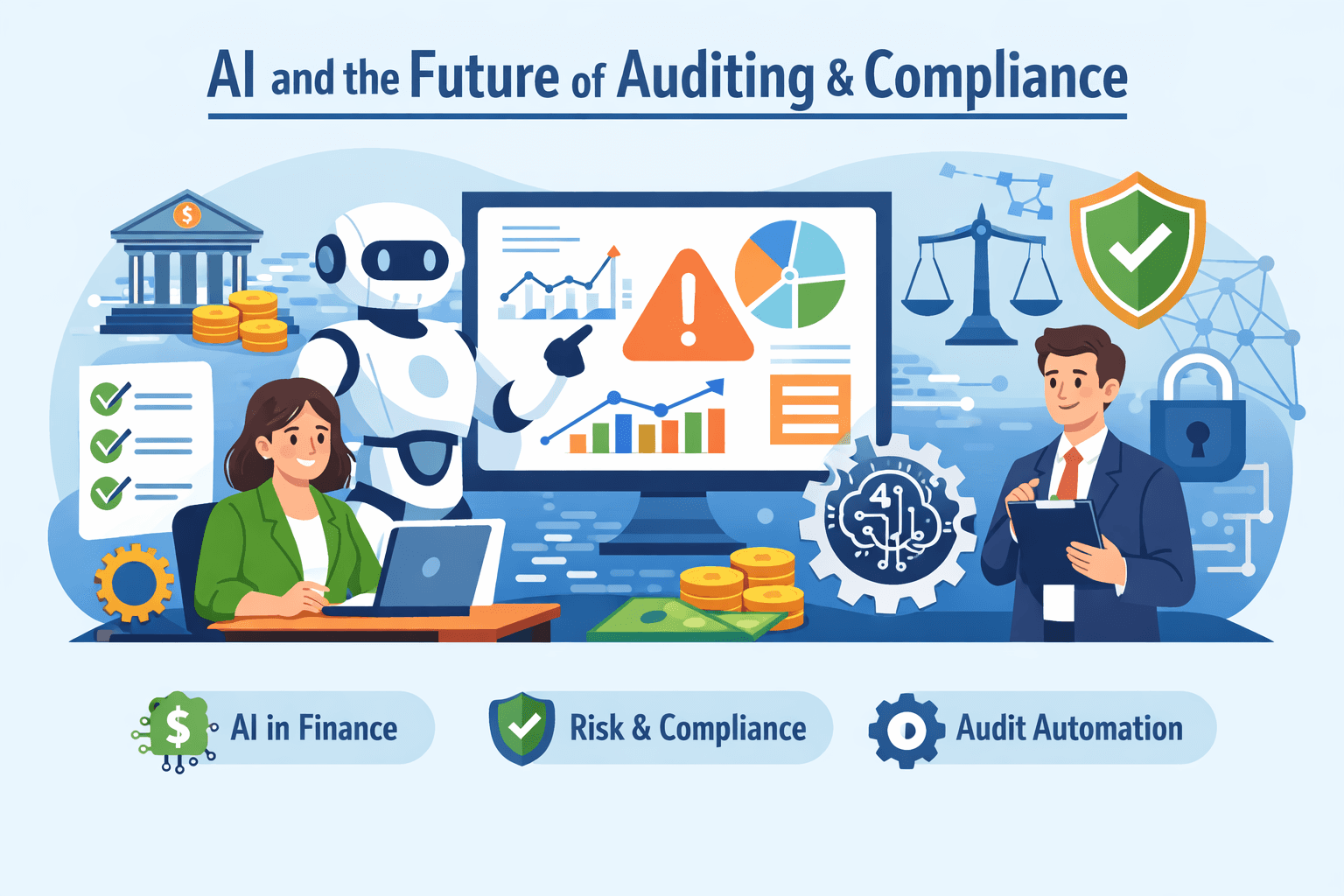
Artificial Intelligence (AI) is no longer a future concept in finance—it is already embedded in auditing, accounting, and compliance systems worldwide. From transaction analysis to regulatory monitoring, AI is transforming how financial assurance is delivered. While this evolution raises questions about job displacement, it also highlights a critical truth: auditing is changing, not disappearing.
Why Auditing and Compliance Are Ideal for AI Integration
Auditing and compliance involve large datasets, repetitive checks, and rule-based decision-making—areas where AI excels.
AI systems can:
- Process millions of transactions in seconds
- Identify inconsistencies invisible to human reviewers
- Apply regulatory rules consistently across data
This makes AI a natural fit for modern audit environments.
Key Areas Where AI Is Making an Impact
1. Intelligent Data Analysis
Traditional audits rely on sampling. AI allows 100% data examination, improving audit quality and reducing the risk of overlooking material misstatements.
2. Advanced Fraud Detection
Machine learning models identify abnormal spending patterns, duplicate entries, and unusual vendor behavior. Over time, these systems improve accuracy by learning from new data.
3. Continuous Compliance Monitoring
Instead of checking compliance annually or quarterly, AI enables real-time monitoring. This helps organizations stay aligned with evolving regulations and reduce penalties.
4. Predictive Risk Management
AI doesn’t just detect problems—it predicts them. By analyzing historical data, AI can forecast potential compliance breaches or operational risks before they occur.
5. Improved Regulatory Reporting
RegTech solutions automate regulatory filings, reduce reporting errors, and ensure timely submissions—especially useful in heavily regulated sectors like banking and fintech.
Human Expertise Still Matters
Despite automation, AI cannot:
- Interpret ambiguous regulations
- Apply ethical reasoning
- Understand business intent behind transactions
- Communicate audit findings with professional judgment
Auditors provide context, accountability, and trust, which technology alone cannot replace.
How the Auditor’s Role Is Evolving
The modern auditor is becoming:
- A technology supervisor, not just a reviewer
- A risk advisor, not only a compliance checker
- A strategic partner, not a back-office function
To stay relevant, professionals must upskill in:
- AI governance and controls
- Technology-driven auditing standards
AI and Chartered Accountants: Competition or Collaboration?
For chartered accountants, AI is not an enemy—it is leverage. Those who understand AI tools can:
- Deliver higher-value advisory services
- Improve audit efficiency
- Strengthen compliance frameworks
The real risk lies in resisting change, not in AI itself.
FAQs
1.Will artificial intelligence replace auditors?
Ans. No. AI will handle repetitive and data-heavy tasks, but auditors are still needed for judgment, ethics, and regulatory interpretation.
2. What will be the future of auditors after artificial intelligence?
Ans. Auditors will shift toward advisory roles, AI oversight, and strategic risk assessment rather than manual verification.
3. Do you think AI is a threat to chartered accountants?
Ans. AI is only a threat to professionals who do not adapt. Chartered accountants who embrace AI will remain highly in demand.
4. How does AI improve audit accuracy?
Ans. AI analyzes entire datasets instead of samples, reducing human error and increasing the reliability of audit findings.
5. Is AI auditing accepted by regulators?
Ans. Yes, regulators increasingly encourage AI-driven audits, provided transparency, controls, and human oversight are maintained.
6. What skills should future auditors develop?
Ans. Future auditors should focus on data analytics, AI governance, regulatory knowledge, and ethical decision-making.