
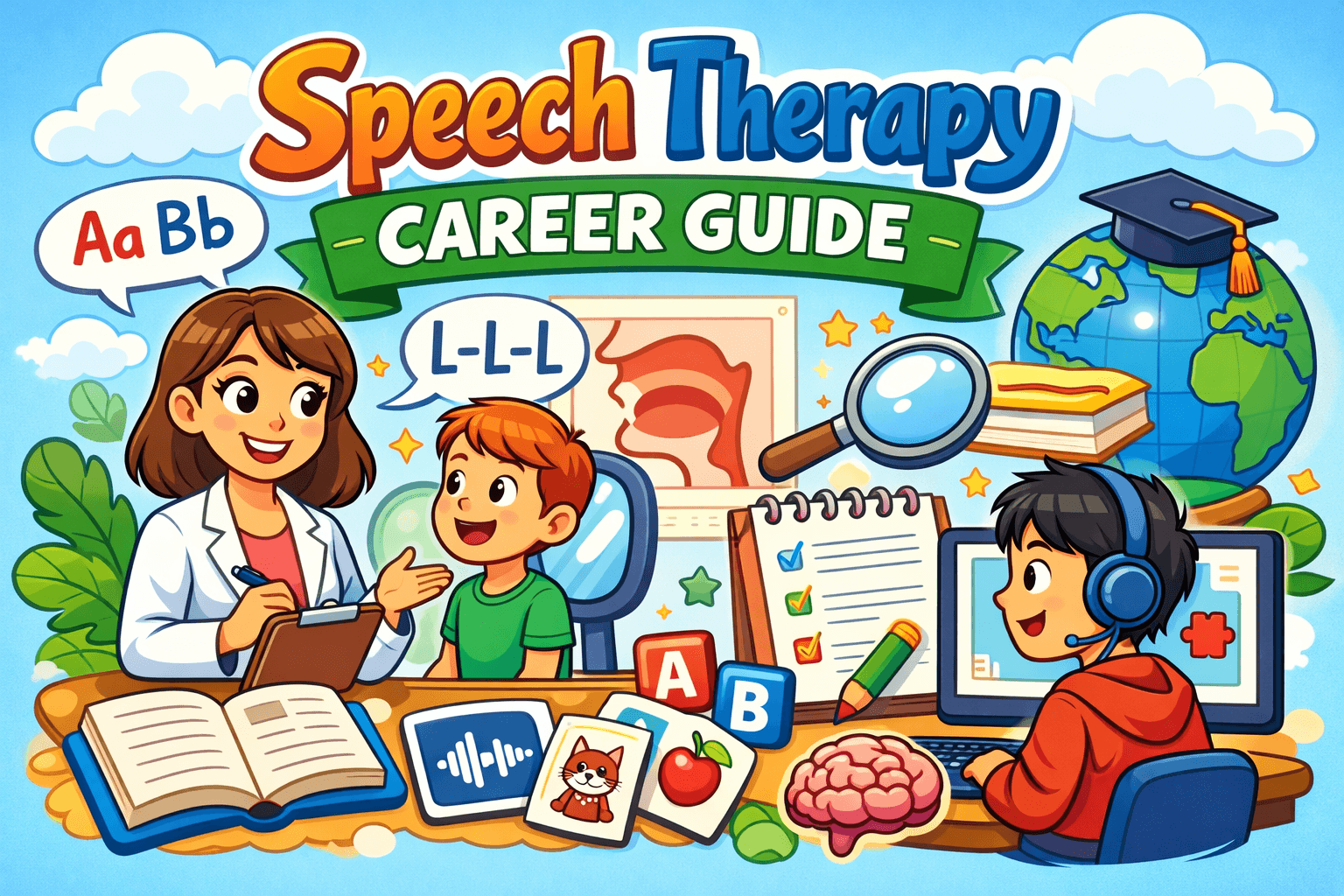
Choosing a career that blends science with deep human connection is a rare find, but that is exactly what makes the field of communication sciences so special. Many students feel a natural pull toward Healthcare careers because they want to help people find their voice, literally and figuratively. When someone struggles with a stutter or loses the ability to speak after an injury, it impacts their entire identity. This is where a Speech language pathologist steps in to bridge the gap between silence and expression. It is a profession that requires equal parts patience and expertise, focusing on the intricate ways our brains and bodies produce sound. Unlike some clinical roles that feel distant or overly technical, this path allows for long-term relationships with patients, seeing them through every small breakthrough. It is about more than just "fixing" a sound; it is about restoring a person’s ability to connect with the world around them.
The Journey to Becoming a Specialist
Stepping into this field requires a clear roadmap, starting with a strong academic foundation. If you are curious about the specific steps, you can explore how to become a therapist: a step-by-step career guide for students in India to see how various clinical paths align.
➤Education requirements for speech therapist: Most start with a Bachelor of Audiology and Speech-Language Pathology (BASLP).
➤Speech pathology programs: These courses usually last four years, including a mandatory internship.
➤Speech therapy degree: After graduation, pursuing a Master’s (MASLP) is highly recommended for better growth.
➤Speech therapy colleges: Many reputable institutions in India offer these specialized programs under strict regulations.
➤Certification: To practice legally, you must register with the Rehabilitation Council of India.
| Degree Level | Duration | Key Focus Area |
|---|---|---|
| Undergraduate (BASLP) | 4 Years | Basic Anatomy, Acoustics, and Clinical Basics |
| Postgraduate (MASLP) | 2 Years | Advanced Diagnostics and Research |
| Doctoral (PhD) | 3 to 5 Years | Specialized Research and Teaching |
What Does Daily Work Look Like?
A Speech therapist does not just sit in an office and listen to people talk. The work is diverse and spans across different age groups and medical conditions. Whether it is helping a child overcome Stuttering or assisting an elderly patient with Dysphagia (swallowing difficulties), the day is always varied.
➤Clinical therapy: Conducting detailed assessments to figure out the root cause of a speech delay.
➤Pediatric speech therapy: Using play-based methods to help children with language disorders.
➤Rehabilitation: Helping stroke survivors or accident victims regain their communication skills.
➤Counseling: Supporting families as they navigate the emotional challenges of Communication disorders.
➤Speech therapy: Creating personalized plans that involve vocal exercises and cognitive tasks.
The tools used in modern clinics are evolving rapidly. If you are interested in how technology is changing the landscape, read about AI and therapy: can technology replace therapists to understand the balance between human touch and digital tools.
Career Scope and Growth
The Speech therapy scope is expanding as awareness about early intervention grows. Professionals find Speech therapist jobs in diverse settings, from large hospitals to private clinics and schools.
➤Healthcare jobs: Working in the ENT or Neurology departments of major hospitals.
➤Pediatric therapy: Specialized centers focusing on autism and developmental delays.
➤Audiology: Many professionals handle both hearing and speech-related issues.
➤SLP: This common acronym stands for Speech-Language Pathologist, a title used globally.
| Work Setting | Primary Responsibility |
|---|---|
| Government Hospitals | Diagnostic testing and mass patient care |
| Private Clinics | One-on-one Therapy and long-term coaching |
| Special Schools | Supporting students with learning disabilities |
| Research Centers | Developing new methods for treating Speech pathology |
Understanding Financial Prospects
Money is a practical part of any Speech therapy career choice. While the starting Speech therapist salary might be modest, it grows significantly with experience and a niche specialization. Understanding the SLP salary trends helps in planning a stable future.
➤Speech therapist salary in India: Entry-level professionals usually start between 3 to 5 Lakhs per year.
➤Speech therapist salary: In private practice, the earnings depend on the number of sessions and reputation.
➤Healthcare careers: This path offers more stability compared to many freelance-heavy industries.
For those interested in comparing this to other physical recovery roles, a look at occupational vs physical therapy careers might provide helpful context on the broader medical field.
Essential Skills and Training
Beyond a Speech therapy certification, certain "soft skills" are non-negotiable. You are dealing with people who might be frustrated or shy because they cannot express themselves.
➤Observation: Noticing small movements in the mouth or throat.
➤Patience: Progress in Speech pathology can sometimes take months.
➤Communication: Being able to explain complex medical terms to parents or caregivers.
If you are looking for information on professional standards in India, the Rehabilitation Council of India provides the necessary guidelines. For details on the standard curriculum, the BASLP course details are a great resource. You can also check the Occupational Outlook Handbook for a global perspective on the role of an SLP.
| Skill Type | Examples |
|---|---|
| Technical Skills | Using diagnostic software, understanding anatomy |
| Soft Skills | Empathy, active listening, adaptability |
| Administrative | Case documentation, insurance billing, scheduling |
While the focus here is on communication, some therapists find themselves drawn to behavioral health. You can learn about careers in addiction therapy if you are interested in the mental health side of Rehabilitation.
FAQs
Q1. How to become a speech pathologist after graduation?
Ans. If you have completed a general graduation like a BSc in a related field, you usually need to look for a bridge course or apply for a Master’s in Speech-Language Pathology. However, most professional roles require a specific BASLP degree as the primary Education requirements for speech therapist.
Q2. How to become a speech therapist?
Ans. How to become a speech therapist involves finishing your 12th grade in the Science stream (Physics, Chemistry, Biology), passing entrance exams for Speech therapy courses, and completing a four-year BASLP degree followed by RCI Certification.
Q3. What is the best career, audiologist or speech therapist?
Ans. Neither is objectively "better." An Audiologist focuses on hearing loss and vestibular issues, while a Speech therapist focuses on voice, fluency, and swallowing. Many choose to do the combined BASLP course to keep both options open.
Q4. Where can I find the best Speech therapy colleges in India?
Ans. Top institutions include AIISH Mysore, NIMHANS, and various state medical colleges. Choosing the right Speech pathology programs is vital for getting quality clinical exposure.
Q5. Is the Speech therapy scope limited to kids?
Ans. Not at all. While Pediatric speech therapy is a huge sector, many professionals work with adults who have suffered strokes, brain injuries, or Parkinson's disease to help with communication and Dysphagia.