
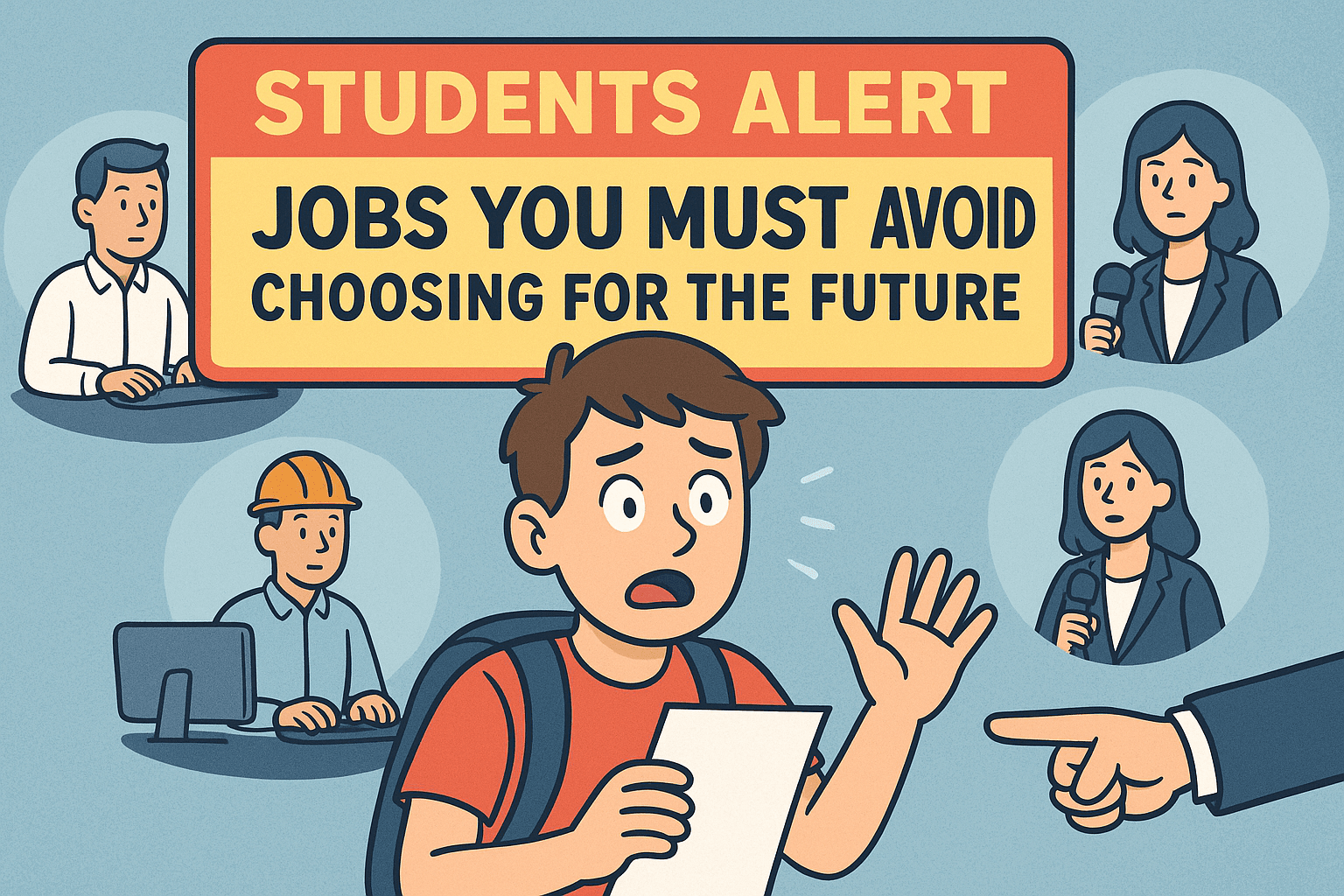
Choosing a career used to be simple—pick a field, study hard, get a job, and grow. But the future job market is changing faster than ever. Automation, artificial intelligence (AI), digital transformation, and shifting global demands are reshaping which careers will thrive… and which will quietly disappear.
For students, especially in Classes 9–12 and early college, this is a crucial warning: Some jobs you see today may not exist—or may pay very little—by the time you enter the workforce.
Here are the jobs and career paths students should think twice about before choosing, along with smarter alternatives and guidance on making regret-free decisions.
1. Routine Administrative Jobs (High Automation Risk)
Jobs like data entry, front-desk operations, basic cashiering, and routine clerical tasks are quickly getting replaced by AI systems and automated software.
Why avoid?
- High automation risk
- Low growth
- Companies prefer software over staff
Better alternatives: Digital Operations, AI-assisted workflow management, Data Analysis, UI/UX.
2. Traditional Manufacturing and Assembly Roles
Robotics and smart factories are taking over repetitive physical labor jobs.
Why avoid?
- Factories require fewer workers
- Machines can perform repetitive tasks 24/7
- Future is shifting toward smart manufacturing
Better alternatives: Robotics maintainance Industrial IoT, Automation engineering.
3. Print Media–Only Careers
While journalism isn’t dying, print-only media jobs are declining because the world consumes content digitally.
Why avoid?
- Shrinking print circulation
- Low job security
- Digital content skills are mandatory now
Better alternatives: Digital Journalism, Content Strategy, Social Media Analysis.
4. Low-Skill Retail Jobs
Self-checkout machines, automated billing, and AI-powered customer service bots have reduced the need for retail sales staff.
Why avoid?
- Unstable income
- High automation in malls & supermarkets
- Limited long-term growth
Better alternatives: E-commerce management, digital marketing, supply chain analytics.
5. Purely Theoretical IT Roles Without Digital Skills
Learning basic coding alone isn’t enough anymore. The industry now demands practical, future-proof skills.
Why avoid?
- Outdated curriculums
- Job competition is global
- Employers expect AI literacy
Better alternatives: AI development, Cloud computing, Cybersecurity, Data Science.
6. Low-Growth Government Clerical Positions
While government careers seem “secure,” many lower-level jobs are being digitalized.
Why avoid?
- Fewer vacancies each year
- Increased use of automated systems
- Competitive exams with declining job availability
Better alternatives: Policy analysis, Public administration, Digital governance roles.
7. Jobs That Require Single Skills and No Upskilling
Careers that don’t evolve will eventually become irrelevant. The job market now values multi-skill, digital-first professionals.
Examples:
- Basic accounting without digital tools
- Simple customer support roles
- Manual bookkeeping
Better alternatives: AI-assisted finance, CRM management, business analytics.
How to Choose a Career Path and Not Regret It Later
Students often choose careers based on:
- Peer pressure
- Family expectations
- Glamour, trends, or temporary interests
- What society says is “safe”
But this leads to career mismatch, regret, and low job satisfaction.
To choose wisely:
- Understand your strengths and weaknesses
- Explore future career trends
- Focus on digital skills regardless of your field
- Choose a career that allows career growth and adaptability
- Don’t follow outdated advice—follow the job market
What to Do When You Can’t Decide Your Future Career
It’s normal to feel confused. But staying confused is risky.
Here’s what you can do:
- Talk to a career counselor
- Study different career paths
- Explore your interest areas with short online courses
- Take a psychometric assessment to get clarity
- Look at job security, automation risk, and long-term growth
FAQ
1. How do I choose a career path and not regret it later?
Ans. Understand your strengths, interests, and future job trends. Pick a career that offers growth and aligns with your abilities. Tools like psychometric tests can help you decide confidently.
2. What should I do if I can’t decide my future career?
Ans. Explore different fields through short courses or internships. Talk to mentors or counselors and use career assessments to narrow down your options.
3. Which jobs are most at risk due to automation and AI?
Ans. Roles involving repetitive tasks—like data entry, cashiering, and basic manufacturing—are at high automation risk. Careers needing creativity, problem-solving, and digital skills are safer.
4. Should students only choose tech-related careers now?
Ans. No. All fields remain relevant, but digital skills are important everywhere. Choose a field you enjoy and stay adaptable with ongoing learning.
5. How can I know if a career has future growth?
Ans. Check industry trends, hiring demand, and skill requirements. Fields connected to AI, health, sustainability, and digital services generally offer strong growth.
6. Are psychometric tests useful for career decisions?
Ans. Yes. They highlight your strengths, interests, and personality traits. Platforms like Infigon Futures use these tests to guide students toward suitable careers.