Diploma After 10th: Courses, Duration and Where They Lead
A diploma after 10th can be a 3-year engineering course, a short technical certificate or a 1-3 year design or health course. Here is what each one involves, how it can lead to a B.Tech and what freshers earn.

Arham Ansari
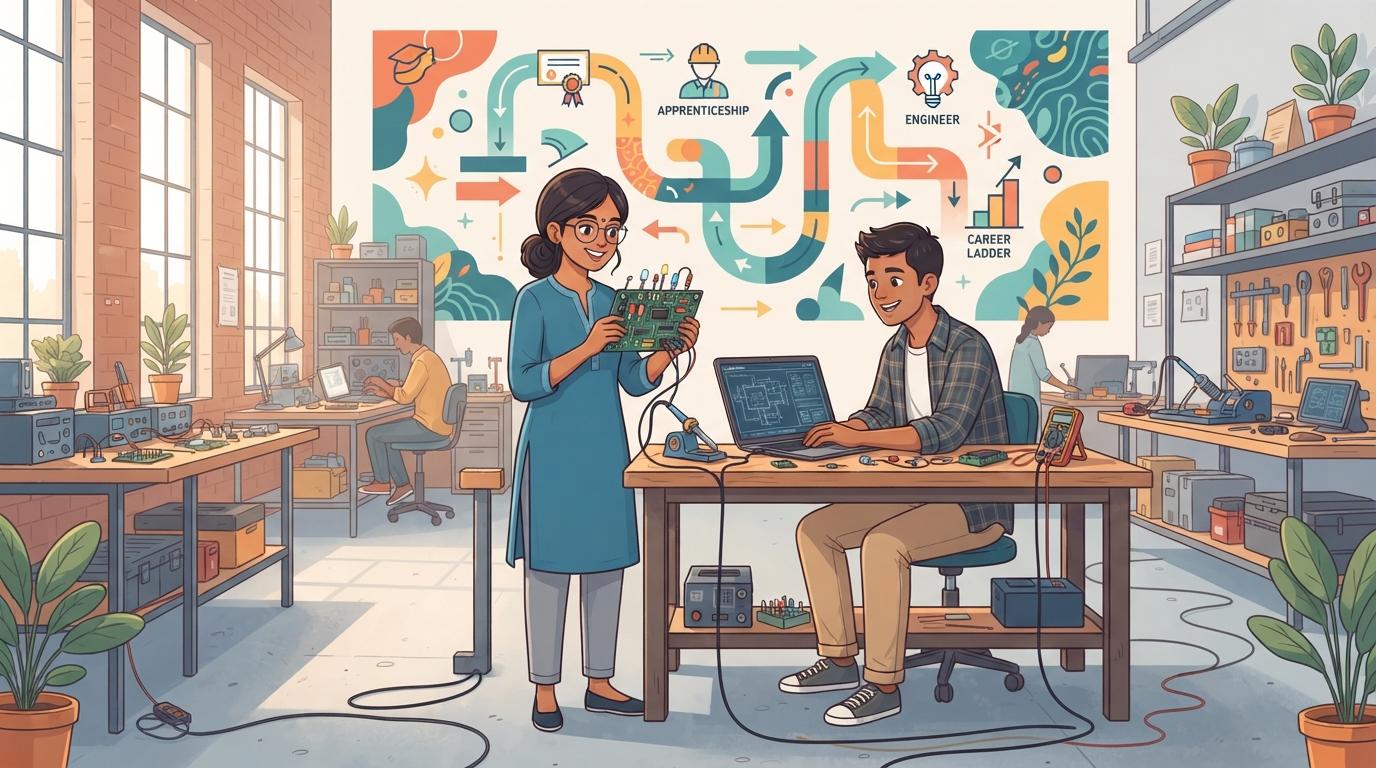
A diploma after 10th is a technical course you can join as soon as you pass Class 10, and the most common version is a three-year polytechnic diploma in engineering. Diplomas in health, design and hospitality run from a few months to three years. This guide explains what each option involves, how a diploma can lead to a B.Tech, how it compares with staying in school for Classes 11 and 12, and what starting pay looks like in India.
What is diploma after 10th?
A diploma after 10th is a practical course built around skills, not only exams. The best-known option is the polytechnic diploma, a three-year course split into six semesters that mixes classroom theory with workshop and lab work. It is usually offered in civil, mechanical, electrical, electronics and computer engineering.
Most polytechnics ask for a Class 10 pass from a recognised board, with Physics, Chemistry and Mathematics, and at least 35% to 40% aggregate marks (polytechnic course listing). West Bengal, for example, asks for at least 40% with PCM as compulsory subjects (state-wise entrance exam guide). Non-engineering diplomas can set a higher bar. One hotel management diploma asks for 50% including English (hotel management course list).
How long each option takes
| Course type | Typical duration | Where it leads |
|---|---|---|
| Polytechnic (engineering) diploma | 3 years, 6 semesters | Technician and junior engineer roles, or lateral entry to B.Tech |
| ITI (Industrial Training Institute) | 6 months to 2 years | Skilled trade and technical jobs |
| Paramedical, such as Medical Laboratory Technology | About 2 years | Lab and diagnostic support roles |
| Fashion, graphic design and hotel management | 1 to 3 years | Design, media and hospitality jobs |
| Short technical courses, such as EV, solar and cybersecurity fundamentals | 3 to 12 months | Entry-level roles in fast-growing fields |
The durations come from a guide to diploma courses after 10th and a diploma course guide. They can differ slightly by institute.
How admission works in each state
First-year polytechnic seats are allotted by each state, so the route depends on where you study. The main state routes for 2027 are below.
| State | How seats are allotted | 2027 timing |
|---|---|---|
| Maharashtra | Online registration, then centralised allotment (CAP) rounds | Applications expected in May 2027 (expected, based on the registration opening on 20 May 2026) (notification link) |
| Andhra Pradesh (AP POLYCET) | Entrance test, then counselling | Notification released on 15 October 2026 (notification link). Apply through polycetap.nic.in |
| Telangana (TS/TG POLYCET) | Entrance test, then counselling | Notification expected in early February 2027 (expected, based on the 4 February 2026 release) (notification link) |
| West Bengal (JEXPO) | Merit on Class 10 marks only, with no entrance test since 2025 | Applications expected April to June 2027 (expected, based on the 2026-27 notification of 12 March 2026) (notification link) |
Maharashtra's 2026 first-year process opened registration on 20 May 2026 and ran four CAP rounds. Fees vary by state and institute, and government polytechnics are usually the lower-cost option.
The main diploma streams available in India
Engineering is the largest group of diplomas. The main branches are:
- Computer engineering: programming, networks and IT support
- Mechanical engineering: machines, manufacturing and maintenance, which leads to mechanical engineer roles
- Civil engineering: buildings, roads and construction, see civil engineer
- Electrical engineering: power, wiring and control systems
- Electronics and telecom: circuits, devices and communication networks
- Automobile engineering: vehicle design, service and testing
- Chemical engineering: process plants, materials and fuels
The full branch list appears in this complete guide to diploma courses after 10th.
Health and paramedical diplomas form the next group. Medical Laboratory Technology (DMLT) runs for about two years and prepares students for lab work in hospitals and diagnostic centres. Fashion designing, graphic design and hotel management diplomas usually run one to three years and suit students with strong creative or people skills.
Short technical certificates such as EV technician, solar technician and cybersecurity fundamentals take three to 12 months. They are a quick entry point into growing fields, but they are best seen as an entry-level start rather than a route to a degree. A solar technician career shows the kind of work involved.
ITI and the polytechnic diploma are often compared. ITI is shorter and more practical, while a polytechnic diploma has more theory and is the route that leads to lateral entry. For the wider decision, read this comparison of a diploma and a degree.
Lateral entry: how a diploma becomes a degree
Lateral entry lets a diploma holder join the second year of a four-year B.Tech directly. The official AICTE handbook for 2024-25 to 2026-27 makes diploma holders in engineering eligible. It allows lateral seats up to 10% of the approved intake, added over and above the sanctioned seats.
The usual minimum is 45% in the diploma, or 40% for reserved categories, in any branch of engineering and technology (lateral entry marks guide). AICTE rules are updated through addenda, so read the handbook for the year you apply.
How the route works in different states
- Direct second year: Maharashtra's Direct Second Year (DSE) route admits diploma holders on their diploma marks, with no lateral entrance exam (direct second year guide).
- Entrance exam route: some states and universities run a lateral entry test. JELET 2026, for example, requires a three-year diploma, or a two-year lateral-entry diploma, with at least 45% marks (JELET 2026 eligibility page).
Seats are limited on both routes, so start planning early in your final diploma year.
How long a lateral-entry degree takes
A lateral-entry B.Tech is a three-year course. The full path is three years of diploma plus three years of degree, which makes six years in total. That matches the school route, covered below.
Why IIT is different
Lateral entry is not the way into an IIT. A guide on IIT admission after diploma says IITs do not offer lateral entry to diploma holders, so an IIT B.Tech needs the JEE route. A diploma still opens doors to many other engineering colleges through lateral entry.
Diploma vs staying in school for 11th and 12th
Both routes can reach a B.Tech in six years. A diploma gives you three years of diploma plus three years of lateral-entry B.Tech. The school route gives you two years of Classes 11 and 12 plus a four-year B.Tech. The difference lies in how those years are spent and which doors they open.
| Factor | Diploma after 10th | Classes 11-12, then B.Tech |
|---|---|---|
| Time to a B.Tech | 6 years (3 + 3) | 6 years (2 + 4) |
| Learning style | Hands-on workshops and labs from the start | Theory-led, mostly classroom |
| Technical job before a degree | Yes, as a technician or trainee engineer after 3 years | Usually not before graduation |
| Route to NITs, IIITs and IITs | Lateral entry at many colleges; IITs need the JEE route | JEE Main through JoSAA counselling for NITs and IIITs |
| Seat security | Limited lateral seats, run by each state or university | Central JoSAA counselling for qualifying candidates |
The school route has one clear advantage for centrally funded institutes. JEE Main is mandatory for admission to NITs, IIITs and GFTIs through JoSAA counselling. Those seats need at least 75% aggregate in Class 12, or a place in the top 20 percentile (B.Tech admission guide).
If you are weighing the two routes, this parent's guide to stream selection after 10th covers the same decision in more depth. A career counsellor can test your interests against these trade-offs, so you can find a career counsellor to talk it through.
What a diploma holder earns at the start
Starting pay after a diploma depends on branch, city and employer, and published figures vary widely. The table shows the spread and where each number comes from.
| Source | Figure | What it measures |
|---|---|---|
| diploma engineer salary guide | ₹1.8-3.5 LPA | Typical fresher range |
| fresher pay listing for Mumbai | About ₹2.7 LPA median (June 2026) | Median fresher pay in Mumbai |
| diploma electrical fresher job listings | About ₹16,000-22,000 a month (November 2026) | Employer-posted trainee roles |
| diploma course guide | ₹15,000-30,000 a month | Mechanical engineering estimate |
| diploma course guide for mechanical engineering | ₹12,000-18,000 a month | Mechanical engineering estimate |
Taken together, a fresher can expect roughly ₹1.8-3.5 LPA, or about ₹15,000-29,000 a month. LPA means lakh per annum, so ₹2.7 LPA works out to about ₹22,500 a month. Pay usually rises with experience, and it varies by branch and city.
Who should not take this route
A diploma after 10th suits many students, but it is not the right fit for everyone. These are the cases where another path usually makes more sense:
- Students who struggle with Physics and Mathematics, since engineering diplomas build on these subjects from the first semester.
- Students who want an IIT B.Tech or a four-year degree from the start, because lateral entry does not lead to an IIT.
- Students aiming for research, teaching or pure science careers, which usually need a full degree and postgraduate study.
- Students who learn best through long theory-based classes, since diploma work is hands-on and project-based.
- Families tempted by 'guaranteed admission' offers, because genuine seats come only through official state or university counselling.
If you are unsure which group you fit into, career counselling starts with your marks, interests and budget. Infigon Futures' career counsellors can help you compare the options side by side.
Frequently Asked Questions
Which diploma is best after 10th?
There is no single best diploma, because the right one depends on your interests, marks and goals. Engineering polytechnic diplomas are the most common choice, lead to technician and junior engineer roles, and are the main route to lateral entry for a B.Tech. Students who enjoy hands-on skills may prefer ITI or a short technical course, while design, health and hospitality diplomas run one to three years. A career counsellor can match your subjects to a stream.
How long is a diploma after 10th?
A polytechnic engineering diploma takes three years and is split into six semesters. ITI courses take six months to two years, and paramedical courses such as Medical Laboratory Technology take about two years. Fashion, graphic design and hotel management diplomas usually run one to three years, while short technical certificates in areas like EV or solar technology take three to 12 months.
Can a diploma holder join B.Tech in second year?
Yes. Under the AICTE rules for 2024-25 to 2026-27, diploma holders in engineering are eligible for lateral entry into the second year of a B.Tech. The usual minimum is 45% in the diploma, or 40% for reserved categories. Seats are limited, and admission runs through a state or university exam or a direct second year route, so plan early.
What is the salary after a diploma in engineering?
Freshers with an engineering diploma typically start at about ₹1.8-3.5 LPA, which is roughly ₹15,000 to ₹29,000 a month. One Mumbai snapshot put the fresher median at about ₹2.7 LPA, while current trainee job postings sit around ₹16,000 to ₹22,000 a month. Pay varies by branch, city and employer, and it usually rises with experience.
Diploma vs ITI: which should I pick?
ITI is shorter, usually six months to two years, and focuses on practical skills for trades. A polytechnic diploma takes three years, includes more theory, and is the route to lateral entry for a B.Tech. If you want a skilled trade job quickly, ITI may suit you. If you might want a degree later, the polytechnic diploma keeps that option open.
Can diploma holders get into IIT?
Not through lateral entry. Vedantu's guide says IITs do not offer lateral entry to diploma holders, so an IIT B.Tech needs the JEE route. Diploma holders can still aim for many other engineering colleges through lateral entry, so the choice depends on which institute you want most.
Is a diploma after 10th better than Classes 11 and 12?
Neither is better for everyone. Both routes reach a B.Tech in six years. The school route keeps the JEE Main path to NITs, IIITs and GFTIs open, while the diploma gives you technical skills and an earlier technician job. Your marks, interests and budget should guide the decision.
Conclusion
A diploma after 10th is a practical route to a technical job or a B.Tech, as long as the course matches your subjects and goals. Weigh the time, the pay and the lateral entry rules together before you decide. If you are still confused about whether a diploma after 10th is right for you, you can connect with Infigon Futures and talk to a career expert.
Before you decide: two free 2-minute checks
- 2 min · freeAre your skills safe from AI?AI will replace people who only do work a machine can do. Answer 10 quick questions to see your score and what to work on.Check my skills
- 1 min · freeWhen will you earn your dream salary?Pick a career and the monthly salary you want. We show at what age people in that career usually earn that much, or if most never do.Check my salary