Career Options After 10th: Beyond Science, Commerce and Arts
After Class 10 you are not limited to Science, Commerce and Arts. Here are the ITI, polytechnic diploma and paramedical routes, who each suits, and how to choose between them.

Arham Ansari
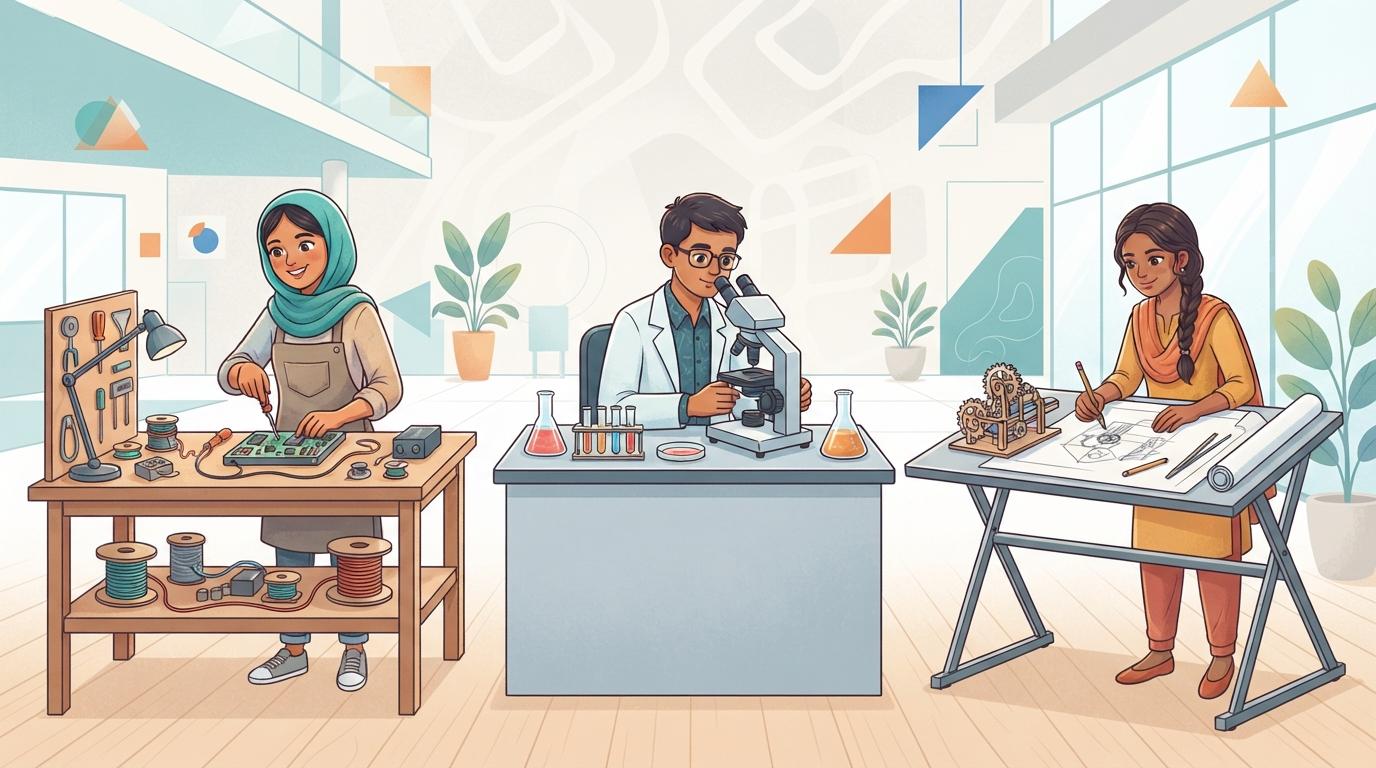
After Class 10, you are not limited to Science, Commerce and Arts. The main alternatives are ITI, which trains you for a skilled trade in one to two years; the polytechnic diploma, a three-year engineering course that can lead to a degree; and paramedical and vocational courses, which differ widely in entry rules and length.
Each route suits a different kind of student. This guide explains how each one works, what the 2027-28 admission cycle is likely to look like, and how to choose. If you are still undecided after reading, career counselling can help you match these options to your marks and interests.
Career options after 10th: the three streams and the routes nobody mentions
Most Class 10 students pick between Science, Commerce and Arts because those are the streams their school talks about. They are good choices, but they are not the only path. Students who enjoy hands-on work, or who want a recognised qualification and paid work sooner, often never hear about the technical and vocational routes.
The table below compares the three alternatives at a glance.
| Route | Typical length | Who it suits | Where it can lead |
|---|---|---|---|
| ITI trade courses | 1 to 2 years | Hands-on learners who want a skilled trade | Trade jobs, apprenticeships, further diplomas |
| Polytechnic diploma | 3 years | Students who like maths, science and practical engineering | Technician and junior engineer roles, or a B.Tech through lateral entry |
| Paramedical and vocational courses | Varies by course | Students drawn to healthcare, labs and service work | Allied health roles such as lab technician or pharmacy technician |
A useful way to think about it: your stream decides which subjects you study, but your route decides how you learn. A student who loves workshops may thrive in an ITI, while one who wants to design machines may prefer a polytechnic. To compare the usual streams in more detail, read Commerce vs Science vs Arts after 10th. For a parent's view of the decision, see Stream selection after 10th: a parent's complete guide.
ITI after 10th: trades, duration and who it suits
ITI stands for Industrial Training Institute. Its Craftsmen Training Scheme (CTS) courses are run under the Directorate General of Training (DGT) and cover skilled trades such as electrician, welder, fitter and many more. Most CTS courses take one to two years, and the training is largely practical, in workshops and labs. A career such as electrician shows what a trade can lead to.
ITI suits students who:
- prefer doing to reading, and learn best with tools and machines
- want a trade skill that employers hire for, and want to start working sooner
- may later want an apprenticeship or a diploma course
How ITI admissions work
ITI admissions run through state portals, so your state's dates decide your deadline. The DGT sets the national framework, but states can set earlier closing dates and run their own spot rounds. In the 2026 session, the closing date for CTS admissions was pushed back several times, and the last extension ran into October 2026. Students who apply in the first round usually have the widest choice of trades and institutes.
For the 2027-28 session, expect registration to open around May, with an original closing date around early August (expected, based on the 2026 DGT calendar). Extensions and spot rounds are likely in several states. Track the DGT admission notices and your state's own portal. Assam, for example, runs its ITI admissions at itiassam.admissions.nic.in.
Seats are not always full. In Telangana's 2025 admission round, 40,218 students were admitted against 98,312 total seats, according to the state's ITI admissions data. Nationally, NITI Aayog's 2023 report counted about 25 lakh ITI seats, with about 10.5 lakh filled (NITI Aayog ITI report). There is usually room, but do not wait for the last date.
Polytechnic and diploma: the lateral entry route into engineering
A polytechnic diploma is a three-year engineering course taken after Class 10. Common branches include mechanical, civil, electrical, electronics and computer engineering. Diploma holders often start as technicians or junior engineers, and many later move into a B.Tech degree.
Eligibility and entrance rules differ by state
Polytechnic admission is run state by state, so the rules change from one state to another. Some states ask for Maths and Science in Class 10 plus a minimum aggregate, and the percentage varies. Some use an entrance exam, while others admit students on Class 10 marks. These examples show how much the rules differ:
| State | How admission works |
|---|---|
| West Bengal | Class 10 marks; the entrance exam was dropped from 2025 |
| Haryana | 85% of seats under the state quota and 15% under the AIC quota, per the 2025-26 Haryana diploma prospectus |
| Andhra Pradesh | Diploma seats for 2026-27 capped at 2025-26 levels |
Because the rules keep changing, read your state's current prospectus or technical education portal before you rely on any cut-off. Seat numbers and quotas can shift from year to year, so a route that was open last session may look different this time.
Lateral entry: moving up from ITI or a diploma
Lateral entry lets a student join a course in the second year rather than the first. Two routes are common:
- ITI to polytechnic: in some states, a student with Class 10 and a two-year ITI can apply for the second year of a diploma, provided the trade fits the diploma branch.
- Diploma to B.Tech: diploma holders can join the second year of a B.Tech in the same or a related branch, through lateral entry exams or counselling. Seats are limited.
Lateral entry can turn a three-year diploma into a route to a degree, but it is competitive. Strong diploma marks and a close match between the diploma branch and the degree branch make a real difference. For a fuller comparison, read Which is better: a diploma or a degree for your career goals?
Paramedical and vocational options after 10th
Paramedical courses train students for healthcare support roles, such as medical laboratory technology, radiology and pharmacy. They suit students who like science, patient care and careful lab work. Vocational courses cover a wider range of practical skills, from technical trades to service roles.
Entry rules are the tricky part. Some diploma courses, such as the DMLT (Diploma in Medical Laboratory Technology), are open after Class 10. Others are different: full radiology courses and the D.Pharm (Diploma in Pharmacy) generally need Class 12 with Science. Because sources differ on entry rules, confirm the requirement for each exact course with the relevant state paramedical council or the state's directorate of technical education before you apply.
Roles to explore include medical laboratory technologist and pharmacy technician. Fees and pay for these courses vary widely by institute and state, so ask for the full cost and compare outcomes before you commit.
Which route gets you earning soonest
If your priority is starting paid work quickly, ITI usually gives the shortest path: one to two years of training and a trade qualification you can use straight away. A polytechnic diploma takes three years, but it opens technician and junior engineer roles and keeps the degree route open. Paramedical courses vary, and some need Class 12 before you can start.
| Route | Time to qualify | Earning path |
|---|---|---|
| ITI | 1 to 2 years | Skilled trade work soon after training, or an apprenticeship |
| Polytechnic diploma | 3 years | Technician or junior engineer roles, or lateral entry to a B.Tech |
| Paramedical | Varies by course | Allied health roles once the course, and any Class 12 requirement, is met |
Pay depends on the trade, the state and the employer, so compare real offers in your area rather than relying on one headline number. As a rule of thumb, students who want the fastest route to paid work look at ITI first, while those who want a degree later tend to favour the diploma.
How to choose between a diploma and staying in school
Staying in school and joining a diploma are not always either-or, but four questions make the decision clearer:
- Your interests: Do you enjoy workshops, machines and lab work, or theory, reading and writing?
- Your Class 10 marks: Do they meet the rules for the polytechnic or paramedical course you want in your state?
- Your timeline: Do you want to earn within two or three years, or are you aiming for a long academic route?
- Your degree goal: Do you want a B.Tech or another degree later, and how would a diploma fit that path?
The CBSE two-exam change
From the 2026-27 session, CBSE Class 10 students face two board exams. The first is compulsory and expected in February to March 2027, as set out in CBSE's 2026-27 LOC circular (overview of the two-exam system). The second is optional and expected in May 2027, based on the 2026 second exam dates of 15 to 21 May (expected, based on the 2026 dates). Students who sit both keep the better score in each subject, as explained in this CBSE two-exam guide.
This matters for your decision. A student who wants to lift marks for a particular stream or course can use the second exam, while a student who is happy with the first result can plan the diploma route with more certainty.
| If this sounds like you | A good fit |
|---|---|
| You learn best with tools, machines or lab work | ITI or polytechnic diploma |
| You want a skilled job within about two years | ITI |
| You want engineering with a path to a degree | Polytechnic diploma, then lateral entry |
| You are strong in theory and want a university degree | Stay in school in Science, Commerce or Arts |
| You are drawn to healthcare and lab work | Paramedical course, after confirming the entry rule |
Take these questions to a parent, a teacher or a counsellor. The guide on how parents can support their children's career choices offers a practical way to talk the decision through together.
Frequently Asked Questions
Can I do polytechnic after 10th without an entrance exam?
It depends on your state, because polytechnic admission rules are set state by state. In West Bengal, for example, the entrance exam was dropped from 2025, so admission relies on Class 10 marks. Other states may still use an entrance test or a merit-based counselling process. Find out which rule applies in your state before you apply, and keep your Class 10 marksheet ready for the counselling round.
Is ITI after 10th worth it, and how long does it take?
Most ITI trade courses under the Craftsmen Training Scheme take one to two years. ITI is worth considering if you enjoy practical work and want a skilled trade you can use soon after training. Earnings depend on the trade, your skill level and the employer, so compare the trades in your area before you choose. ITI can also be a stepping stone, since some states allow ITI holders to apply for lateral entry into a polytechnic.
Can an ITI student join a polytechnic in the second year?
In some states, yes. Lateral entry rules can let a student with Class 10 and a two-year ITI apply for the second year of a polytechnic diploma, provided the trade fits the diploma branch. The rule is not the same everywhere, so confirm it for your state and course before you enrol. Ask the institute whether your ITI trade counts toward the branch you want.
Which course gets me earning soonest: ITI, polytechnic or paramedical?
ITI usually gets you to a skilled trade fastest, with training of one to two years. A polytechnic diploma takes three years but opens technician and junior engineer roles, along with a route to a degree. Paramedical courses vary, and some need Class 12 before you can start. Earnings depend on the trade, your state and the employer, so compare real job offers in your area.
Can I do paramedical after 10th, or only after 12th?
It depends on the course. Some diploma courses, such as the DMLT (Diploma in Medical Laboratory Technology), are open after Class 10. Full radiology courses and the D.Pharm generally need Class 12 with Science. Because sources differ on entry rules, confirm the requirement for your exact course with the relevant state paramedical council or the state's directorate of technical education before you apply.
Should I take CBSE's second Class 10 exam?
The second exam is optional, so it depends on your marks and goals. It is expected in May 2027, based on the 2026 dates. Students who sit both exams keep the better score in each subject, so the second attempt can only help your scores. If you are happy with your first result, you may not need it. If you want to raise marks for a particular stream or course, it is a useful second chance.
Does lateral entry to B.Tech actually work after a diploma?
Yes, lateral entry is a well-established route. Diploma holders can join the second year of a B.Tech in the same or a related branch. Admission happens through lateral entry exams or counselling run by states or universities, and seats are limited. Strong diploma marks and a close match between the diploma branch and the degree branch improve your chances.
Conclusion
Choosing after Class 10 feels like a big decision, but it does not lock you in for life. ITI, the polytechnic diploma and paramedical courses each open a clear route to work, and many students move between routes later through lateral entry or further courses. Start with your interests, confirm the rules for your state, and compare the options side by side. If you are still confused about this topic, you can connect with Infigon Futures and talk to a career expert who can match your marks, interests and plans to the right route.
Before you decide: two free 2-minute checks
- 2 min · freeAre you AI-proof?AI will take the work of people who only do what a machine can do. Ten questions show your AI-proof score and your biggest gap.Check my AI-proof score
- 1 min · freeWhen will you earn your dream salary?Pick a career and the monthly salary you have in mind. See at what level and around what age people in that career get there, if they do.Run the salary reality check