
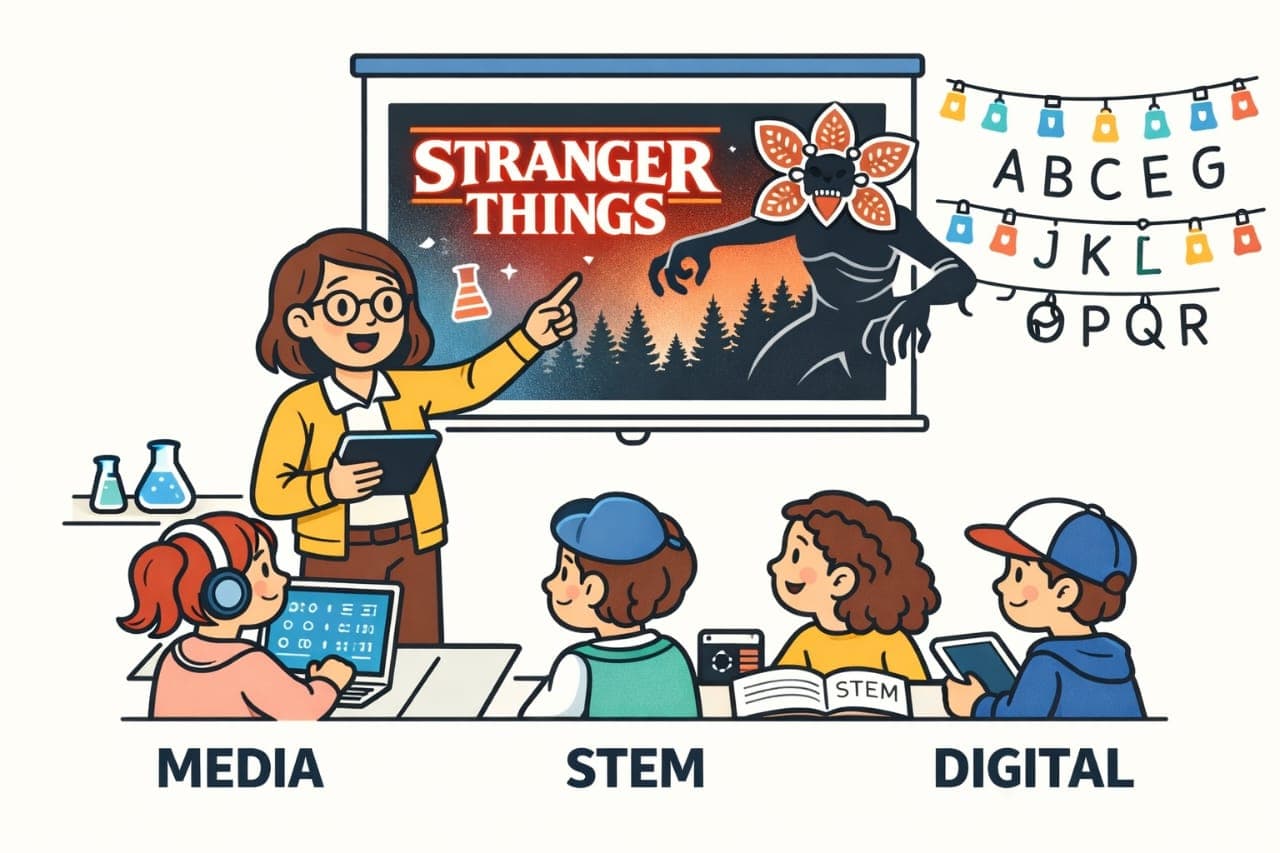
In today’s classrooms, keeping students engaged is one of the biggest challenges teachers face. With shorter attention spans and constant digital exposure, traditional teaching methods often struggle to connect with learners. This is why many educators are turning to pop culture—especially popular shows like Stranger Things—to make learning more relatable, meaningful, and memorable.
The Power of Pop Culture in Education
Stranger Things blends science, friendship, mystery, and problem-solving—elements that naturally align with classroom learning. Teachers use references from the show to explain complex STEM concepts, discuss ethical decision-making, or even analyze storytelling techniques in literature classes. When students recognize familiar characters or situations, learning instantly feels less abstract and more personal.
Storytelling as a Modern Teaching Tool
Storytelling has always been central to human learning. Shows like Stranger Things provide ready-made narratives that teachers can adapt into lessons. Whether it’s using the Upside Down to explain parallel dimensions in physics or character arcs to discuss psychology, storytelling helps students emotionally connect with the subject matter.
This approach supports student-centered learning, where learners actively participate instead of passively memorizing information. It also boosts motivation, as students feel excited to discuss lessons tied to media they already enjoy.
Digital Media Meets Classroom Learning
With the rise of edtech and technology in the classroom, integrating digital media has become easier than ever. Short clips, discussions, and creative assignments based on Stranger Things allow teachers to combine modern teaching methods with curriculum goals. This also encourages collaboration, critical thinking, and creativity—key skills for the future.
Why Teachers Choose Stranger Things
- It naturally supports STEM discussions through science fiction elements
- It reflects real emotional and social challenges students relate to
- It fits well with innovative teaching strategies
- It bridges the gap between entertainment and education
How This Approach Supports Modern Pedagogy
Using Stranger Things in classrooms also aligns strongly with modern pedagogy and innovative teaching strategies. Instead of rote learning, teachers encourage discussion, analysis, and creativity. For example, students might debate ethical issues around scientific experimentation shown in the series or map story timelines to improve analytical thinking. These activities promote deeper understanding rather than surface-level memorization.
Connecting Entertainment With Real-World Skills
Pop culture–based learning helps bridge the gap between academic theory and real-world application. When students analyze media they already consume, they naturally build skills like communication, teamwork, media literacy, and problem-solving. This method supports student-centered learning, where learners take ownership of discussions and ideas instead of passively receiving information.
Preparing Students for a Digital-First Future
In a world driven by technology and media, classrooms must evolve. Integrating shows like Stranger Things reflects how digital learning and technology in the classroom can coexist with academic rigor. Teachers are not just teaching subjects—they are helping students learn how to learn in a digital age, making education more adaptive, engaging, and future-ready.
FAQs
1. What are the benefits of storytelling as a teaching method?
Ans. Storytelling improves memory retention, emotional engagement, and comprehension. It helps students understand complex ideas through relatable narratives, encourages critical thinking, and makes learning more enjoyable and meaningful.
2. How does pop culture improve student engagement?
Ans. Pop culture references make lessons feel familiar and relevant. When students recognize characters, stories, or themes they enjoy, they are more likely to participate actively and stay focused during class.
3. Can shows like Stranger Things be used for serious subjects like STEM?
Ans. Yes. Science fiction elements such as parallel worlds, experiments, and technology can be used to spark discussions in physics, biology, and technology, helping students grasp complex STEM concepts creatively.
4. Is using entertainment in education academically effective?
Ans. When used thoughtfully, entertainment-based learning supports deeper understanding rather than distraction. It complements traditional teaching by reinforcing concepts through examples students relate to.
5. Does this approach suit all age groups?
Ans. While examples may vary by age, storytelling and pop culture-based teaching can be adapted for different grade levels, making learning accessible and engaging for a wide range of students.