
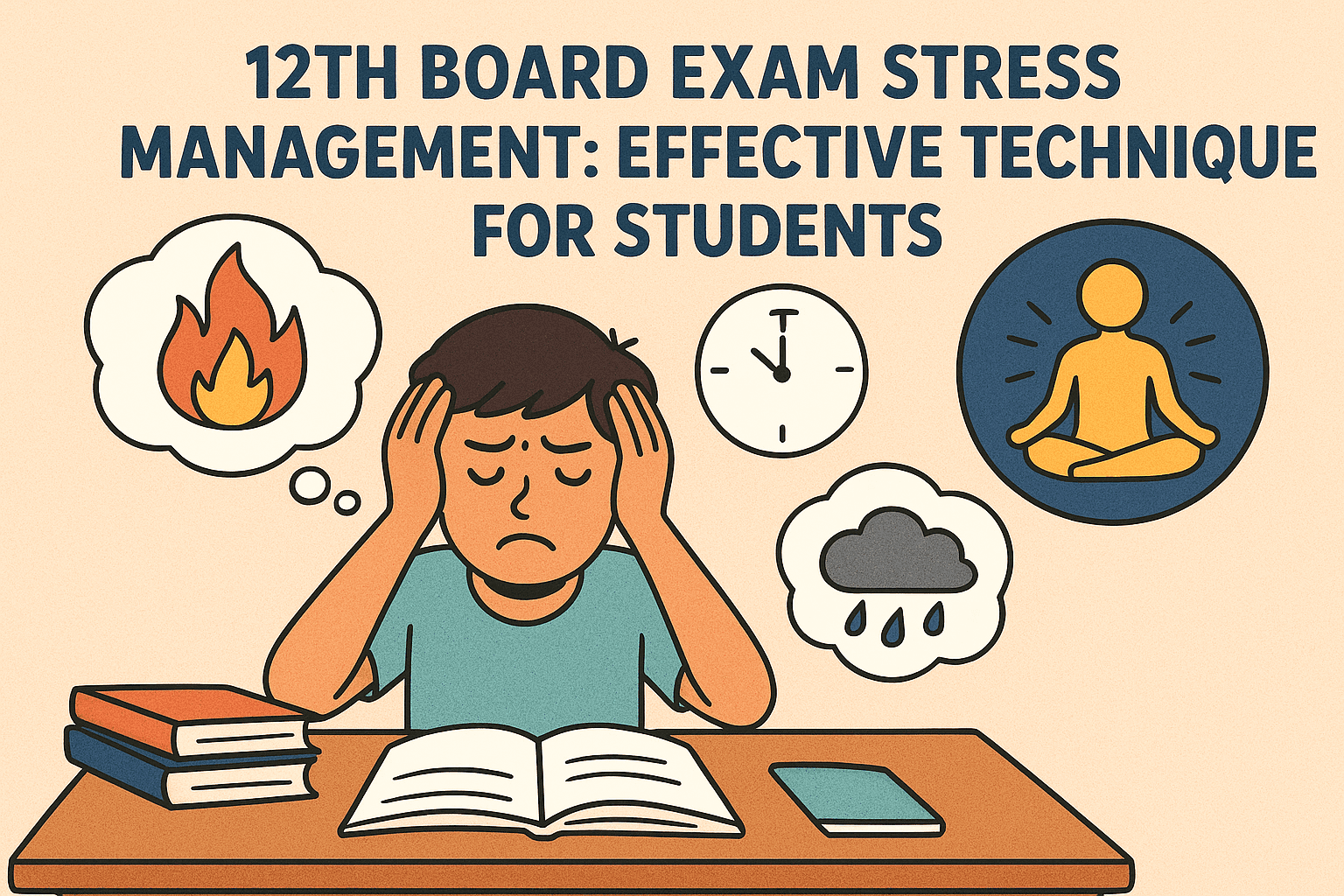
The 12th board exams are often seen as a “life-defining” moment in a student’s academic journey. Expectations are high from parents, teachers, and most importantly, from ourselves. With so much syllabus to cover and so little time, it’s easy for students to feel overwhelmed. Stress becomes a constant companion, and sometimes, it feels like there’s no way out of the pressure.
But here’s the truth: stress is not your enemy. It’s a signal that something needs structure, clarity, and balance. With the right exam prep strategies and study routine, this stressful phase can actually become a productive and confident one.
Let’s explore some effective techniques to manage stress and revise smartly for your Class 12 board exams.
Why Do Students Feel So Stressed During Board Exams?
Board exams carry huge emotional weight. Many students experience stress because of:
- Fear of failure
- Pressure to score high in CBSE boards or state boards
- Comparisons with friends or toppers
- Large
- NCERT syllabus
- Poor time management
- Lack of a clear study routine
This mental load often leads to panic, lack of concentration, and burnout. That’s why stress management and smart revision techniques are just as important as studying itself.
1. Start With Smart Revision, Not Hard Revision
Instead of spending 10–12 hours with low productivity, use smart study techniques:
- Break your syllabus into small, achievable parts
- Focus on high-weightage chapters first
- Make short, simple notes for last-minute revision
- Use mind maps for conceptual subjects like history, biology, or economics
- Revise daily instead of trying to memorize everything at once
Smart revision is about understanding concepts, not just memorising lines.
2. Create a Realistic Study Routine
A good study routine should include:
- Fixed study hours (not random)
- Breaks every 45–50 minutes
- Morning time for difficult subjects
- Evening for revision
- Night for light reading or formulas
Consistency matters more than the number of hours. Even 6 focused hours are better than 12 distracted ones.
3. Improve Concentration & Productivity
To increase concentration and productivity, try the following:
- Keep your phone away while studying
- Use a timer (Pomodoro technique: 25 mins study, 5 mins break)
- Study at the same place daily
- Drink enough water
- Eat light, healthy meals
Your brain needs fuel and a calm environment to work efficiently.
4. Practice More, Stress Less
Practice is the biggest confidence booster. Solve:
- Previous years’ question papers
- Sample papers from NCERT/CBSE
- Online mock tests for exam prep
This helps you get familiar with the pattern and manage time during the actual board exam.
5. Take Care of Your Mental Health
Never underestimate the importance of rest.
Get 6–8 hours of sleep
Go for short walks or do light stretching
Talk to someone you trust
Don’t compare your journey with others
Your mental health is more important than any mark sheet.
FAQs
Q1. How to revise Class 12 syllabus in 1 month?
Ans. Focus on important chapters first, create a strict study plan, revise daily, and practice previous year papers. Use mind maps and short notes for quick revisions.
Q2. What are the most successful revision techniques?
Ans. Active recall, mind maps, flashcards, practice questions, and self-testing are among the most successful revision methods.
Q3. My exams are tomorrow. How do I memorize and study fast?
Ans. Do not try to learn new topics. Revise only what you already know, go through formulas, keywords, diagrams, and get proper sleep.
Q4. What are some effective revision strategies before the exam?
Ans. Revise summaries, solve a mock paper, read key points, and relax your mind. Calmness improves memory.
Q5. How can I reduce exam stress quickly?
Ans. Practice deep breathing, drink water, step away from screens for a while, and remind yourself that you are prepared.
Q6. Should I study all night before the board exam?
Ans. No. Sleep is very important. A tired mind forgets more than it remembers.