
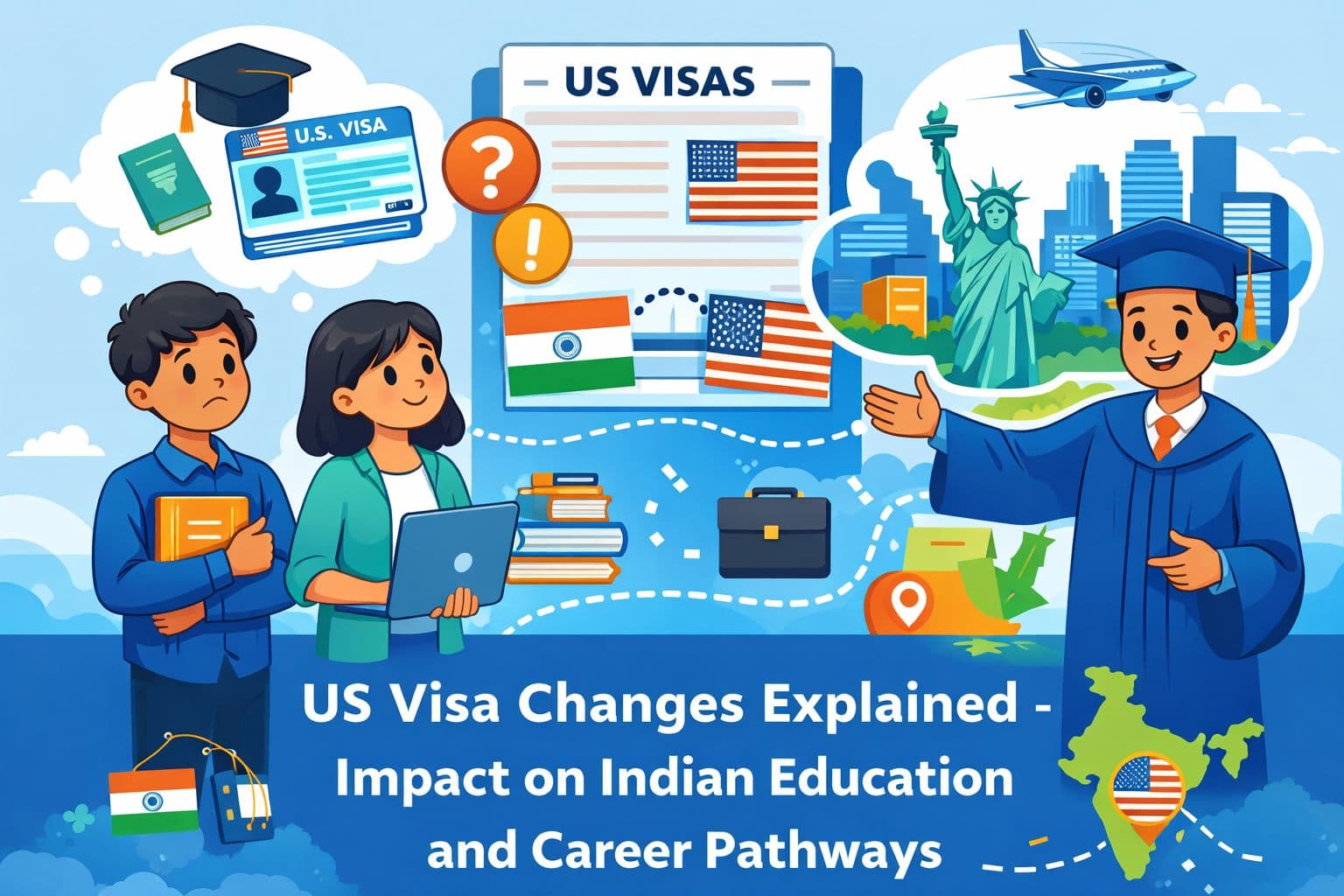
For decades, the United States has been a top destination for Indian students seeking world-class education and global career exposure. However, recent changes in US visa policies—especially around F-1, OPT, and H-1B visas—have reshaped how Indian students plan their education and careers abroad. Understanding these changes is no longer optional; it’s essential.
What’s Changing in the US Visa Landscape?
Recent revisions aim to make the US immigration system more structured and transparent. While the H-1B visa continues to be a key pathway for Indian graduates, stricter scrutiny, lottery-based selection, and employer compliance rules have increased competition. At the same time, the F-1 student visa and Optional Practical Training (OPT) programs remain crucial bridges between education and employment.
Impact on Indian Students and Universities
Indian students are now more cautious while choosing universities, courses, and career tracks. STEM programs continue to dominate due to extended OPT benefits, while non-STEM students often need stronger employer sponsorship strategies. US colleges are also adapting—offering better career services, industry tie-ups, and visa guidance to stay attractive.
Career Planning Beyond Just a Degree
A US degree alone is no longer enough. Students must think early about:
- Employability and job market demand
- Internship opportunities during study
- Long-term visa pathways
- Backup options such as global mobility or returning to India
Strategic planning from the first year itself has become the new norm.
FAQs
1. How do recent H-1B visa changes affect Indian graduates?
Ans. The changes increase competition and place more emphasis on skilled roles, salary levels, and employer credibility.
2. Is studying in the USA still worth it for Indian students?
Ans. Yes, but only with smart course selection, career planning, and awareness of visa pathways.
3. What role does OPT play in building a US career?
Ans. OPT allows students to gain real-world work experience, often becoming the deciding factor for H-1B sponsorship.
4. Are STEM courses safer from a visa perspective?
Ans. STEM programs offer extended OPT, giving students more time to secure long-term employment.
5. How can students reduce visa-related career risks?
Ans. By choosing in-demand skills, building strong internships, and keeping alternative global career pathways open.