
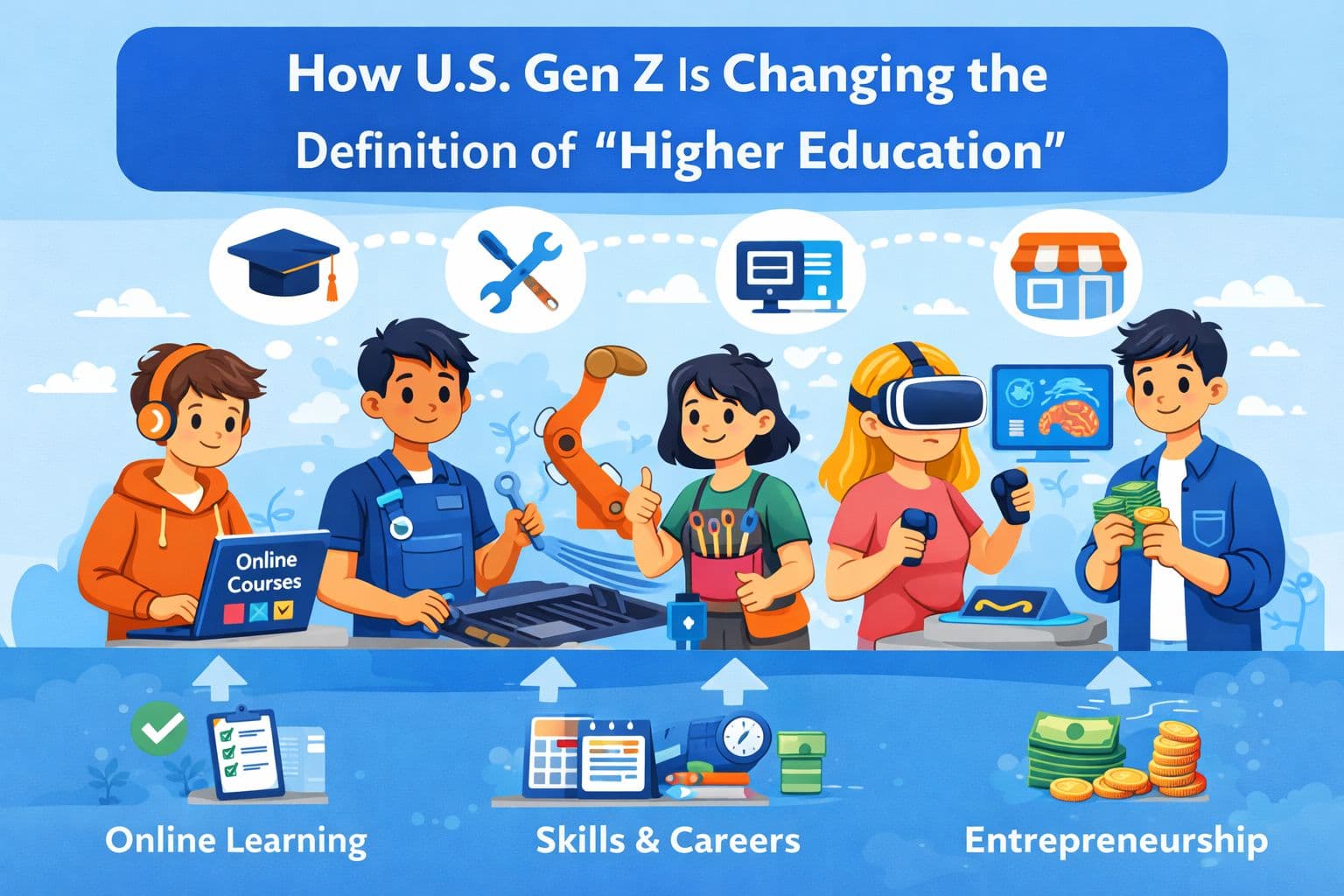
For decades, higher education followed a fixed path: finish school, attend a four-year college, earn a degree, and then enter the workforce. But U.S. Gen Z is rewriting that script. Born into a world shaped by technology, economic uncertainty, and rapid innovation, this generation views education not as a destination, but as a flexible, lifelong tool.
Gen Z students are asking a powerful question: Does education prepare me for real work and real life? If the answer is no, they’re willing to look elsewhere.
From Degrees to Skills: A Major Shift
Traditional degrees still matter, but Gen Z no longer sees them as the only route to success. Instead, they value skills, adaptability, and practical experience. Short-term certifications, online programs, bootcamps, and skill-based courses are gaining popularity because they offer faster, more affordable, and job-oriented learning. Fields like data analytics, digital marketing, UX design, coding, and AI tools often reward demonstrable skills over formal degrees. As a result, Gen Z is more open to alternative education models that directly connect learning with employability.
Online and Hybrid Learning as the New Normal
Unlike previous generations, Gen Z is fully comfortable with digital learning. Online degrees, hybrid classrooms, recorded lectures, and self-paced courses are not “second best” options anymore, they’re often preferred.
This generation values flexibility and personalization. Many students balance internships, freelance work, or side projects alongside their studies. Online education allows them to learn at their own pace while gaining real-world experience early on.
Universities are responding by integrating technology, offering micro-credentials, and partnering with industry leaders to stay relevant.
Career-First Thinking
Gen Z approaches education with a strong career lens. They want clarity on outcomes:
- Will this course help me get a job?
- Does this degree match future workforce needs?
- Can I apply what I’m learning immediately?
This practical mindset is pushing colleges to redesign curricula around career readiness, internships, soft skills, and interdisciplinary learning. Education is no longer just about knowledge—it’s about employability and growth.
Is Gen Z the Smartest and Most Knowledgeable Generation?
Gen Z has unprecedented access to information, making them highly informed and self-aware. However, intelligence today looks different. It’s not just about memorization—it’s about critical thinking, digital literacy, emotional intelligence, and adaptability.
While this generation may not know everything, they know how to find, filter, and apply information quickly. Their strength lies in learning fast, unlearning outdated ideas, and staying flexible in a changing world.
How Higher Education Will Evolve in the 2020s
Higher education in the 2020s will likely be:
- More skill-focused than degree-focused
- Highly digital and hybrid
- Closely linked to industry and workforce needs
- Personalized to individual learning styles and career goals
Institutions that resist change risk becoming irrelevant, while those that embrace innovation will thrive.
FAQS
1. How is higher education going to change in the 2020s?
Ans. Higher education will become more skill-driven, flexible, and digitally integrated. Online courses, micro-credentials, and industry-aligned programs will gain importance over rigid degree structures.
2. Why is Gen Z moving away from traditional college degrees?
Ans. Gen Z prioritizes employable skills, affordability, and real-world experience. Many feel traditional degrees are expensive and slow compared to alternative, career-focused learning paths.
3. Are online degrees and certifications valued by employers?
Ans. Yes, especially when they offer practical skills and project-based learning. Employers increasingly value what candidates can do rather than where they studied.
4. Is Gen Z the most knowledgeable generation?
Ans. Gen Z has access to vast information and strong digital literacy. Their strength lies in adaptability, critical thinking, and learning new skills quickly.
5. How can students choose the right education path today?
Ans. Students should align their interests, strengths, and career goals. Tools like psychometric assessments and career guidance platforms help make informed education choices.